
Website Orders To Northern Ireland Now Available!


Securing a shipping container properly means you first have to understand its weak spots. A shipping container is a tough steel box, no doubt about it, but a simple padlock is often little more than a minor delay for a determined thief. That’s why a layered security approach is the only way to go if you want to protect what's inside.
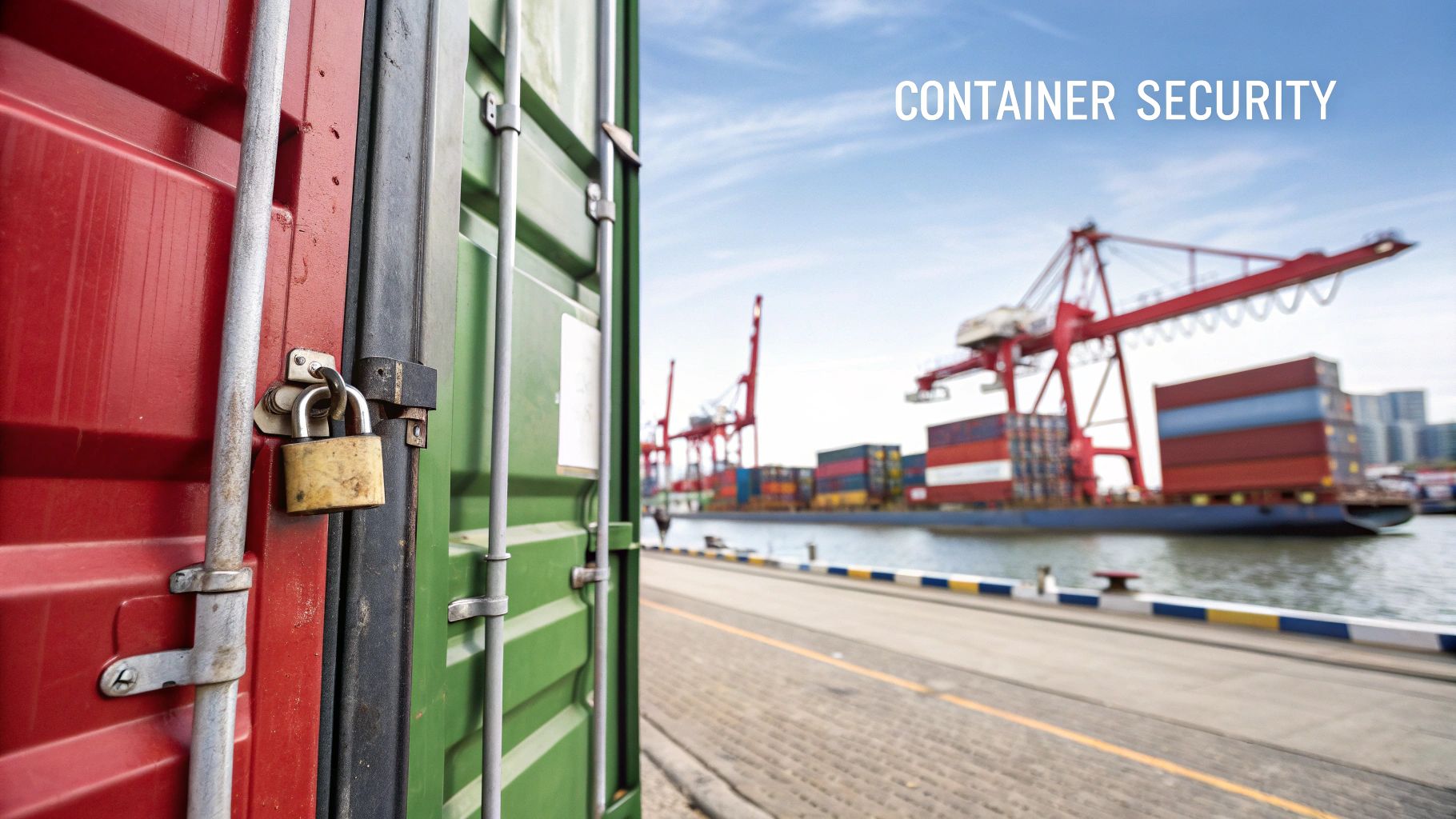
Before you even think about buying a lock, you need to get your head around what you’re up against. Shipping containers are built to be incredibly tough, but they aren't impenetrable vaults. They have inherent security flaws that criminals have gotten very good at exploiting.
The most glaring vulnerability is the locking mechanism itself. Standard container doors have locking rods and handles, which are usually fastened together with a single padlock. This creates one single point of failure, and you can bet that’s where thieves will focus their efforts.
Thieves don't mess about; they go for methods that are quick and brutally effective. Getting familiar with their tactics is the first step in building a defence that actually works.
Here are the most common ways they get in:
Let's be blunt: a basic padlock is little more than a visual deterrent. It’s not going to stop someone who came prepared. This is precisely why you need a strategic approach to locking your shipping container—it’s a necessity, not just an option.
A standard padlock is only as strong as its most exposed part—the shackle. Protect this single component, and you dramatically increase the effort and time a thief needs. Often, that's enough to make them give up and look for an easier target.
This isn't just some hypothetical risk. Whether it’s a construction site in London storing expensive tools or a retail business in Manchester holding excess stock, the contents of these containers represent serious money. The sheer volume of goods moving around the country puts the scale of this vulnerability into perspective.
UK major ports handled 421 million tonnes of freight, with roughly 85% of all international freight traded with the UK arriving by sea. That’s a massive flow of containerised goods constantly at risk of being stolen or tampered with. You can dive deeper into the numbers by checking out the UK port freight statistics on the official government website.
By acknowledging these weak points and understanding the real-world threats, you can start making informed decisions about the security hardware you actually need. This proactive mindset is the foundation of effective container protection.
Picking the right lock for your shipping container isn't a one-size-fits-all job; it really boils down to your specific needs. The first step towards real security is moving beyond a basic padlock. You need to be thinking about material strength, how it stands up to aggressive attacks from tools like angle grinders, and who has control over the keys.
Good, solid hardware is your first line of defence. It’s a physical barrier that buys you time and, more importantly, puts off opportunistic criminals. A thief looking for a quick win will nearly always skip a well-secured container and move on to an easier target. Let's break down the most effective options to help you make the right choice.
For stationary containers—think storage on a building site or at your business premises—the combination of a high-quality padlock and a steel lock box is the undisputed gold standard. A lock box, sometimes called a cowl, is a chunky steel housing that's welded onto the container doors, completely surrounding the padlock.
This one addition is probably the single biggest security upgrade you can make. It protects the padlock’s weakest point, the shackle, from being snipped with bolt cutters or attacked with a grinder. Without that protection, even a beefy padlock is a sitting duck.
When you're picking a padlock, keep these points in mind:
A heavy-duty CISA padlock is a popular and seriously effective choice here in the UK. It fits perfectly inside a standard lock box, leaving no gaps for tools to get a grip.
With so many options, it can be tricky to know where to start. This table breaks down the most common lock types, giving you a clear idea of what might work best for your situation.
| Lock Type | Security Level | Best Use Case | Pros | Cons |
|---|---|---|---|---|
| Heavy-Duty Padlock | Medium-High | Stationary storage with a lock box | Widely available, cost-effective | Vulnerable shackle without a lock box |
| Crossbar Lock | High | Containers that are moved often; high-value storage | Highly visible deterrent, reinforces door structure | Bulkier, can be more expensive |
| Bolt Seal | Low (Evidence) | Shipping and logistics | Provides tamper evidence, unique serial numbers | Easily broken, offers no real security barrier |
| Hidden Shackle Lock | Very High | Maximum security for static containers | Extremely resistant to cutting and prying | Requires a specific hasp or lock box |
Ultimately, the best lock is the one that matches your risk level. For low-risk storage, a good padlock and lock box will do the job. For high-value goods, layering your security with something like a crossbar lock is a smart move.
A crossbar lock is a fantastic choice when you need a substantial and very obvious layer of security. These things are made from heavy-gauge tubular steel and clamp right across the vertical locking rods on the container doors.
They’re adjustable, so they’ll fit most standard containers, and they present a serious challenge to any would-be thief. Because they cover a big area and have their own integrated high-security lock, they are incredibly resistant to being pried off with a crowbar. They're also a great option for containers that get moved around a lot, as they aren't permanently fixed.
The real beauty of a crossbar lock is that it spreads its strength across the container's own locking bars. This reinforces the entire door structure instead of just relying on a single weak point.
If your container is for shipping goods rather than just sitting in one place, a high-security bolt seal is a must. These aren't reusable locks; they are single-use security devices designed purely to show evidence of tampering.
Each bolt seal has a unique serial number, which gets recorded on the shipping documents. When the container arrives, the recipient checks that the seal is intact and that the number matches the paperwork. If it’s broken or has been swapped out, you have instant proof that the container was opened during its journey. While they won't stop a determined thief with enough time, they are a vital part of supply chain security.
To see a wider range of security options, feel free to check out our other articles on container accessories.
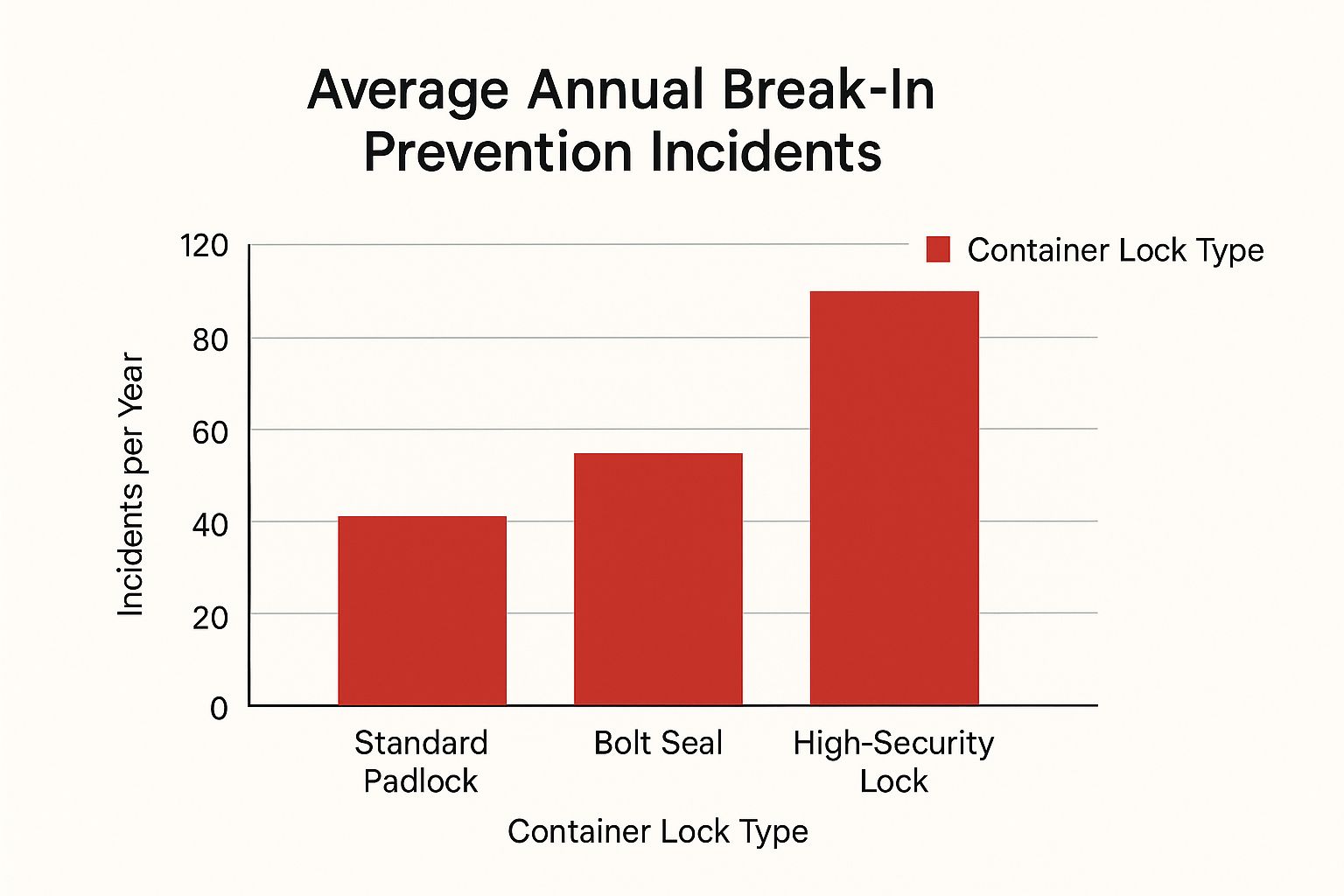
As you can see, simply upgrading from a standard padlock to a high-security lock more than doubles your chances of preventing a break-in. It really drives home the value of investing in proper, specialised hardware. Choosing the right lock is all about matching the hardware to the risk, ensuring your assets stay safe and sound, whether they're sitting on-site or travelling the globe.

You can spend a fortune on top-tier locking hardware, but if it's installed poorly, you've essentially just wasted your money. A badly welded lock box or a wonky crossbar lock doesn't add security; it creates a brand-new weak point for a determined thief to exploit.
Getting the installation right isn't just a finishing touch—it's a critical part of your security strategy. Let's walk through some practical, actionable advice for fitting your hardware correctly. Whether you plan to tackle the job yourself or hire a professional, this will give you the confidence to get it done right.
For any stationary shipping container, the single most important security upgrade is a steel lock box, often called a cowl. Its job is simple: to shroud the padlock and shield its shackle from attack. But a poorly fitted one is almost as bad as having nothing at all.
When you're fitting a lock box, alignment is everything. The box has to be positioned perfectly, straddling the central gap between the two doors. It needs to sit flush against the corrugated surface so the padlock can pass through both locking cams without any strain or resistance. If it’s even slightly off, the padlock won't seat properly, leaving it vulnerable or even making it impossible to lock.
Then there's the weld quality—this is completely non-negotiable. The lock box must be welded securely on all accessible sides to the container door.
A common mistake I see is installers using weak ‘tack’ welds at the corners instead of running a continuous, solid bead. This creates the perfect leverage point for a crowbar. A thief can simply rip the entire box clean off the door. Insist on strong, clean welds that make the box feel like an integral part of the door itself.
Whether you're doing the installation yourself or just supervising a pro, it pays to know what tools are needed for the job. A DIY installation is definitely achievable if you have some welding experience, but it’s not a task to be taken lightly.
Here’s a look at what a professional installation typically requires:
Crossbar locks are a fantastic, non-permanent security solution, but just like lock boxes, their effectiveness hinges on a proper fit. These devices clamp over the vertical locking rods of the container doors, reinforcing them against brute force.
The key to a secure fit is getting the tension right. The adjustable arms should be tightened until the device fits snugly against the locking rods, with no slack or movement. A loose crossbar lock can be jiggled around and potentially worked free, completely defeating its purpose.
When it's positioned correctly, the crossbar lock should physically stop the door handles from being lifted. This prevents the vertical bars from rotating and disengaging. After fitting the lock, always give the doors a good tug to confirm they are completely immobilised. It's a simple check that ensures your container is truly secure.
For more information on container components, our guide on how twist locks work provides additional insights into securing and connecting containers. Proper installation, whether it's a permanent lock box or a temporary crossbar lock, is the final, crucial step in protecting your assets.
A robust lock is a fantastic starting point, but on its own, it's just one barrier. Real security for a shipping container doesn't come from a single gadget; it comes from creating layers of defence that all work together. When I talk about a layered security strategy, I mean thinking beyond the lock itself to create an environment that actively puts criminals off before they even think about touching your container.
This approach is all about making your container a difficult, risky, and highly visible target. It’s a mix of strong physical hardware and some clever psychological deterrents. A thief who sees a well-lit area, obvious cameras, and clear signs of an alarm system is far more likely to just move on to an easier mark, no matter how tough your padlock is.
Criminals love darkness and anonymity. So, your first job is to take that advantage away from them. Motion-activated lighting and high-visibility CCTV are your two most powerful tools in this fight. It's a simple principle, but it's incredibly effective: if a potential thief feels exposed, they are far less likely to act.
Here in the UK, theft from shipping containers is a massive headache, especially on construction sites and commercial properties. We've seen time and again that robust physical security measures drastically reduce this risk. While high-quality locks are essential, site owners are also finding huge success with bright LED lighting and visible CCTV surveillance. With studies showing that two-thirds of burglaries happen at night and that visible cameras alone can discourage break-in attempts, it's a no-brainer.
Of course, just having them isn't enough. Effective placement is what makes the real difference.
While lighting and cameras are great deterrents, an alarm system gives you an active response if someone does try their luck. Modern alarm systems designed for shipping containers are brilliant – they're self-contained, battery-powered, and communicate wirelessly, making them perfect for remote locations that don't have a mains power supply.
When you're looking for an alarm, keep an eye out for these features:
A loud siren is a good local deterrent, but it's the instant alert to your phone that gives you the power to react swiftly. It transforms your security from a passive defence into an active monitoring system, allowing you to notify the authorities immediately.
Building a truly layered security strategy for your containers means integrating physical and digital measures within a comprehensive risk management framework, ensuring you have a proactive approach to protection. This holistic view is crucial. It’s not just about a single lock but about a complete security setup that considers every potential threat.
For those interested in the nuts and bolts of how containers are secured, our guide on how twist locks keep your shipping containers secure offers some great insights into the core components. By combining a top-tier lock, smart environmental controls like lights and cameras, and an active alert system, you create a formidable defence that protects your assets around the clock.
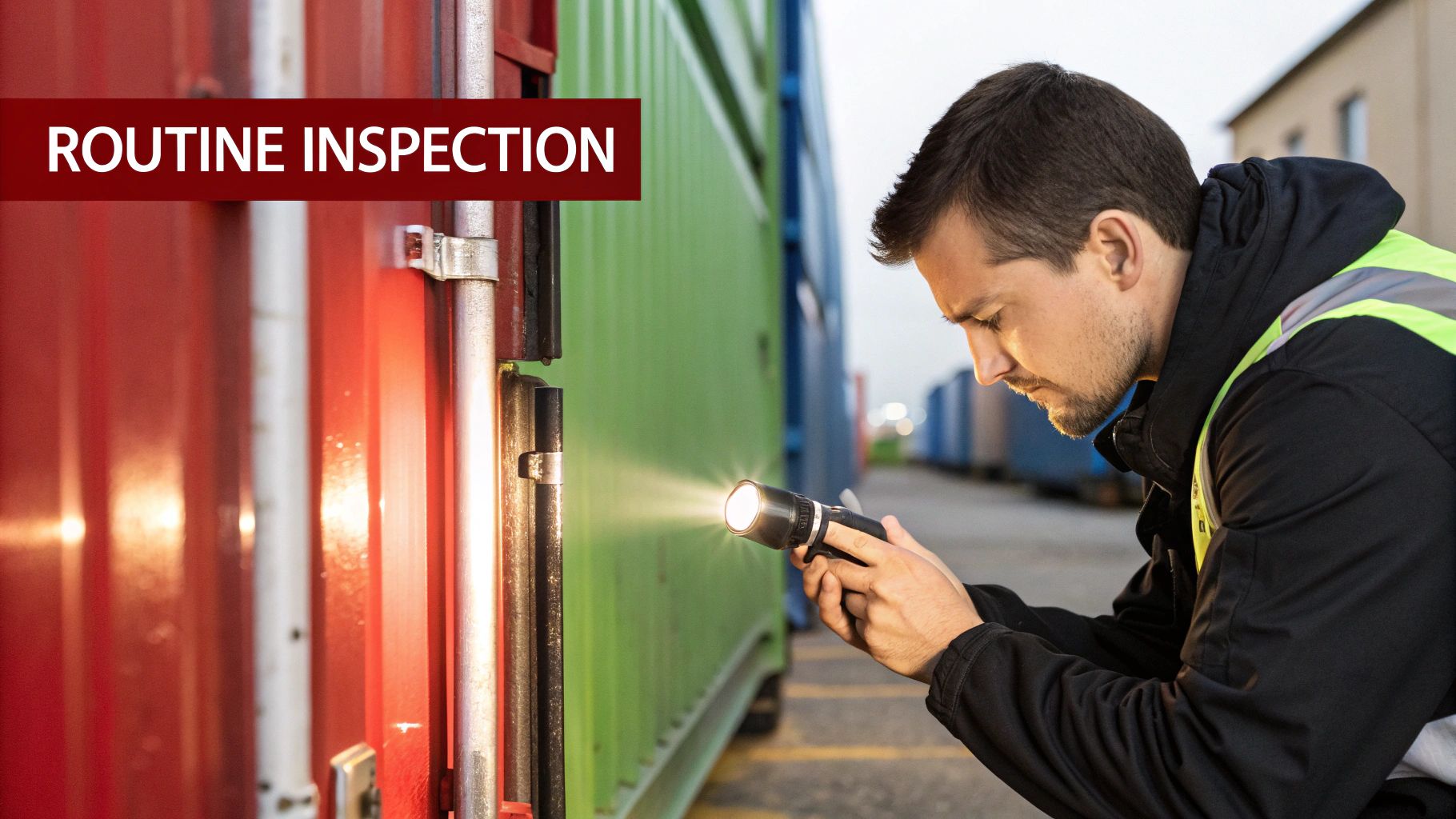
While a solid physical lock is always your first line of defence, the next frontier in protecting your assets is digital. Smart technology is completely changing how we secure shipping containers, shifting the game from passive protection to active, intelligent monitoring. This is where brute physical strength meets digital brains for total peace of mind.
These systems give you a level of oversight that was impossible just a few years ago. Imagine knowing exactly where your container is at any given moment, who opened it, and getting an instant alert if someone tries to force their way in. This isn't science fiction anymore; it's the reality of modern container security.
One of the biggest leaps forward has been the integration of GPS trackers and telematics systems. A small, discreet GPS device can be attached to your container, giving you its precise location in real-time. This is a game-changer not just for logistics and tracking shipments but also for recovering your container fast if it ever gets stolen.
Telematics systems take this a step further. These clever devices combine GPS with other sensors to keep an eye on all sorts of conditions.
This tech is quickly becoming essential for anyone serious about security. Telematics gives you an unbroken chain of custody and full transparency, which is a massive deterrent to organised crime.
Working hand-in-hand with GPS tracking are smart locks, which ditch traditional keys for digital access. Instead of a physical key that can be lost, stolen, or copied, these locks are opened using a smartphone app, a key fob, or a unique PIN.
Their biggest advantage is the auditable access log they create. Every single time the lock is opened or closed, it records the time, date, and exactly who accessed it. This creates a bulletproof digital paper trail, getting rid of any guesswork and giving you hard evidence. It’s perfect for businesses that need to give temporary access to different staff members or contractors without compromising security.
The real power of a smart lock isn't just in keeping people out, but in knowing exactly who went in. For businesses managing high-value goods or complex supply chains, this level of accountability is a game-changer.
The true strength of this technology comes when you layer it. A smart lock handles access control and gives you an audit trail, while a GPS telematics system provides location data and real-time alerts for any tampering. Together, they form a comprehensive digital shield around your assets.
For a deeper dive into how these technologies are changing the security world, this article on the role of NFC and GPS in modern security is a fascinating read. As technology continues to evolve, so do the ways we can protect what’s valuable. Our guide on https://www.quickfitcontaineraccessories.co.uk/blogs/news/how-to-turn-shipping-containers-into-smart-storage-spaces also explores how you can bring these advancements to your own setup. This fusion of rugged hardware and intelligent software is, without a doubt, the future of locking shipping containers.
Even with a solid security plan, you'll likely run into specific questions when it comes to the nuts and bolts of locking up a shipping container. Getting clear, straightforward answers is the key to making the right choice with confidence. Let's tackle some of the most common queries we hear from customers.
For a stationary container, the gold standard is a high-quality, heavy-duty shrouded padlock sitting inside a welded steel lock box. It’s a simple but incredibly effective combo. The lock box shields the padlock's shackle—its weakest point—making it nearly impossible to get at with bolt cutters or a grinder. When you’re shopping around, look for padlocks with a Boron alloy shackle and a CEN security rating of 4 or higher.
If your container is on the move a lot, a heavy-duty adjustable crossbar lock is a fantastic, highly visible option. Its design braces the doors themselves, which is a powerful deterrent on its own.
Yes, absolutely. In fact, fitting a lock box is one of the most common and effective security upgrades you can make to a standard container. They’re designed specifically to be retrofitted.
A professional can weld a pre-fabricated steel lock box straight onto your container doors, bridging the gap where they meet. This covers the locking cams and creates a protected housing for your padlock. The whole process is pretty quick and instantly boosts the security of any padlock you use. It’s the first thing I recommend to anyone storing valuable gear.
Don’t underestimate the impact of this simple addition. A lock box elevates an ordinary container into a much tougher target. It forces a thief to spend more time and make more noise, two things they actively avoid.
For high-value cargo or complex commercial operations, they can be an excellent investment. While the upfront cost is higher than a traditional lock, the benefits go far beyond just a physical barrier. This is especially true if you need a clear audit trail and real-time oversight of your assets.
Think about the advantages you get:
For modern supply chains and high-stakes assets, this level of control and information is becoming essential.
Proper maintenance is crucial, especially with the UK's damp and changeable weather. A neglected lock can seize up at the worst possible moment, leaving you stuck. It’s a simple job that saves a lot of headaches.
First, give your locks a regular clean to get rid of any grime that’s built up on the outside. Every few months, I’d recommend applying a graphite-based lubricant to the keyway and the internal mechanism. It’s really important to avoid oil-based products like WD-40 inside the lock itself—they attract dust and can eventually gum up the delicate tumblers.
Finally, make it a habit to check for any signs of rust or corrosion on both the lock and its fittings. Catching these issues early will ensure your entire security setup works reliably for years to come.
For all your container security needs, from high-security padlocks and lock boxes to a wide range of essential fittings, trust Quickfit Container Accessories. Explore our extensive online catalogue for durable, reliable solutions with next-day UK delivery available. Secure your assets with confidence by visiting https://www.quickfitcontaineraccessories.co.uk.
{"one"=>"Select 2 or 3 items to compare", "other"=>"{{ count }} of 3 items selected"}