
Website Orders To Northern Ireland & Republic Of Ireland and USA Now Available!

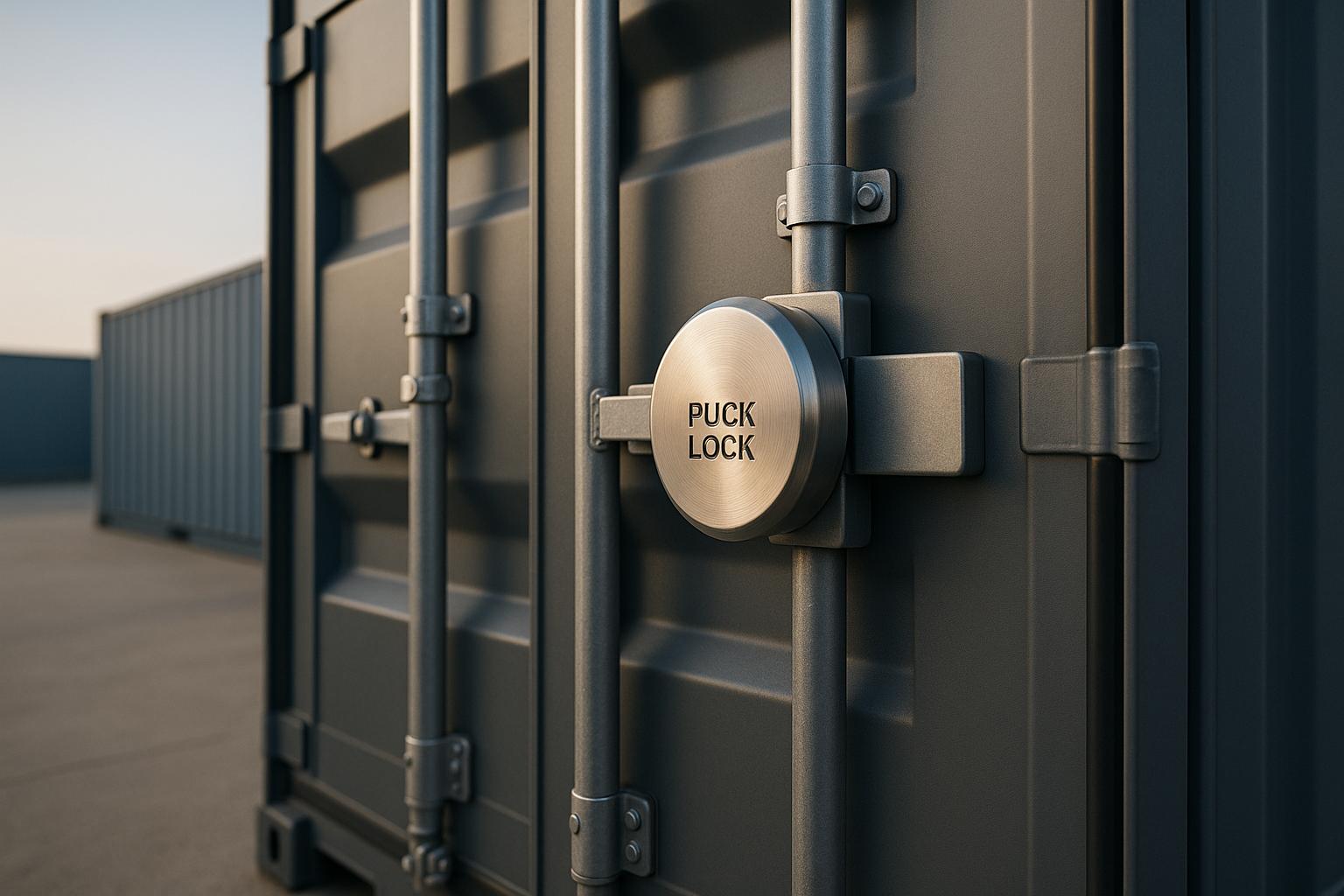
Shipping containers are often targeted by thieves using simple tools like bolt cutters or crowbars, leaving goods vulnerable and causing costly disruptions. While standard locks like padlocks or crossbar systems are common, they frequently fail against determined attacks. Enter the puck lock - a secure, enclosed locking mechanism designed to resist cutting, drilling, and tampering. Its hardened steel body and recessed design make it a top choice for safeguarding containers in harsh conditions.
For the best security, combine a puck lock with a lock box or crossbar lock to create a multi-layered defense. Other options include heavy-duty padlocks and hidden-shackle padlocks, each offering unique strengths. Here's a quick comparison of the main lock types:
| Lock Type | Security Level | Cutting/Drilling Resistance | Weather Resistance | Works with Lock Boxes |
|---|---|---|---|---|
| Puck Lock | High | Excellent | Good | Yes |
| Padlock | Medium | Moderate | Variable | Yes |
| Crossbar Lock | High | Good | Excellent | No |
| Hidden-Shackle Lock | High | Very Good | Good | Yes |
To secure your container effectively, consider a puck lock paired with a lock box for maximum protection against theft and damage.
The puck lock takes container security to the next level by housing its locking mechanism inside a sturdy, circular steel body. This design eliminates many of the weaknesses found in traditional padlocks. For more information, check out our puck lock for shipping container.
What sets puck locks apart is their hidden shackle design, which removes the most exposed part of a standard lock - making it much harder for intruders to tamper with. The locking mechanism is recessed within a hardened steel casing, requiring multiple steps and significant effort to breach. This makes puck locks an ideal choice for high-security environments like construction sites, warehouses, and transportation yards.
Made from hardened steel, puck locks are built to endure brute force attacks. Their thick steel walls present a formidable barrier, requiring specialised tools and a lot of time to penetrate. This durability ensures they perform well even under challenging outdoor conditions.
The sealed design of puck locks keeps moisture, dirt, and debris out, reducing the risk of rust and mechanical issues over time. This weatherproof construction ensures reliable performance in outdoor settings. When paired with a secure lock box, the lock’s resistance to harsh weather and environmental factors is further enhanced, providing an extra layer of protection.
Puck locks work seamlessly with lock boxes for added security. For instance, the INSTA Shipping Container Bolt-On Puck Lock Box has earned a 5-star rating for its durability. These lock boxes, typically made from 4-gauge (5.2mm) steel, are available in bolt-on or weld-on designs. They shield the lock from cutting tools and extreme weather conditions. Browse our selection of shipping container lock boxes to explore your options.
Combining a high-quality puck lock with a bolt-on lock box creates a strong, dual-layer defense. This setup not only addresses the vulnerabilities of exposed locks but also stands up to the challenges of outdoor storage.
Padlocks are a reliable and sturdy option for securing shipping containers. While they may not have the bells and whistles of more specialised locks, heavy-duty padlocks designed specifically for containers can offer solid protection when selected and used properly.
High-security padlocks are built to withstand serious tampering. They typically feature hardened shackles, solid metal bodies, and dual ball locking mechanisms, all of which minimise the risk of failure.
"When it comes to securing a storage container or shipping container, selecting the right padlock is crucial for achieving maximum security and peace of mind."
– Nothing But Padlocks
Though combination locks might seem convenient, bolt padlocks often outperform them in terms of strength and tamper resistance. Key-operated mechanisms are generally more durable, as they avoid the vulnerabilities of combination dials, which can wear out or be manipulated over time.
Heavy-duty padlocks are designed to handle aggressive break-in attempts. Their hardened steel shackles and robust metal bodies make them tough against bolt cutters and drilling tools.
Top-quality padlocks are built to last in challenging environments. Features like sealed mechanisms and corrosion-resistant coatings help them endure moisture, extreme temperatures, and debris without compromising security.
Using a padlock alongside a container lock box adds an extra layer of protection. Lock boxes are steel enclosures welded onto container doors, designed to shield the padlock from cutting tools like bolt cutters or saws. They also offer protection against rain and debris, keeping the lock functional in harsh conditions.
For containers equipped with lock boxes, square or shutter padlocks are ideal since they fit snugly inside, allowing the bolt to slide securely into place. If there’s no lock box, any heavy-duty padlock with the correct dimensions can be used. Just make sure the shackle size matches your container’s hasp for a proper fit.
Crossbar locks take container security up a notch by introducing a sturdy physical barrier that spans across your container doors. Made from heavy-duty steel, these locks clamp tightly onto the vertical locking rods or door handles, offering protection that goes beyond what a standard padlock can provide.
What sets crossbar locks apart is their dual-layer defense. While padlocks secure just one locking point, crossbar locks physically block the doors from being opened, even if other locks are compromised. Their extendable clamps lock into place using a keyed mechanism, making unauthorised access incredibly challenging.
Beyond their physical strength, crossbar locks also serve as a visible deterrent. A solid steel bar running across the doors sends a clear message to would-be intruders: this container is well-protected.
Built from heavy-duty tubular steel and reinforced with dual steel components, crossbar locks are designed to withstand break-in attempts using bolt cutters or drills. Hardened, spring-loaded steel elements keep the locking mechanism under constant tension, making it highly resistant to tampering. This rugged construction not only boosts security but also ensures the lock can handle tough outdoor conditions.
The robust steel design of crossbar locks makes them highly durable in outdoor environments. Whether exposed to rain, snow, or fluctuating temperatures, these locks maintain their performance, making them a reliable choice for long-term outdoor use.
A big advantage of crossbar locks is how easy they are to install. Most models fit securely without requiring welding or specialised tools, allowing you to upgrade your container's security without making permanent changes. For added protection, crossbar locks pair exceptionally well with a puck lock for shipping containers and a lock box setup. This combination adds multiple layers of security, delaying unauthorised access while integrating seamlessly with standard lock box designs. For more details on container security options, check out our Container Accessories page.
Hidden-shackle padlocks bring a modern twist to container security. Unlike traditional padlocks with a visible shackle, these locks feature a recessed or completely concealed shackle that sits flush within the lock body. This streamlined design makes them an excellent fit for securing containers, offering an extra layer of protection by reducing weak points.
The standout feature of hidden-shackle padlocks is their ability to address the common weakness of exposed shackles. By keeping the shackle either entirely hidden or barely accessible, these locks make it much harder for tools like bolt cutters to gain leverage. This design represents a significant step forward in advanced locking systems for containers. Many of these padlocks meet rigorous standards like the CEN (Central European Norm) grading system, which evaluates resistance to sawing, twisting, drilling, and cutting. Some models also include anti-drill cylinders, adding another layer of defense.
The enclosed design of these padlocks creates multiple obstacles for anyone attempting to break in. Made from tough materials like hardened or boron steel, the locks leave minimal surface area for bolt cutters to target. While no lock is entirely invincible, the time and effort required to bypass a hidden-shackle padlock - along with the noise such an attempt generates - can effectively deter intruders.
Hidden-shackle padlocks work seamlessly with shipping container lock boxes, enhancing security even further. A lock box restricts access to the padlock, while the hidden-shackle design continues to resist cutting attempts, even if the box itself is breached. For containers without built-in lock boxes, bolt-on or weld-on options can be added for extra protection. Some padlocks, like the PACLOCK UCS-82A, even feature removable shackles specifically designed for integration with lock boxes, making them ideal for container applications.
For even greater security, consider pairing your hidden-shackle padlock with our container security accessories to create a robust, multi-layered defense system.
Each type of lock comes with its own strengths and weaknesses. Knowing these trade-offs can help you choose the best option depending on your security needs and level of risk. Below is a breakdown of the key features for each lock type.
Puck locks stand out for their exceptional security. Thanks to their unique design, such as the puck lock for shipping container, they eliminate exposed shackles, making bolt cutters useless. These locks are incredibly versatile and suitable for a range of uses. However, the effectiveness of puck locks can be undermined by lower-quality models, which may not provide the same level of protection.
Traditional padlocks are simple, affordable, and widely available. They’re easy to use and require minimal investment upfront. However, their simplicity comes with drawbacks. Traditional padlocks are vulnerable to picking and cutting, lack advanced security features like access control or monitoring, and may not hold up well under extreme weather conditions. Regular maintenance is often necessary to prevent issues like rust or mechanical failure.
Crossbar locks add a physical layer of protection by blocking access to the container doors. Even if another lock is compromised, the crossbar prevents entry. However, these locks are typically used alongside other lock types for full protection, which can increase costs and complexity.
Hidden-shackle padlocks combine ease of use with a high level of security. Their enclosed design makes it difficult for intruders to tamper with them. When paired with lock boxes, they provide an even stronger barrier against unauthorised access.
| Lock Type | Security Level | Resistance to Cutting/Drilling | Weather Resistance | Compatibility with Lock Boxes |
|---|---|---|---|---|
| Puck Lock | Very High | Excellent – no accessible cutting points | Good | Moderate |
| Traditional Padlock | Low to Medium | Poor – vulnerable to bolt cutters | Variable – requires maintenance | Excellent |
| Crossbar Lock | High | Good – physical barrier protection | Excellent | Not applicable |
| Hidden-Shackle Padlock | High | Very Good – enclosed shackle design | Good to Excellent | Excellent |
The CEN grading system offers a standardised way to evaluate lock security. Locks are rated from 1 (lowest security) to 6 (highest security). Higher-grade locks are made from tougher materials like hardened steel and often include advanced anti-tampering features, justifying their higher price tag.
For ultimate security, experts recommend using a combination of locks. In July 2025, Tradecorp USA emphasised this approach when securing high-value shipments:
"For ultimate protection when delivering cargo worth millions of dollars, combine a crossbar lock, hidden shackle padlock, and lock box."
This layered security strategy tackles multiple attack methods while still allowing for practical access when needed. It’s a proven way to achieve the best possible protection for shipping containers.
The puck lock stands out as a highly reliable option for securing containers. Its enclosed design addresses key vulnerabilities by eliminating exposed points, such as shackles, which could otherwise be targeted by bolt cutters. This makes the puck lock for shipping container a strong and dependable choice for safeguarding your valuables.
To take security a step further, consider combining the puck lock with additional protective accessories. For instance, lock boxes provide an extra layer of defense by acting as steel barriers, blocking access to tools. When paired with anti-vandal shutters, you create a multi-layered security system that resists bolt cutter attacks and discourages unauthorised access. Together, these tools form a robust shield for your container.
A puck lock offers an upgraded level of security for shipping containers due to its smart design, which addresses weaknesses often seen in standard padlocks. Its compact, circular shape eliminates exposed shackles, making it tough for cutting or prying tools to compromise.
On top of that, most puck locks are made from hardened steel, giving them exceptional strength and resistance to forced entry. Their tight integration with the container's locking mechanism further minimises tampering risks, keeping your container secure for the long haul.
To make your container lock more resistant to weather, opt for materials like stainless steel or hardened steel, as these are built to handle tough conditions. Make sure the lock is properly sealed to keep out water and debris. Adding protective coatings to both the lock and the surrounding area can also help guard against rust and moisture.
For extra defense, you might want to reinforce the lock area with seals or gaskets that block out dirt and water. A puck lock is a great choice for shipping containers because it’s designed to endure rough weather while offering solid security.
Using a mix of lock types is a smart way to strengthen the security of your shipping container. Combining options like puck locks, padlocks, and bolt seals adds extra layers of protection, making it much tougher for intruders to break in. Each type of lock has its own design and method of operation, meaning a thief would need different tools and techniques to bypass each one.
This strategy becomes even more critical when dealing with containers holding valuable goods or placed in areas where security concerns are higher. A well-protected container not only safeguards your cargo but also gives you peace of mind, ensuring your shipment stays secure against theft or tampering.
{"one"=>"Select 2 or 3 items to compare", "other"=>"{{ count }} of 3 items selected"}