
Website Orders To Northern Ireland & Republic Of Ireland and USA Now Available!


Buying a storage container is a big decision, a bit like buying a new vehicle. You wouldn't buy a sports car to haul building materials, and the same logic applies here. Your specific plans for the container should guide every choice you make, from its size to any extra features you might need.
The trick is to figure out exactly what you need before you even start looking. This simple first step is the key to finding a container that’s not just practical, but genuinely cost-effective for years to come.
Stepping into the world of storage containers can feel overwhelming, but it doesn't have to be. Think of this guide as your roadmap. We’ll walk you through the entire process, breaking it down into simple, manageable steps so you can move forward with confidence. And it all starts with one question: what are you using it for?
The answer changes everything. Your requirements will look very different depending on the job at hand:
Nailing down your primary goal right from the start makes all the later decisions fall into place. It shapes everything that follows, like what size you’ll need, whether to go for a new or used container, and what modifications like locks or ventilation are non-negotiable.
And while storage is the classic use, containers are being adapted for all sorts of innovative roles these days. For anyone curious about these more advanced applications, a good starting point is understanding what an energy storage system (ESS) is and how containers are being repurposed for them.
Consider this guide your strategic plan. By outlining the key decisions you'll face, we’re taking the guesswork out of the equation. Our goal is to equip you to navigate the UK market like a pro and find the perfect steel storage solution for your project.
This introduction sets the stage for the journey ahead. By the time you’re done, you’ll have a clear path forward, from assessing your needs to arranging delivery. You'll be ready to make an informed choice that will serve you well for a long, long time.
Picking the right size is probably the single most important decision you’ll make when buying a storage container. It’s a choice that directly hits your wallet, dictates how you can use the unit, and determines if it will even fit on your property.
Get it right, and you’ve got a brilliant, cost-effective storage solution. Get it wrong, and you're stuck with a container that’s half-empty or, even worse, one that’s bursting at the seams from day one.
The most common players on the field in the UK are the 10ft, 20ft, and 40ft containers. While the numbers give you a technical spec, it’s much more helpful to think about what you can actually cram inside.
Let’s put these sizes into perspective. A 10ft container is your best friend if you're tight on space. Think of it as a beefed-up garden shed. It’s absolutely perfect for stashing away tools, the contents of a small flat, or all that household clutter you’ve been meaning to sort out.
The 20ft container is the crowd favourite, and for good reason. It hits that sweet spot between storage space and footprint, giving you about as much room as a single-car garage. You can comfortably pack in the contents of an average three-bedroom house, making it the go-to for home movers, small businesses needing stockroom space, or tradespeople who need secure on-site tool storage.
When you need a serious amount of space, the 40ft container is the undisputed heavyweight champion. These are the workhorses of the commercial world, built to swallow up bulky machinery, huge volumes of inventory, or even a car or two. If you’ve got the room for it, a 40ft unit delivers the best value per square foot, hands down.
To give you a better sense of scale, this infographic lines them up side-by-side.
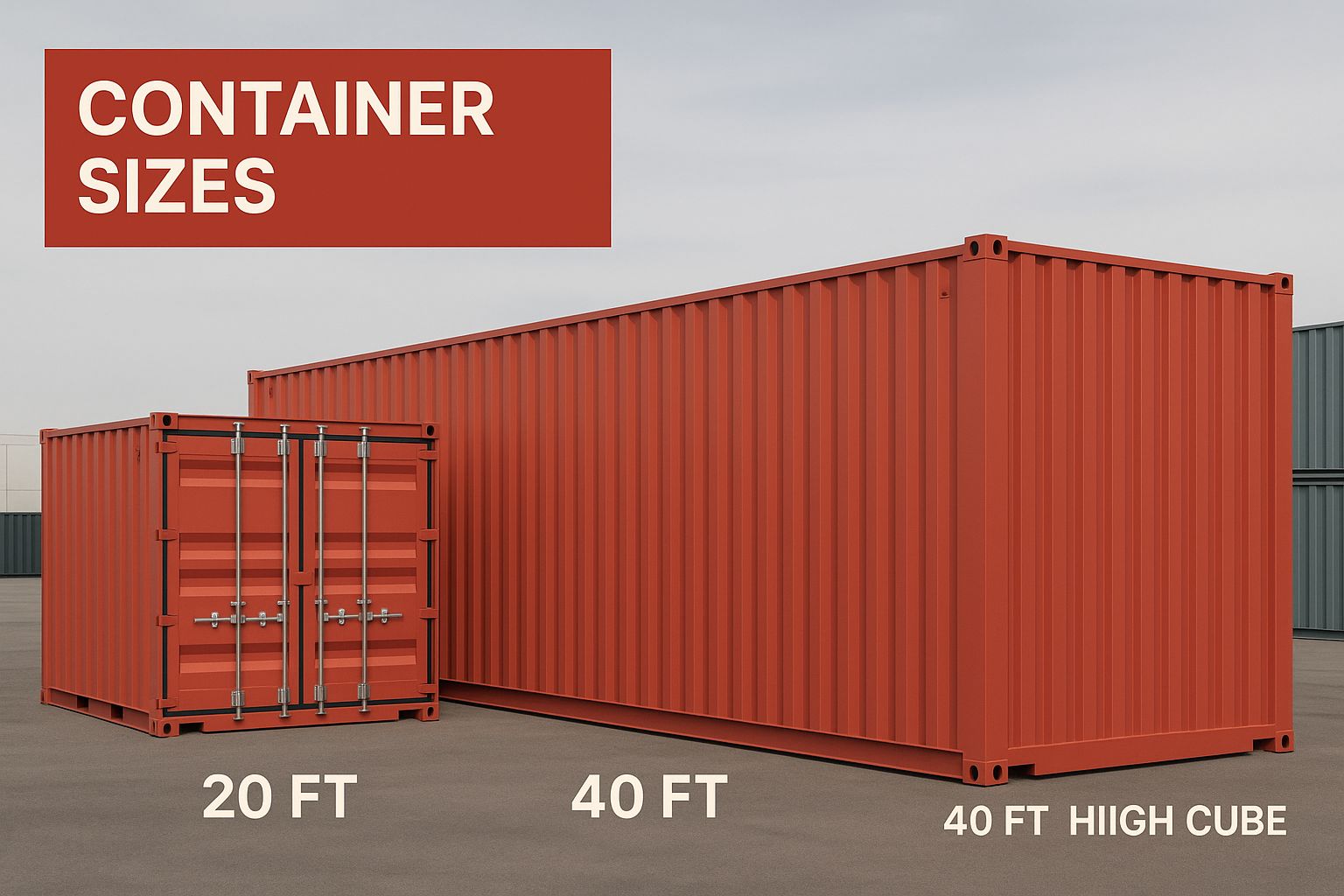
It really helps to see how much extra room you gain as you go up in size.
To make things even clearer, here’s a quick-reference table that breaks down the sizes and what they’re typically used for.
| Container Size | Approx. Dimensions (L x W x H) | Typical Storage Capacity (Cubic Metres) | Common Use Cases |
|---|---|---|---|
| 10ft | 2.99m x 2.44m x 2.59m | 15.9 m³ | Small business stock, garden tools, personal effects, secure site office. |
| 20ft | 6.06m x 2.44m x 2.59m | 33.2 m³ | 3-bedroom house contents, small vehicle storage, construction site workshop. |
| 40ft | 12.19m x 2.44m x 2.59m | 67.7 m³ | Large commercial inventory, agricultural machinery, multiple vehicle storage. |
| 40ft High Cube | 12.19m x 2.44m x 2.90m | 76.4 m³ | Stacking pallets, oversized equipment, maximising vertical storage with shelving. |
This table should give you a solid starting point for figuring out which option best fits what you need to store.
Of course, sometimes a simple dry box just doesn’t cut it. If you have specific storage challenges, there are specialised containers designed to solve them.
Here are a few of the most common types:
High-Cube Containers: These have the same footprint as a standard container but give you an extra foot of headroom. That little bit of extra height is a game-changer for storing tall items like mini-diggers or for getting the most out of your vertical space with high shelving. If you want to go vertical, our guide on shipping container shelving solutions has some great tips.
Open-Top Containers: Instead of a solid steel roof, these come with a heavy-duty tarpaulin that can be removed. They’re designed for situations where you need to load awkward or oversized items from above with a crane—think scrap metal, big logs, or machinery that won’t fit through the doors.
Refrigerated 'Reefer' Containers: If you're storing anything that needs to stay cool, a reefer is non-negotiable. These are essentially giant, mobile fridges. They’re insulated and come with their own refrigeration units, making them perfect for perishable foods, flowers, or even sensitive pharmaceuticals.
By taking a moment to think not just about the volume of your stuff, but also its shape, height, and any special requirements, you can make a much smarter choice. Matching the container to the job is the best way to get real value from your investment.
One of the first big decisions you'll make is whether to spring for a brand-new container or go with a more wallet-friendly used one. There's no single right answer here. The best choice really boils down to your budget, how long you plan to use it, and frankly, how good it needs to look.
A new container, often called a 'one-trip' container, is exactly what it sounds like. It's made just one trip from its factory, usually in Asia, carrying a single load of cargo. For all intents and purposes, it's in pristine condition.
These units are the go-to when looks matter. Think customer-facing pop-up shops or a neat and tidy storage solution on your property. They come with a fresh coat of paint, no dents, and only the most minor scuffs from their single voyage. This also means they have a longer lifespan, often lasting over 25 years with basic care. If this is a long-term investment, a one-trip unit gives you a clean slate and a professional appearance.
On the flip side, a used container can be an absolute bargain if you're working with a tighter budget. These are the grizzled veterans of the global shipping industry. They've seen some action, sure, but they’re built from incredibly tough Corten steel designed to withstand years at sea.
Their history means they'll have some cosmetic battle scars—dents, dings, and patches of surface rust are all part of the territory. But in most cases, they're just as strong and functional as their newer counterparts.
When you start looking at used options, you’ll run into a few grading terms. Getting to grips with these is key to knowing what you're buying.
A common mistake is getting spooked by a bit of rust. On Corten steel, a little surface rust is completely normal and purely cosmetic. What you need to watch out for is deep, flaky corrosion that could threaten the container's structural integrity.
Whether you're buying new or used, a quick inspection is always a smart move. If you're going for a used container, consider this checklist non-negotiable. It'll help you dodge any nasty surprises down the line.
So you’ve picked your container. Great! But getting a multi-tonne steel box to your property is where the real planning begins. This is a step that’s easy to overlook, but trust me, a smooth delivery day is no accident. It’s all in the prep work.
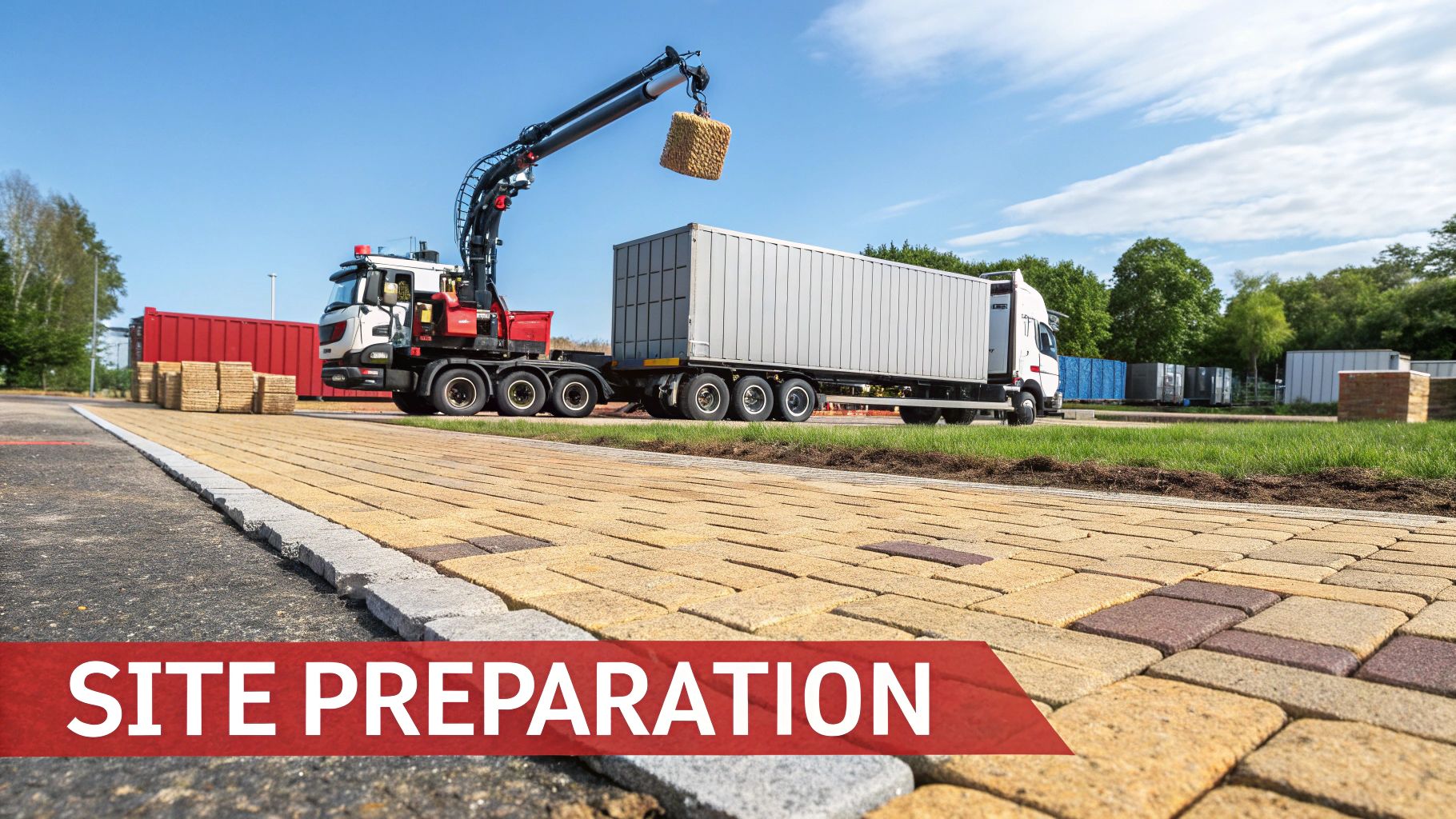
Most containers arrive on large lorries fitted with a HIAB crane. Think of it as a delivery lorry with its own built-in crane, designed to lift your container off the back and place it precisely where you want it. This method gives you fantastic flexibility, but it also means the lorry needs proper access.
Before you even think about confirming your order, it’s time to put on your logistics manager hat. Walk the entire route the delivery lorry will take, from the main road right to the final spot. You’re looking for any potential showstoppers.
Getting your site ready isn’t just a nice-to-have; it's absolutely essential. Plonking a container down on soft or uneven ground is a recipe for disaster. The frame can twist, making the doors a nightmare to open and close. A solid, level foundation is the secret to a happy, functional container.
Here’s what you need to get right:
A level foundation does more than just keep the doors working smoothly. It stops rainwater from pooling underneath, which is vital for preventing the steel from corroding and the wooden floor from rotting over time.
Nailing the foundation is non-negotiable. If you need a detailed guide, our post on how to level a shipping container breaks it all down step-by-step.
Beyond a solid base, you might also want to think about moisture protection from the ground up. A good waterproofing membrane foundation guide can give you some great ideas on this front.
Taking the time to sort these logistical details beforehand will make delivery day a simple, stress-free event instead of a logistical headache. This groundwork is a fundamental part of the journey when buying storage containers.
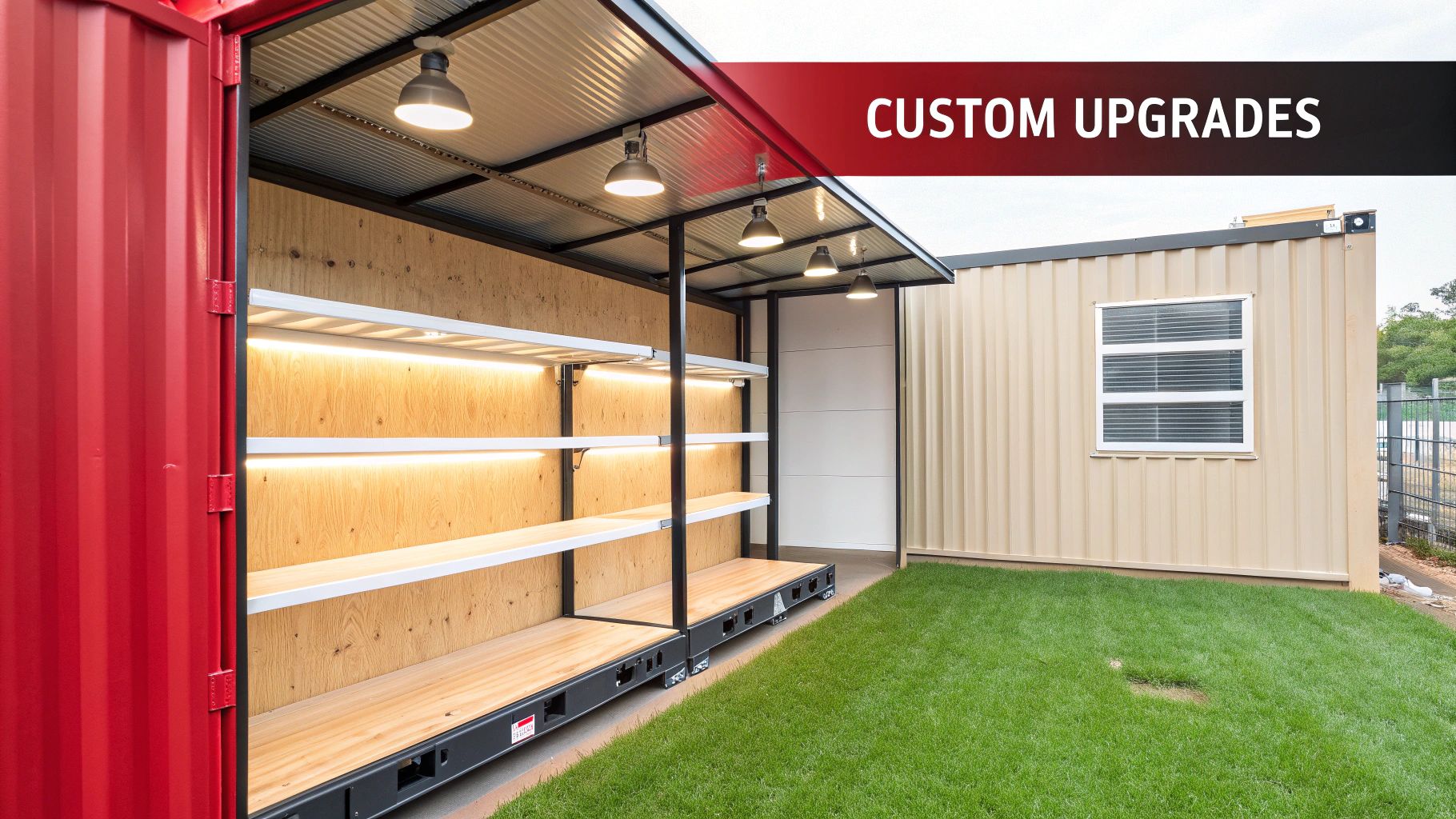
A standard storage container is a fantastic blank canvas. But its real value comes to life with a few smart customisations, transforming it from a simple steel box into a highly functional and secure space that’s built for your needs. A couple of well-chosen accessories can make all the difference.
Security is almost always the first thing on your mind. While the container’s natural strength is a huge plus, upgrading the locking mechanism is a non-negotiable step. A simple padlock just won't cut it when you're storing valuable goods.
This is where a welded lockbox comes into its own. This tough steel housing fits over your padlock, shielding it from bolt cutters and angle grinders and making a break-in far more difficult. When you pair it with a heavy-duty, industrial-grade padlock, you’ve got a seriously formidable security barrier. Our guide on effective methods for locking shipping containers dives deeper into this essential upgrade.
Beyond just locking it up, you need to make the container practical for day-to-day use. Two of the most common headaches are condensation and organisation, but luckily, simple modifications can solve both.
Condensation control is vital to protect what’s inside from 'container rain'—that annoying moisture that builds up and drips from the ceiling. Simple fixes include fitting weatherproof louvre vents to get some air flowing through. For more sensitive contents, applying a specialised anti-condensation coating to the interior roof creates a robust moisture barrier.
Good organisation is all about maximising the space you have. Instead of just stacking boxes on the floor, installing a shelving system lets you use the container's full height. Whether you choose free-standing heavy-duty racks or bespoke bracket-based shelving, you'll dramatically improve how you access and sort your gear.
Think of customisations as an investment in your container's usability. A few hundred pounds spent on a lockbox, vents, or shelving can prevent thousands of pounds worth of damage or loss, ensuring your container serves its purpose efficiently for years.
The demand for functional spaces like these is only growing. The UK self-storage industry, which increasingly uses container-based solutions, now turns over approximately £1.2 billion. This growth is driven by a wide range of people, with 24% of users actually running a business from their unit, which really highlights the need for these kinds of customisations.
The humble shipping container is getting a serious upgrade. We're moving far beyond just thinking of them as simple steel boxes. The next wave in container storage is all about smart technology and sustainability, turning these passive shells into active, efficient assets. This isn't just a fleeting trend; it’s a fundamental shift in what you can—and should—expect from your investment.
Innovations in smart tech are making containers more secure and easier to manage than ever before. Imagine getting an alert on your phone if a container door is tampered with, or being able to grant a delivery driver temporary digital access from miles away. Features like these, powered by IoT sensors and smart locks, are quickly moving from niche upgrades to mainstream expectations.
Alongside this tech boom, there's a huge push towards sustainability. More and more, buyers are looking for green solutions that cut down on their environmental impact and their long-term running costs. This has sparked a surge in clever, eco-friendly customisations.
Some of the most popular sustainable upgrades include:
The modern storage container is becoming a more intelligent and responsible choice. By considering these future-focused options, you ensure your container not only meets today’s needs but is also aligned with future standards in efficiency and environmental responsibility.
This forward-thinking approach is already taking hold across the UK's self-storage sector. A recent 7.2% jump in available space points to massive investment, with operators rushing to adopt new technologies. In just one year, the use of artificial intelligence for managing logistics and pricing has shot up from 25% to 68%, showing just how much digitalisation is shaping decisions around buying storage containers. You can explore more data on these industry shifts and see what's driving this growth.
Here are some of the most common questions we get asked about buying and owning a storage container in the UK. We’ve put together some clear, practical answers to help you get the details sorted and buy with confidence.
The short answer is: usually not. For most people using a single container for domestic storage, it’s treated as a temporary structure and planning permission isn't needed.
However, this isn’t a one-size-fits-all rule. Your local council has the final say, and they might take a closer look depending on the container's size, where it’s going to sit (especially if it’s visible from the road), and what you plan to use it for. Using it for a business, for example, is more likely to need a formal nod than just storing personal bits and bobs.
The best advice? Always have a quick chat with your local planning authority before you commit.
A quick, informal enquiry with your local council's planning department can save you from significant headaches later. It’s a five-minute job that provides complete peace of mind before the lorry arrives.
A brand new, ‘one-trip’ container is built like a tank. Made from tough corten steel, it can easily last over 25 years with just a bit of basic care. As the name suggests, its only sea voyage is the one from the factory to the UK, so it arrives in near-perfect condition.
A used container’s lifespan really depends on the life it's had before you buy it. Even so, a well-looked-after second-hand unit can still give you 10-15 years of solid, weatherproof storage. A regular check of the door seals and touching up any surface rust as it appears will make a huge difference in how long it serves you.
Ah, container rain. It’s that annoying condensation that forms when warm, moist air inside the container hits the cold steel walls and ceiling. Getting this under control is vital if you want to keep your belongings free from damp and mould.
The simplest and most effective fix is to make sure you have good ventilation. Popping in a few weatherproof vents gets the air moving, which helps balance the temperature inside with the outside. If you’re storing things that are particularly sensitive to moisture, you could also look at:
At Quickfit Container Accessories, we stock all the essential bits you need to secure, maintain, and kit out your container. Explore our full range of container solutions and get your unit performing perfectly.
{"one"=>"Select 2 or 3 items to compare", "other"=>"{{ count }} of 3 items selected"}