
Website Orders To Northern Ireland & Republic Of Ireland and USA Now Available!


A seal for container isn't just a lock. Think of it as a single-use, tamper-evident signature for your cargo's journey, guaranteeing that your container hasn't been opened by anyone without authorisation. Its main job isn't to stop someone from getting in, but to provide a crystal-clear, visual sign that they did.
Forget the idea of a heavy-duty physical barrier; a container seal is more like a sophisticated security tag. Whilst a padlock is there to prevent entry, a seal’s real purpose is to reveal it.
Every seal has a unique serial number, which gets logged in the shipping documents. If that seal is broken upon arrival, or if the number doesn't match the paperwork, you have immediate proof that something’s wrong. This simple principle is the bedrock of supply chain security.
This small device plays a huge role in everything from global commerce to local self-storage. For a logistics manager, it’s the lynchpin of cargo integrity, ensuring high-value goods arrive untouched. For a self-storage operator, it offers clients undeniable peace of mind that their belongings are safe and sound.
A seal’s importance really boils down to three key functions that work together to protect your assets and keep things moving smoothly:
The economic stakes are massive. To put it in perspective, the UK's shipping industry moves billions of pounds worth of goods every year. That includes £64.1 billion in food and beverages and £27.1 billion in medicines, all of which rely on container seals for security. It really shows just how indispensable these little devices are in protecting national supply chains.
Ultimately, picking the right seal for container is a critical business decision that directly impacts safety, compliance, and your bottom line. It’s a small component with a massive responsibility.
Beyond just preventing access, the right seal also protects contents from harsh environments; understanding robust standards like NEMA 4X ratings for industrial enclosures can be crucial. This protective quality is often supported by high-quality shipping container door gasket seals, which work hand-in-hand with security seals to keep everything safe and dry.
When it comes to securing a container, a one-size-fits-all approach just won't cut it. Not all seals are created equal; each type is designed for a specific job, offering different levels of security to match the value and risk profile of your cargo. Understanding these differences is the first step towards properly protecting your assets.
The main categories you'll run into are bolt seals, cable seals, bar seals, and simpler plastic seals. Each plays a distinct role in the security chain, from high-stakes international shipping to low-risk domestic storage. The real key is matching the seal’s capabilities to the journey your container is about to take.
This visual below breaks down the three fundamental functions every container seal must fulfil: security, protection, and compliance.
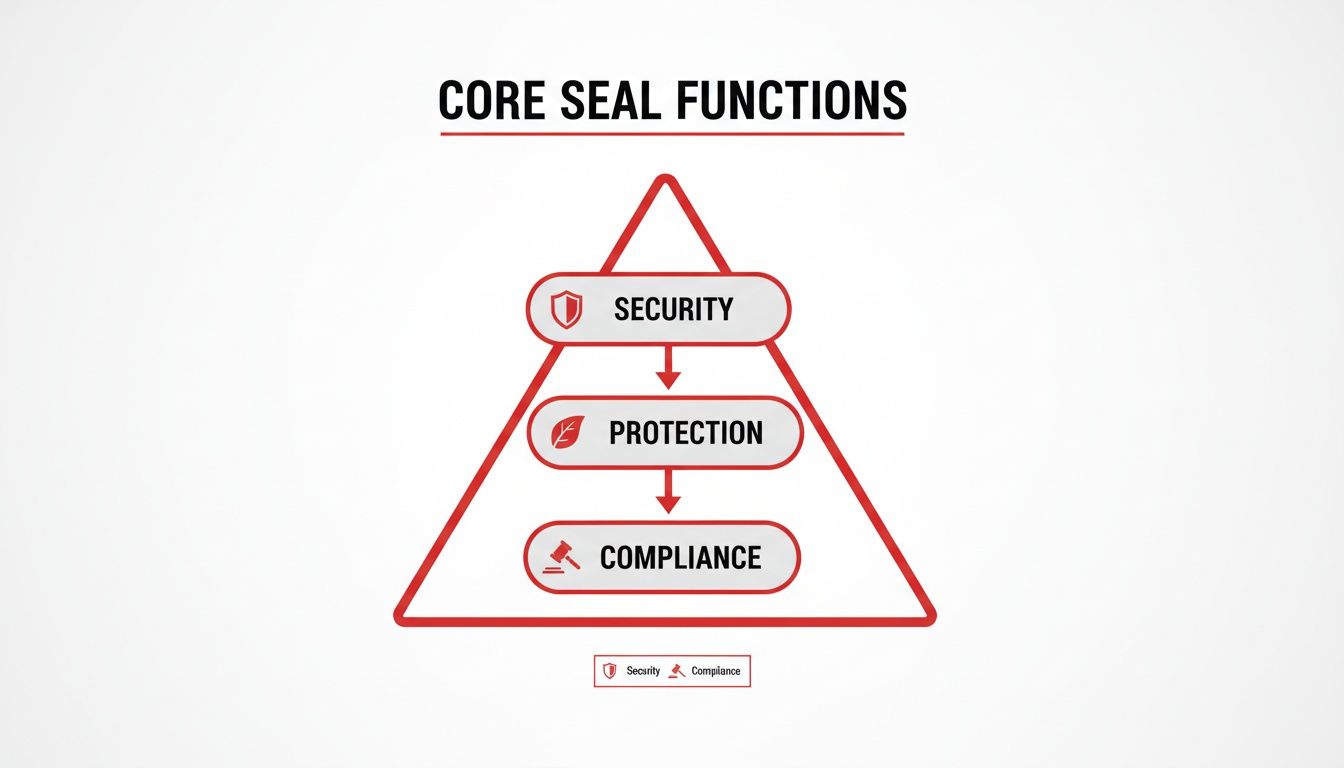
As the diagram shows, these core duties form a kind of hierarchy of needs for your cargo. It all starts with robust security against tampering and ends with meeting the essential shipping regulations that keep global trade moving.
If your cargo is crossing international borders, a high-security bolt seal is non-negotiable. These are the heavyweights of the sealing world, built from a steel pin and a locking bush that are both uniquely numbered. To be compliant with ISO 17712, they must be classified as 'H' for High Security, which means they need serious tools like bolt cutters for removal.
A standout feature of bolt seals is their anti-spin mechanism. This clever design prevents a common tampering method where a thief tries to spin the pin out of the locking body with a drill. It’s a simple but incredibly effective security boost.
Their tough design makes them the gold standard for freight forwarders and logistics companies. If you're shipping valuable goods overseas, you need the peace of mind that only a quality bolt seal can offer.
Cable seals strike a fantastic balance between security and flexibility. They consist of a high-tensile steel cable threaded through a locking body. Once you pull it tight, the cable can't be retracted, creating a super-secure loop.
Their biggest advantage is just how adaptable they are. You can use them on containers, of course, but they're also perfect for securing lorry doors, rail wagons, and even valves or hatches. The cable length can vary, allowing you to secure locking mechanisms that are spaced awkwardly apart.
For maximum physical deterrence, bar seals are an excellent choice. This type of seal is a solid steel bar that locks across the central locking rods of a container's doors. It acts as both a seal and a heavy-duty lock, presenting a formidable barrier against forced entry.
Whilst they are more expensive and a bit more cumbersome than other seals, their sheer strength is unmatched for high-value or sensitive cargo stored in vulnerable locations.
At the other end of the security spectrum, you'll find plastic seals. These aren't designed for high security but purely for tamper-evidence. They are easily broken by hand or with a simple tool, but they provide a clear visual sign if a container has been opened.
They are ideal for low-risk, domestic jobs like securing roll cages in a warehouse or sealing fire extinguishers after an inspection. Their low cost and ease of use make them a practical choice when the main goal is simply to know if something has been accessed.
To help you visualise the differences, here's a quick comparison of the common seal types and where they fit best.
| Seal Type | Security Level | Primary Use Case | Key Features |
|---|---|---|---|
| Bolt Seal | High | International shipping, high-value cargo | ISO 17712 'H' compliant, requires bolt cutters for removal, anti-spin feature |
| Cable Seal | Medium to High | Lorry doors, rail cars, versatile applications | Adjustable steel cable, tamper-evident locking body, flexible length |
| Bar Seal | Very High | High-risk storage, stationary containers | Heavy-duty steel bar, acts as a physical lock and seal, maximum deterrence |
| Plastic Seal | Low (Indicative) | Internal logistics, tamper-evidence | Low cost, easily broken by hand, provides clear visual sign of entry |
This table should give you a clear starting point for matching the right seal to your specific security needs, ensuring your cargo is protected appropriately for its journey or storage conditions.
When you start looking into container seals, you’ll quickly run into a key international standard: ISO 17712. This isn't just a bit of technical jargon; it's the global benchmark for mechanical freight container seals. Think of it as the official rulebook that separates a simple tag from a genuine security device, ensuring a consistent level of quality and security around the world.
Compliance with ISO 17712 is non-negotiable for international shipping. It’s your guarantee that a seal for container has been properly manufactured and tested to withstand serious force and show obvious signs of tampering. Without this certification, shipments can hit major roadblocks like long delays, extra inspections, or even outright rejection at ports—all of which lead to expensive disruptions.
The standard gives us a clear, tiered system that classifies seals based on their physical strength. This makes it easy for shippers, carriers, and customs officials to know the security level of a seal at a glance.
The standard breaks seals down into three main categories. Each one serves a different purpose and offers a distinct level of security, so choosing the right one is vital for both compliance and protecting your goods.
(I) for Indicative Seals: These are the lightest-duty seals, usually made from plastic. Their main job is to show evidence of tampering, not to act as a strong physical barrier. They can be snapped off by hand or cut with a simple tool, which makes them fine for low-risk, domestic shipments where you just need to know if a container has been opened.
(S) for Security Seals: A definite step up from indicative seals, these are made from tougher materials like metal or heavy-duty plastic and offer a bit more security. You’ll need tools to remove them, and they are designed to put up a limited fight against intrusion.
(H) for High-Security Seals: This is the top tier and the mandatory choice for most international freight. 'H' class seals, like bolt seals and heavy-duty cable seals, are built from hardened steel. They have to pass a series of tough tensile, shear, and impact tests and can only be removed with heavy-duty tools like bolt cutters.
For any container crossing international borders, an ISO 17712 'H' class seal isn't just a good idea—it's a requirement. This classification ensures the seal meets the strict demands of global customs programmes like the US Customs-Trade Partnership Against Terrorism (C-TPAT).
This requirement highlights just how crucial a tough seal for container is for maintaining the integrity of the global supply chain, especially as freight volumes continue to climb. In the first quarter of 2025, UK ports saw a massive surge in activity, with container tonnage jumping by 13% to 18.2 million tonnes compared to the year before. This growth, particularly the 16% rise at the Port of London, shows the sheer volume of goods that rely on compliant, high-security seals to prevent tampering and theft. You can explore more data on UK port freight activity and see its impact on the shipping industry for yourself.
Choosing the right seal for container security doesn't have to be a headache. It's a practical decision that boils down to a few key questions about your cargo and its journey. By thinking through these factors, you can find the perfect balance between tough security, compliance, and cost—without paying for features you simply don’t need.
The process kicks off by looking at three critical areas: what your goods are worth, the regulations you have to meet, and the real-world risks your container will actually face. After all, a construction manager securing an on-site storage unit has very different needs from a freight forwarder shipping high-value electronics across the globe.
Let's break this down into simple, actionable steps.
First things first: be realistic about what you're protecting. Is your container packed with low-value bulk materials, or is it full of irreplaceable, high-value electronics? The more valuable the contents, the beefier your security needs to be.
This isn't just about the financial cost of the goods, either. Think about the knock-on effects. Would losing the shipment cause massive operational delays or damage your company's reputation?
Use these points to get a handle on your risk level:
Next, you need to map out the container's entire journey. A container sitting still in a secure yard faces far fewer threats than one passing through multiple ports and transport hubs. The more hands a container passes through, the more opportunities there are for someone to try their luck.
The environment it travels through also plays a huge role in choosing the right material. A seal getting blasted with saltwater spray on a long sea voyage needs to be way more corrosion-resistant than one used for dry, indoor storage.
Think of your seal's material as its armour against the elements. Hardened steel offers brute strength for security, whilst specialised plastics or coatings provide essential resistance to rust and degradation, ensuring the seal remains effective throughout its journey.
For long-haul sea freight, always go for seals made from high-grade steel with anti-corrosion properties. For domestic trips or short-term use in dry conditions, a standard steel or durable plastic seal will likely do the job just fine. This practical approach ensures you get the right level of protection without paying for material specs you don't need. Matching the seal to the environment is key to its long-term reliability.
Even the most high-tech seal for container security is completely useless if it’s not put on correctly. Proper installation isn’t just a formality; it’s a critical, hands-on process that turns a simple bit of metal and plastic into a genuine security device. Think of it as the final, essential step in protecting your cargo.
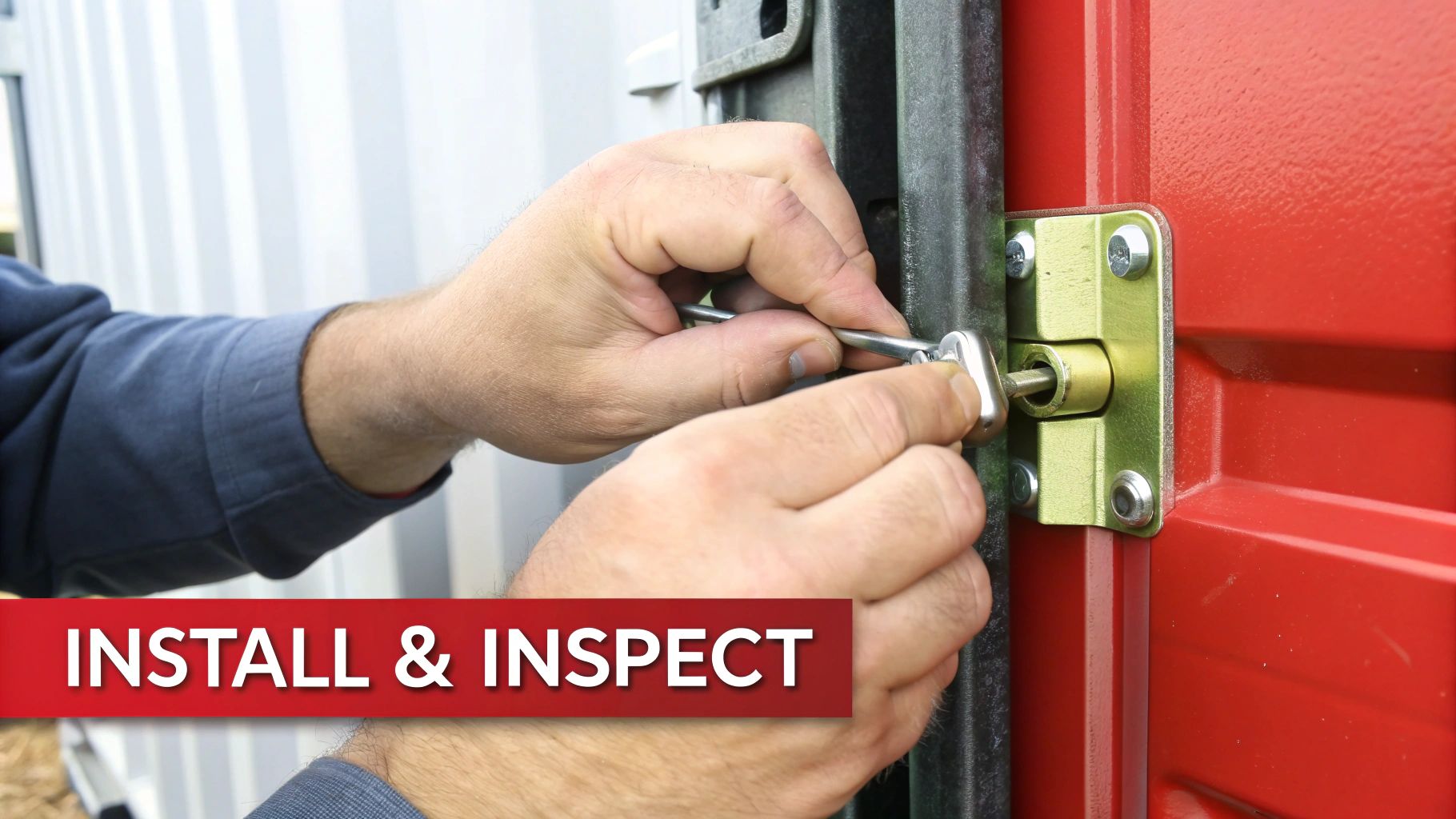
The whole thing hinges on a precise sequence. Get it right, and the seal engages properly with its unique number recorded. A rushed or sloppy job, however, leaves your goods wide open to theft or tampering, defeating the whole purpose of having a seal in the first place.
To guarantee a secure fit, follow these steps meticulously every single time. This simple routine is your first line of defence.
A common—and dangerous—mistake is skipping the "click" and tug test. Without that physical confirmation, the seal might only look locked, making it incredibly easy for someone to pop it off and replace it without leaving a single trace of tampering.
Removing a high-security seal requires just as much care as putting one on. This isn't just about getting into the container; it's about performing one last security check.
For 'H' class bolt and cable seals, there’s no easy way around it: you’ll need bolt cutters. Their tough design is deliberate, making it impossible to remove them without the right tools and a bit of force. But before you cut, always do a final inspection.
This final check is your last opportunity to confirm your shipment’s integrity before the chain of custody is broken. Proper removal proves that your security measures held strong for the entire journey.
A high-quality seal for container security is a fantastic starting point, but genuine protection comes from thinking in layers. Real peace of mind is achieved when a seal is just one part of a broader, integrated security system. This holistic approach transforms your container from a simple box into a secure vault, creating multiple barriers against anyone trying to get in.
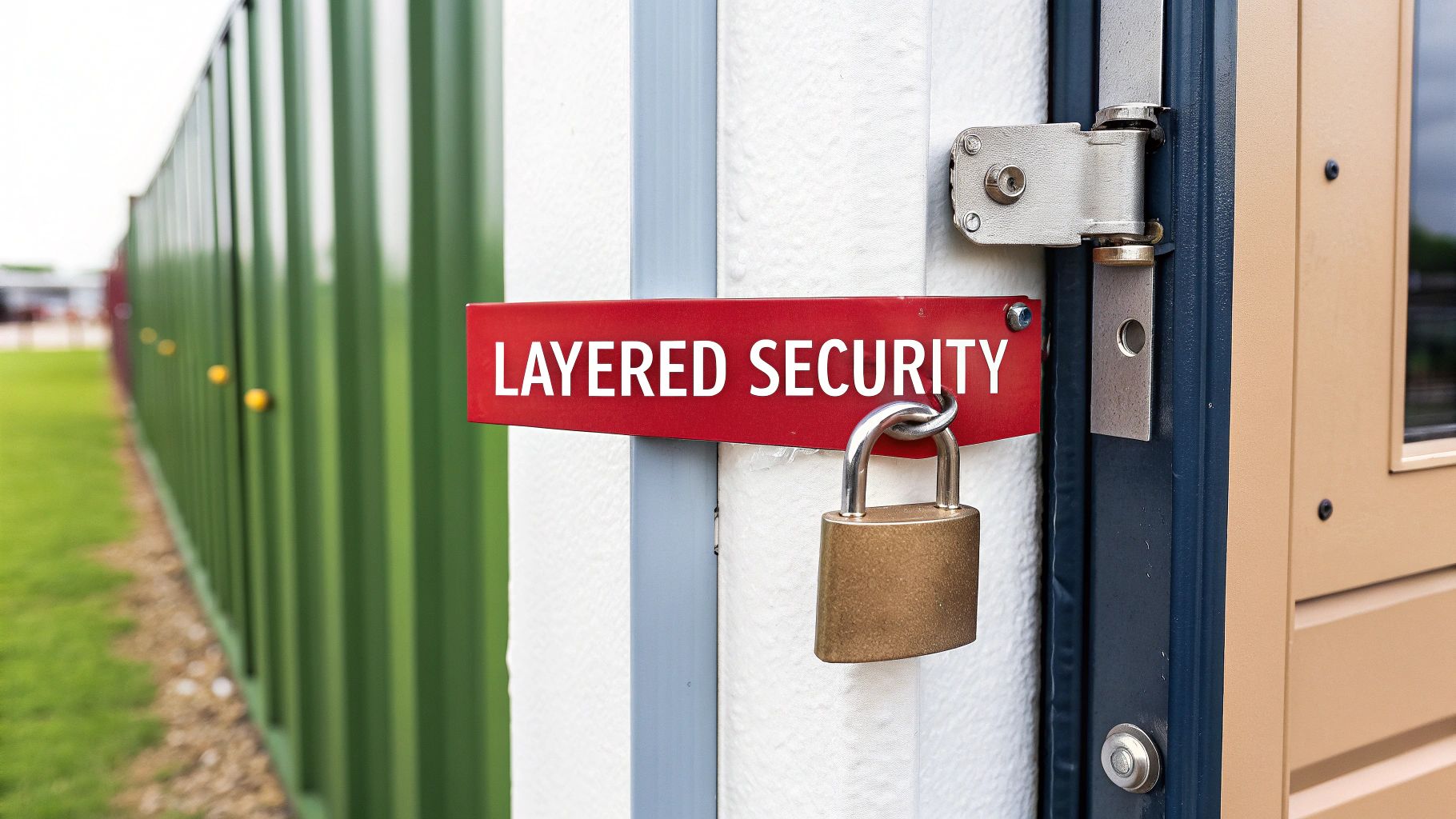
The idea is simple: protect the seal itself. A determined thief with a good pair of bolt cutters can eventually defeat even an ISO-certified bolt seal if given enough time. But by adding other accessories into the mix, you build a system where each component reinforces the others. This makes tampering significantly harder and much more time-consuming.
The most effective way to ramp up your container's security is by protecting its most vulnerable points. This is where extra accessories come in, working hand-in-hand with your chosen seal.
A truly comprehensive approach combines several key elements:
Combining a high-security bolt seal with a shrouded padlock inside a lockbox creates a formidable, multi-layered defence. This system forces a potential intruder to defeat three separate security measures, drastically increasing the time and noise involved and making them far more likely to simply give up.
Of course, a truly secure system extends beyond just physical measures; it also includes robust regulatory compliance. For instance, correctly understanding HS codes for trade compliance is crucial for accurate goods classification, preventing customs delays and ensuring smooth international shipments. For a deeper dive into creating a layered defence, explore our detailed guide on shipping container security.
When you're dealing with the security of a seal for container shipments or on-site storage, a few questions pop up time and time again. Getting straight answers to these common queries helps you manage your cargo with confidence.
Absolutely not, and that’s by design. High-security container seals, especially the bolt and cable types we supply, are strictly single-use. This is their most important feature.
Once you correctly remove a seal, it’s destroyed and can't be put back together. Any attempt to glue it, weld it, or otherwise fake it would be immediately obvious. This one-time-use design is your guarantee of tamper evidence, ensuring you know if anyone has tried to access your container.
If customs officials decide they need to inspect your container, they will break the original seal. Don't panic – this is a completely standard part of the process.
After they've finished their inspection, they are required to apply a new, official customs seal. They will then formally document the change on the shipping paperwork, noting both the old seal number and the new one. This ensures the chain of custody remains clear, secure, and fully traceable.
For a container that’s staying put on your property for storage, an ISO-certified 'H' class seal is probably overkill. Your security needs are different from those for international shipping, but they are still important.
A strong cable seal, or even a tough indicative plastic seal, is often the perfect fit. Pair it with a high-quality padlock and a steel lockbox, and you’ve created a layered security system that’s both effective and affordable for stationary containers.
This approach gives you a powerful physical deterrent and real peace of mind without the expense of complying with global transit standards you don't need.
No, the serial number on a seal has nothing to do with its physical strength. That unique number is purely for identification and tracking. Think of it like a registration plate on a car, not an indicator of its engine power.
A seal's security level is determined by its official ISO 17712 classification (like 'H' for High Security), the materials it's made from, and its physical design—not the number stamped on it.
At Quickfit Container Accessories, we provide the high-quality seals and security devices you need to protect your assets. Explore our full range of container solutions at https://www.quickfitcontaineraccessories.co.uk.
{"one"=>"Select 2 or 3 items to compare", "other"=>"{{ count }} of 3 items selected"}