
Website Orders To Northern Ireland & Republic Of Ireland and USA Now Available!


Think of global trade as a giant, world-spanning set of building blocks. The simple genius behind it all? Twist locks. These essential fittings are the standardised connectors that allow shipping containers to be securely fastened to ships, lorries, trains, and even stacked one on top of the other. Twist locks are the unsung heroes of the supply chain, quietly ensuring that cargo stays safe and secure on its journey.
At its core, a twist lock is a specialised connector made to fit perfectly into the corner castings found on every standard ISO shipping container. It’s a bit like a key fitting into a lock. When a container is lowered into place, the cone-shaped head of the twist lock slots into the hollow corner casting. A simple 90-degree turn of a lever locks it firmly in place, stopping any movement, whether up, down, or sideways.
This clever yet straightforward mechanism is the very backbone of intermodal transport. It’s what allows a single container to move seamlessly from a massive cargo ship, to a freight train, and finally onto a lorry for the last leg of its journey, all without ever being unloaded. This standardisation is what makes the global logistics network so incredibly efficient.
Trying to stack containers without twist locks would be like building a tower with slippery, smooth-sided bricks—unstable and extremely dangerous. These fittings provide the critical structural connection that turns a stack of individual boxes into one solid, rigid unit. This brings a few major benefits:
A single twist lock is engineered to handle incredible forces, often rated with a minimum breaking load of around 500 kN in tension—that’s the equivalent of holding over 50 tonnes. This immense strength is what keeps multi-storey container stacks stable on the world's biggest ships.
To get a better handle on how they're used, it helps to know the main types. You can find a more in-depth explanation in our complete guide to different twist lock types, but here’s a quick overview to get you started.
Here's a quick look at the main categories of twist locks to help you understand which type is best for different jobs.
| Twist Lock Type | Primary Use | Ideal For |
|---|---|---|
| Manual | Securing containers to each other or to a fixed base | Static stacking, construction sites, DIY projects |
| Semi-Automatic | Speeding up loading/unloading on ships and lorries | Ports, haulage companies, logistics hubs |
| Automatic | High-volume, automated crane operations | Large container terminals seeking maximum efficiency |
| Chassis Locks | Securing containers to lorry or trailer chassis | Road transport and haulage |
Each type is designed for a specific task, from simple static connections to high-speed port operations, ensuring there's a reliable solution for every stage of a container's journey.
Not all twist locks are created equal. While they all do the same basic job—securing a shipping container—the one you need depends entirely on the situation. Are you stacking containers for a self-storage yard, or are you part of the high-speed ballet at a major UK port? Getting the right type is crucial for both safety and getting the job done efficiently.
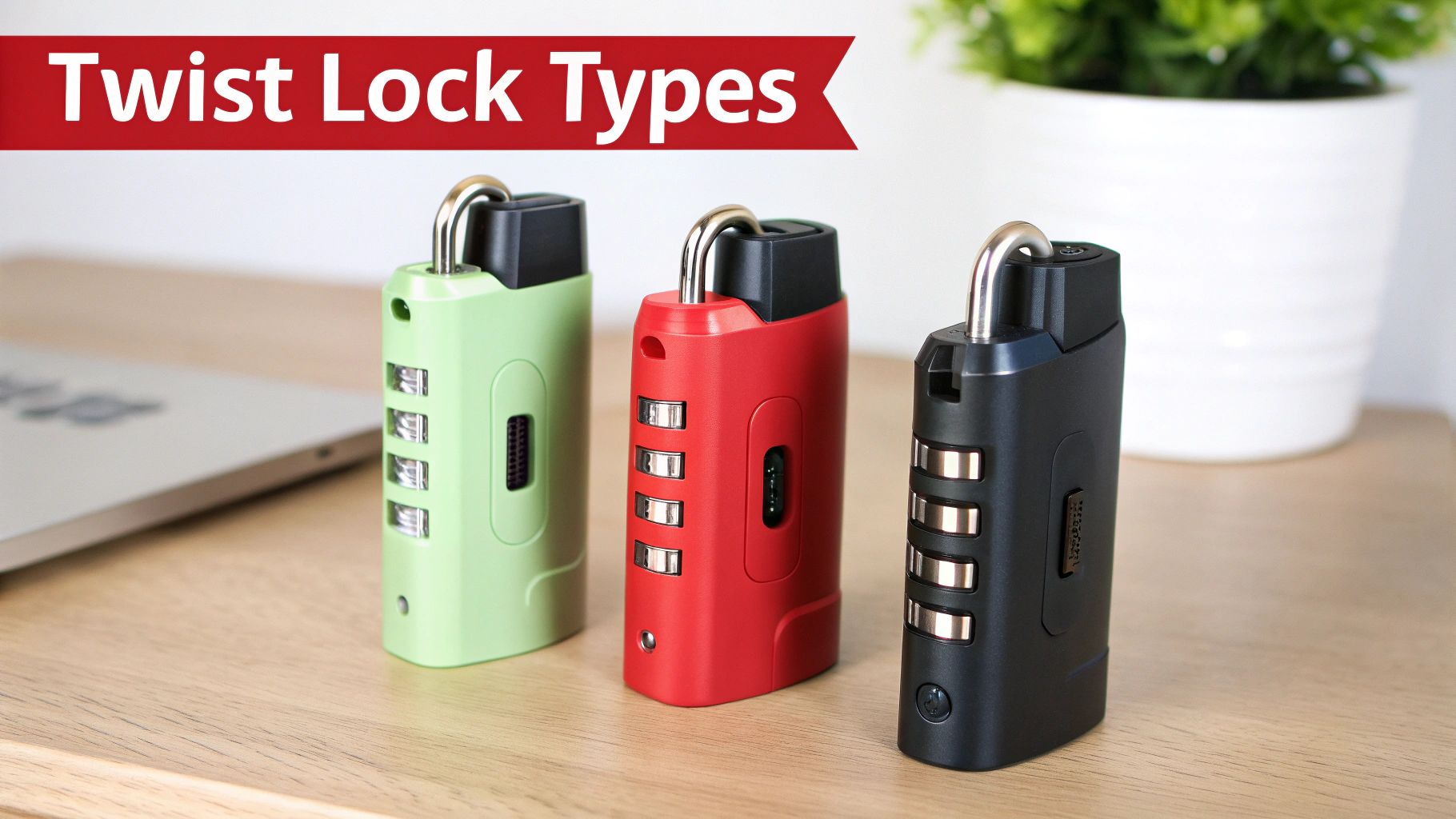
The real difference between twist locks comes down to how they operate. This single factor impacts everything from labour costs and turnaround times to the safety of the workers connecting and disconnecting the containers. Let's break down the main players.
First up is the most common and straightforward type: the manual twist lock. Just like the name says, it needs a person to physically turn a handle or lever by 90 degrees to lock or unlock the mechanism. Simple as that.
These are the go-to choice for static applications where speed isn't the top priority. Think of a construction site manager stacking container offices or a self-storage operator lining up secure units. They're tough, cheap, and provide a rock-solid connection once they're engaged.
Moving up the ladder, we find semi-automatic twist locks. These are a total game-changer in places where time is money, like busy ports and logistics hubs.
Here's how they work: a crane operator lowers a container, and its sheer weight automatically engages the lock. Clever, right? But to unlock it, a dockworker still needs to manually pull a lanyard or release wire. This design massively speeds up the loading process while keeping the unlocking step deliberate and safe.
The semi-automatic design is a brilliant compromise. It means workers don't have to be perched on top of a stack during the risky loading phase, which boosts safety and shaves precious seconds off crane time for every single lift.
For a terminal manager at a bustling port like Felixstowe, making the switch from manual to semi-automatic locks can mean a huge jump in the number of containers moved per hour, hitting the bottom line directly.
At the very top of twist lock tech are the fully automatic twist locks. These are built for maximum speed in the world’s biggest and most automated container terminals.
With these, both locking and unlocking are triggered by the weight and movement of the crane's spreader. There’s no manual intervention needed at all, which allows for the fastest possible turnaround. A crane can lift a container and the locks pop open automatically; when it places one, they engage instantly on contact. This system is what makes the high throughput demanded by modern mega-ships possible.
To help you see the differences at a glance, the table below compares these main operational types and shows where each one really shines.
| Feature | Manual Twist Lock | Semi-Automatic Twist Lock | Automatic Twist Lock |
|---|---|---|---|
| Mechanism | Fully manual lever operation | Automatic locking, manual unlocking | Fully automatic locking & unlocking |
| Speed | Slowest; requires direct access | Fast loading, manual release | Fastest; no manual intervention needed |
| Labour Cost | High (requires manual work for both actions) | Medium (only requires unlocking labour) | Lowest (minimal human involvement) |
| Ideal Setting | Static stacks, construction sites, DIY | Busy ports, freight yards, ship decks | Large, highly automated container terminals |
| Cost | Lowest | Moderate | Highest |
This comparison makes it clear that the right choice depends heavily on the scale and pace of your operations, balancing initial cost against long-term efficiency gains.
Beyond these three main types, there are also a few specialised fittings designed for unique situations. Chassis twist locks, for example, are permanently built into the frame of a lorry or trailer, made specifically for securing containers during road transport.
Another important variation is the recessed or flush twist lock. You'll find these in places where a completely flat top surface is needed after a container is removed, like on a multi-purpose ship deck or a flexible factory floor. When not in use, they sit flush with the surface, getting rid of trip hazards and allowing other cargo or machinery to roll right over them. It's a smart design that offers security when you need it and stays out of the way when you don't.
Step away from the factory floor and the engineer’s blueprint for a moment. The real test for twist lock containers is in the relentless, high-stakes world of a modern UK port. Picture the Port of Felixstowe or the London Gateway during peak hours—a massive, perfectly timed ballet of cranes, ships, and lorries shifting thousands of containers a day. In this complex dance, twist locks aren't just bits of metal; they are the linchpin holding the entire operation together.
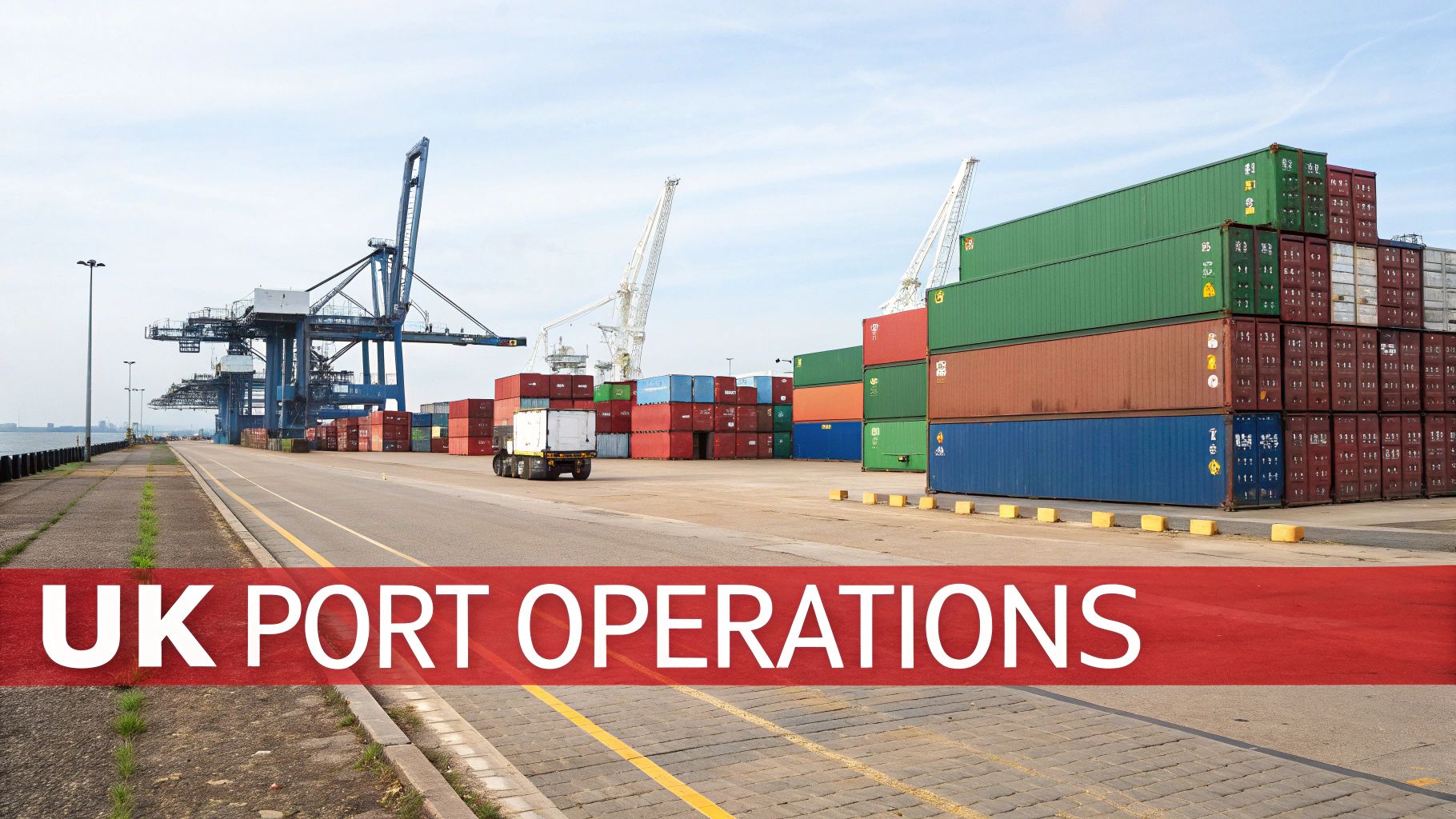
The efficiency of these ports lives and dies by the reliability of their equipment. When a container ship docks, every minute it sits idle costs a fortune. Speed is everything—how fast containers can be unloaded, stacked in the yard, and then loaded onto lorries or trains. This is where the choice between manual, semi-automatic, and automatic twist locks becomes a crucial operational decision, one that directly shapes throughput and profitability.
UK ports are handling more cargo than ever, pushing their infrastructure and equipment to the limit. The latest figures tell the story perfectly. In the first quarter of this year, UK container tonnage shot up by 13% to a staggering 18.2 million tonnes compared to the same period last year. This surge makes it crystal clear just how vital twist lock containers are for securing this ever-growing volume of goods. Ports like London were at the forefront of this boom, with a 16% increase to 5.6 million tonnes, making dependable securing gear absolutely indispensable. You can dig into the full data on port freight statistics from the UK Government.
All this extra volume means container stacks in port yards are getting taller, and the strain on each individual twist lock is immense. A single failure could trigger a stack collapse, resulting in millions of pounds in damages, crippling operational delays, and—most importantly—a grave risk to worker safety. For port operators, the structural integrity that comes with high-quality, certified twist locks is simply non-negotiable.
To a port manager, a twist lock isn't just a component; it's a promise. It’s a promise that a container stack will hold steady through a winter storm, that cargo worth hundreds of thousands of pounds is safe, and that tight shipping schedules will be met without a hitch.
The sheer pace of port operations leaves no room for equipment shortages or delays. When a critical component like a twist lock fails or a new batch of fittings is needed on the double, waiting for an international delivery just isn't an option. One delayed lorry or a ship held at berth for want of the right securing equipment can set off a domino effect, throwing schedules into chaos across the entire supply chain.
This is where the value of a dependable, UK-based supplier for container accessories really shines. Logistics firms and port operators need instant access to a full stock of twist locks and other essential fittings to avoid costly downtime.
At the end of the day, the humble twist lock is a cornerstone of the UK’s economic strength. By making sure containers are stacked, stored, and transported safely, they allow our ports to run at the incredible speed needed to keep Britain connected to the globe. For more on best practices, check out our detailed guide on safe and secure ways to stack shipping containers.
In the world of shipping and logistics, safety isn’t just a nice-to-have—it’s a non-negotiable rule, enforced by a tight web of international standards. Every single twist lock container connection, whether it’s on a ship’s deck battling the waves or on a lorry chassis navigating the motorways, is governed by strict regulations designed to prevent catastrophic failure. Getting these standards right is fundamental for anyone responsible for moving or stacking containers.
These rules aren’t just red tape. They’re the product of decades of engineering, real-world testing, and unfortunately, learning from past disasters. They create a universal language for manufacturers and operators, ensuring a twist lock made in one part of the world will work perfectly with a container from another. This global consistency is the bedrock of the entire intermodal transport system.
The most critical standard in the twist lock container world is ISO 1161: Specification of corner fittings for series 1 freight containers. This document is the bible for corner castings, laying out the exact dimensions, material strength, and tolerances for every ISO-compliant container. Think of the corner casting as the lock, and the twist lock as the key—ISO 1161 is the master blueprint that ensures the key always fits.
By standardising the corner casting, ISO 1161 guarantees that any certified twist lock can engage properly. This creates a secure connection that can handle the incredible forces it will face, from shear (side-to-side jolts) and tension (lifting) to compression (the immense weight of stacking).
Beyond the fittings themselves, other organisations set the rules for safe operation:
A non-certified twist lock isn't just a risk; it's a gamble with potentially devastating stakes. Using unverified parts can lead to equipment failure and cargo loss, but it can also void insurance policies, leaving a company on the hook for millions in damages. Full compliance is the only way to operate safely and responsibly.
Trying to save a few pounds on a non-compliant or uncertified twist lock might seem tempting, but the potential fallout is terrifying. A fitting that doesn't meet ISO standards might not lock in correctly, leaving a multi-tonne container dangerously unsecured. The consequences can be disastrous.
Picture a stack of containers on a cargo ship crossing the rough North Atlantic. If just one substandard twist lock fails from metal fatigue or a manufacturing defect, it could set off a chain reaction, bringing an entire stack crashing down. This doesn't just destroy cargo; it puts the crew in grave danger and can even threaten the stability of the entire vessel.
The same goes for road transport. A faulty chassis lock could let a container shift or even detach from a lorry during a hard brake, creating a lethal hazard for other drivers. The risks are simply too high to justify cutting corners. Sourcing high-quality, fully certified fittings isn't just a recommendation—it's the only responsible way to ensure every connection is safe, secure, and legally compliant.
A twist lock is only as good as its installation and upkeep. Moving from theory to practice, a few key procedures can mean the difference between a secure load and a major safety hazard. Whether you’re managing a fleet or just a single DIY project, these best practices ensure your twist locks operate safely and reliably for years to come.
Proper installation starts with a clean surface. Before you even think about engaging a lock, make sure both the container’s corner casting and the twist lock’s mounting point are free of debris. Any dirt, rust, or old grease can stop the lock from seating correctly, compromising its strength right from the start.
Once everything is aligned, insert the lock and turn the handle. This is the critical part: you need to confirm it's fully engaged. The handle should rotate a complete 90 degrees to its locked position. A partial turn isn’t good enough – it means the lock is unsecured and poses a serious risk.
Regular inspections are the bedrock of good twist lock maintenance. They stop small issues from turning into catastrophic failures. Honestly, a few minutes of proactive checks are far cheaper than dealing with the aftermath of a failed fitting.
Your routine inspection should be thorough, covering every visible and moving part. Here’s a practical checklist to get you started:
To prevent a lock from seizing up—especially in harsh marine or industrial environments—a disciplined cleaning and lubrication schedule is non-negotiable. This simple task can drastically extend the service life of your twist locks.
Start by giving the lock a good clean with a wire brush to get rid of any built-up grime, salt, or flaking paint. A high-pressure washer can do the trick for stubborn dirt, but make sure you dry it thoroughly afterwards so you don’t trap moisture inside.
Once it's clean and dry, apply a high-quality, weather-resistant grease to all the moving parts. That includes the handle pivot and the internal locking mechanism. This not only keeps things moving smoothly but also creates a protective barrier against moisture and corrosive elements.
This kind of proactive maintenance is becoming more important than ever. The UK shipping container market is forecast to grow steadily over the next decade, driven by e-commerce and major port upgrades. That means the demand for reliable twist locks will only increase. Keeping these critical assets in top condition is absolutely key to safe and efficient intermodal transfers. You can learn more about the shipping container market forecast on futuremarketinsights.com.
Picking the perfect twist lock isn't a one-size-fits-all job; it’s about matching the right piece of kit to the problem you’re trying to solve. The best choice depends entirely on your specific needs, whether you're optimising a global supply chain or just anchoring a single container for a DIY conversion. By walking through a few common scenarios, you can make a smart decision that balances cost, speed, and safety.
Let's look at three different situations. Each person has a different goal, and because of that, a different twist lock is the ideal solution.
Imagine you're a logistics manager at a major UK shipping firm. Your world revolves around efficiency, turnaround times, and labour costs. In this high-volume, fast-paced environment, every single second saved during loading and unloading translates directly into profit.
For this kind of work, semi-automatic twist locks are the clear winner. Their clever design, which locks automatically under the container's own weight, drastically slashes crane time. While a dockworker still needs to manually release them, this system gives a massive boost to operational speed compared to fully manual options. If you're looking to make this efficiency upgrade, you can check out the specs of a semi-automatic twist lock stacking pin to see exactly how they work.
Now, picture yourself as a construction site manager responsible for stacking container offices and secure storage units. Your priorities are completely different. Here, the containers will be static for months on end, exposed to whatever the British weather throws at them. The speed of installation is far less critical than absolute durability and security.
In this case, a robust manual twist lock is the most sensible choice. These are the workhorses of the industry, providing a rock-solid, reliable connection that you know won’t be tampered with. They are incredibly cost-effective for semi-permanent structures and offer the peace of mind that comes with a simple, strong, and manually verified connection.
Finally, think about the homeowner taking on a container conversion project—maybe building a garden office or a workshop. The main concerns here are ease of installation and staying on budget. You need a secure fitting, but you certainly don't require industrial-grade speed or complex automation.
The bolt-on dovetail twist lock is an excellent solution for this user. It can be bolted directly onto a concrete foundation or a steel frame without needing any specialised welding skills. This makes it incredibly accessible for DIYers and provides a secure, straightforward way to permanently anchor the container.
This flowchart visualises the simple care protocol for any twist lock, guiding you from inspection to the correct maintenance action.
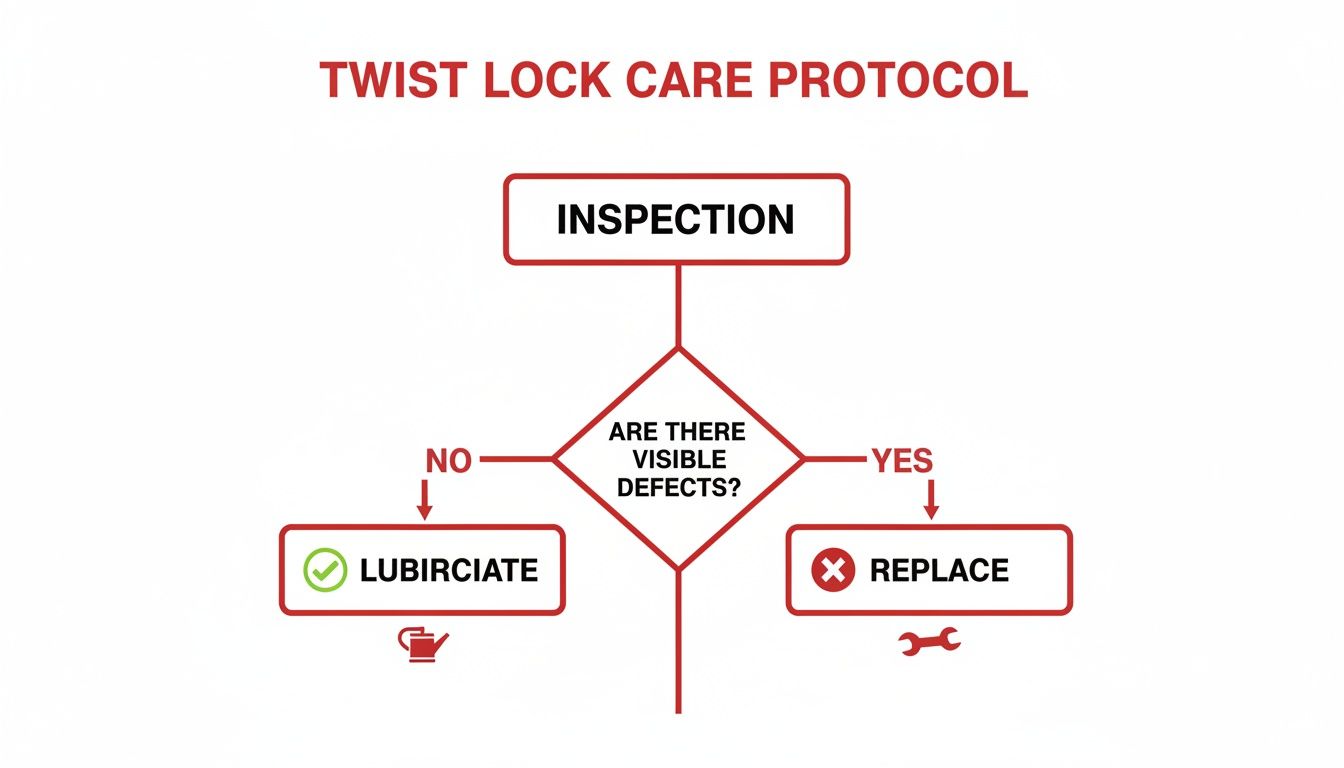
As the diagram shows, a quick visual check is always the first step in ensuring safety, leading to either routine lubrication or essential replacement. It’s that simple.
The need for versatile fittings is also clear in hybrid logistics. Just last year, UK ports handled a staggering 96.2 million tonnes of Ro-Ro (Roll-on/Roll-off) freight, which includes containerised trailers. This figure really underscores the complex mix of cargo types moving through our ports. An environment like that often requires both fixed and twistable locks to secure mixed loads efficiently.
Of course, getting the right twist lock is only half the battle. Effective ongoing management is crucial. This means following best practices for installation and maintenance, and adopting sound, comprehensive effective asset audit processes to ensure your equipment stays safe, compliant, and lasts for years to come.
Even after getting the basics down, you might still have a few specific questions floating around. That’s perfectly normal. We get asked about the finer details all the time, so let's tackle the most common ones to clear things up and help you move forward with your project.
Yes, and it’s what makes the whole system work. Almost every modern shipping container is built to the ISO 1161 standard, which dictates the exact dimensions for their corner castings. This is the secret sauce of global logistics.
This standardisation means any certified twist lock will fit perfectly with any compliant container, anywhere in the world. It’s the reason containers can be moved seamlessly from a ship in Rotterdam to a lorry in Birmingham or a train in Liverpool.
This depends on the specific design and materials, but a high-quality twist lock is an incredibly tough piece of kit, engineered to handle enormous forces. Any reputable lock will have a specific Safe Working Load (SWL) for both shear (sideways) and tension (lifting) forces.
A word of caution: always use certified locks and never exceed their stated SWL. Check the manufacturer’s specs to make sure the lock is right for your job. Pushing a lock past its limit isn't just risky; it can lead to catastrophic failure.
In a word, no. We strongly advise against welding the twist lock mechanism itself. The intense heat from welding can mess with the heat-treated steel, ruining its structural integrity and creating a major safety hazard.
The proper way to do it is to use a weldable foundation or a twist lock pocket. These are purpose-built plates or housings that you can safely weld onto a chassis or foundation. The twist lock then slots into this base and works exactly as it was designed to.
Left and right locking twist locks are designed to be used as matching pairs, especially on a vehicle chassis or trailer. Think of them as mirror images of each other—when locked, their handles point in opposite directions.
This isn’t just for looks; it's a clever and simple visual safety check. An operator can take a quick glance down the side of their lorry and instantly confirm that all the twist lock containers are properly secured, without having to walk around and check each one individually. It ensures everything is locked down consistently and safely.
Whether you need standard manual locks or specialised fittings, Quickfit Container Accessories has you covered. We offer a huge, UK-based inventory with next-day delivery. Find exactly what you need to keep your project safe and secure at our online store.
{"one"=>"Select 2 or 3 items to compare", "other"=>"{{ count }} of 3 items selected"}