
Website Orders To Northern Ireland & Republic Of Ireland and USA Now Available!


Shipping container lights are simply specialised fixtures built to safely and effectively light up the dark, cavernous space inside a steel container. These aren't your typical household lamps; they range from simple battery-powered magnetic strips to tough, mains-powered LED battens. Their whole job is to bring crucial visibility to a space where, naturally, there is none.
Whether you're using a container for storage, a workshop, or a site office, the right lighting solution needs to be durable, easy to fit, and up to the job of handling the challenging environment inside.
A shipping container without good lighting isn't just dark—it's an inefficient and potentially dangerous space. For UK businesses using containers for everything from construction site storage to pop-up workshops, a lack of light creates immediate, practical headaches. Just picture trying to find a specific tool or a bit of paperwork in near-total darkness, or trying to move around equipment with only the weak beam of a phone torch to guide you.
This poor visibility hits both productivity and safety right where it hurts. Time gets wasted hunting for items, and the risk of trips, falls, and injuries shoots up. In any commercial setting, that’s not just an annoyance—it’s a serious operational liability.
The environment in and around a shipping container brings its own unique set of lighting challenges that standard fixtures just aren't designed to cope with. A solid lighting strategy has to tackle these specific problems head-on.
Effectively illuminating a container transforms it from a simple steel box into a functional, secure, and productive asset. It's about creating a workspace where tasks can be completed safely and efficiently, regardless of the time of day or the location.
Choosing the right shipping container lights is a fundamental step in customising your unit. It’s far more than just an accessory; it’s a critical component for safety and basic usability. By sorting out the core issues of darkness and damp, you unlock the full potential of your container and turn it into a genuinely workable environment. For a deeper dive into other container upgrades, you can find more information about lights and accessories to really nail your setup. This ensures your investment is not just secure, but also perfectly suited for whatever you have in mind.
Choosing the right shipping container lights can feel like trying to read a foreign language, full of technical terms and acronyms. But getting to grips with a few key specs is the secret to picking a solution that’s safe, efficient, and perfectly suited to your container.
Think of these specifications as the instruction manual for your light. They tell you exactly what it can do, how bright it will be, and how it will hold up inside the unique environment of a steel box. Nailing this part means you get a well-lit, functional space from day one, without any nasty surprises.
This simple concept map really brings it home, showing how the right lighting is the direct answer to the darkness and danger lurking in an unlit container.
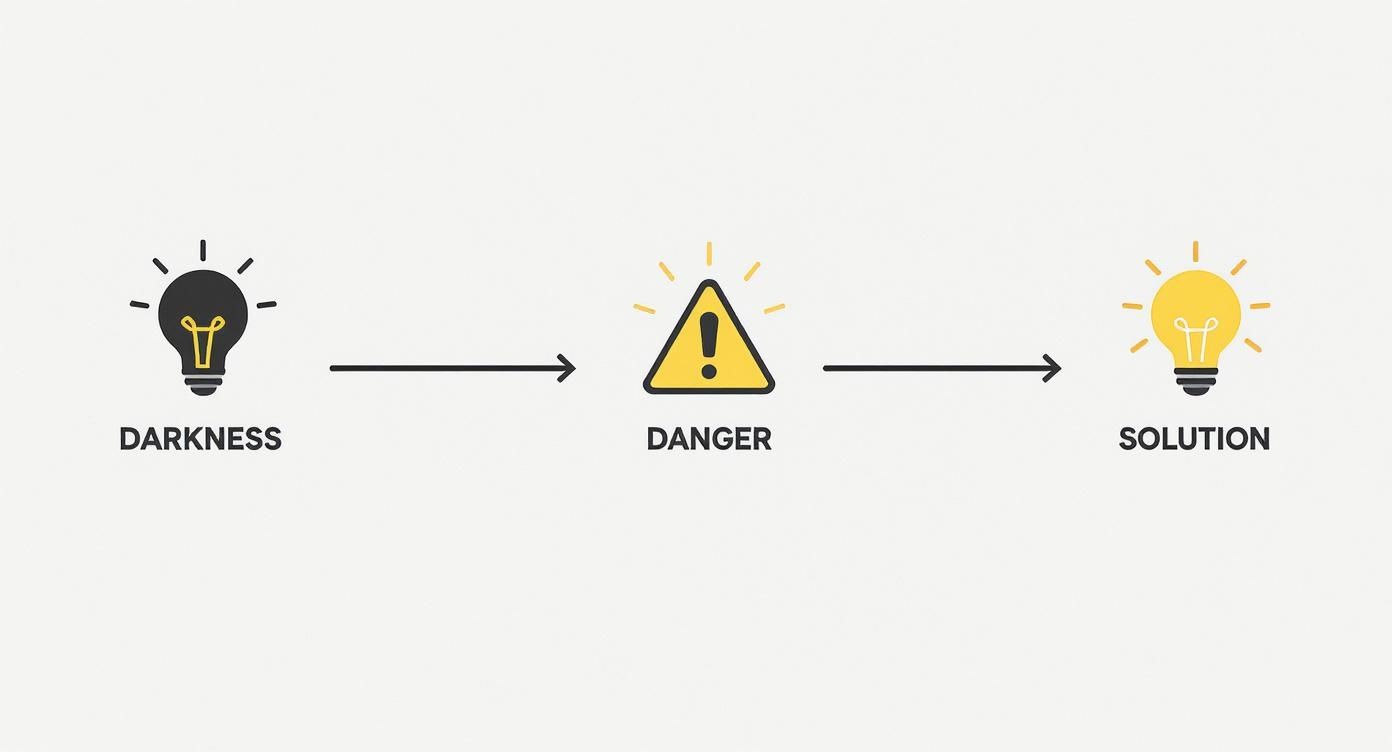
As you can see, installing effective, purpose-built lighting isn’t just a nice-to-have; it's the definitive solution to the safety and usability problems inherent in a dark, enclosed space.
To make comparing your options a breeze, we've broken down the must-know terms into a simple reference table.
| Specification | What It Measures | Recommended Range for Containers |
|---|---|---|
| Lumens (lm) | The total brightness of the light. | 3,000–5,000 lm for a 20ft container; more for 40ft or detailed work. |
| IP Rating | How well the light is sealed against dust and water. | IP65 is a great starting point; consider IP67 for very wet sites. |
| Colour Temp (K) | The "warmth" or "coolness" of the light's colour. | Around 5000K (cool white) is ideal for clarity in workshops or storage. |
| CRI | How accurately the light shows the true colours of objects. | 80+ ensures colours look natural, which is vital for detailed tasks. |
Let's dive a little deeper into what each of these means for you.
The first term you’ll always see is lumens (lm). Forget watts—that just measures energy use. Lumens tell you the total amount of visible light a bulb gives off. It's a direct measure of brightness: the higher the lumen count, the brighter the light. Simple.
For a standard 20ft shipping container being used for general storage or as a workshop, a setup providing a total of 3,000 to 5,000 lumens is usually spot on. This is enough to illuminate every corner, getting rid of those gloomy spots where trip hazards love to hide. If you're working with a larger 40ft container or doing tasks that require fine detail, you'll want to aim for a higher lumen output.
An IP (Ingress Protection) rating is a simple two-digit code that reveals how well a light fixture is protected against solids (like dust) and liquids (like water). For a shipping container, this is non-negotiable. Condensation and dampness are constant battles, especially with the UK's climate.
The first digit rates protection against solids (from 0 to 6), and the second rates protection against liquids (from 0 to 8).
Choosing a light with a high IP rating isn't just about making it last longer; it's a critical safety measure. It ensures your electricals are shielded from moisture, massively cutting the risk of short circuits and faults in a damp, metal environment.
Finally, two specs dictate the actual quality of the light: Colour Temperature and Colour Rendering Index (CRI).
Colour Temperature, measured in Kelvin (K), describes how warm or cool the light appears. Low Kelvin values (2700K-3000K) give off a warm, yellowish glow, like an old-school incandescent bulb. Higher values (5000K-6500K) produce a cool, bluish-white light that’s much closer to natural daylight. For a workshop or storage space where you need to see clearly, a cool white light (around 5000K) is ideal. It boosts visibility and helps reduce eye strain.
The Colour Rendering Index (CRI) is a score from 0 to 100 that measures how well a light reveals the true colours of objects. For most container uses, a CRI of 80 or higher is recommended to ensure colours appear natural. This is crucial in workshops where you might be dealing with coloured wires, paints, or other materials that need accurate identification. A low CRI light can make everything look washed out, dull, and just plain wrong.
Picking the right shipping container lights isn't just about how bright they are; it's about matching the tech to the task. The perfect setup depends entirely on what you're using your container for. Are you running a workshop that needs bright, consistent light all day long, or is it a remote storage unit that just needs to be lit up securely now and then?
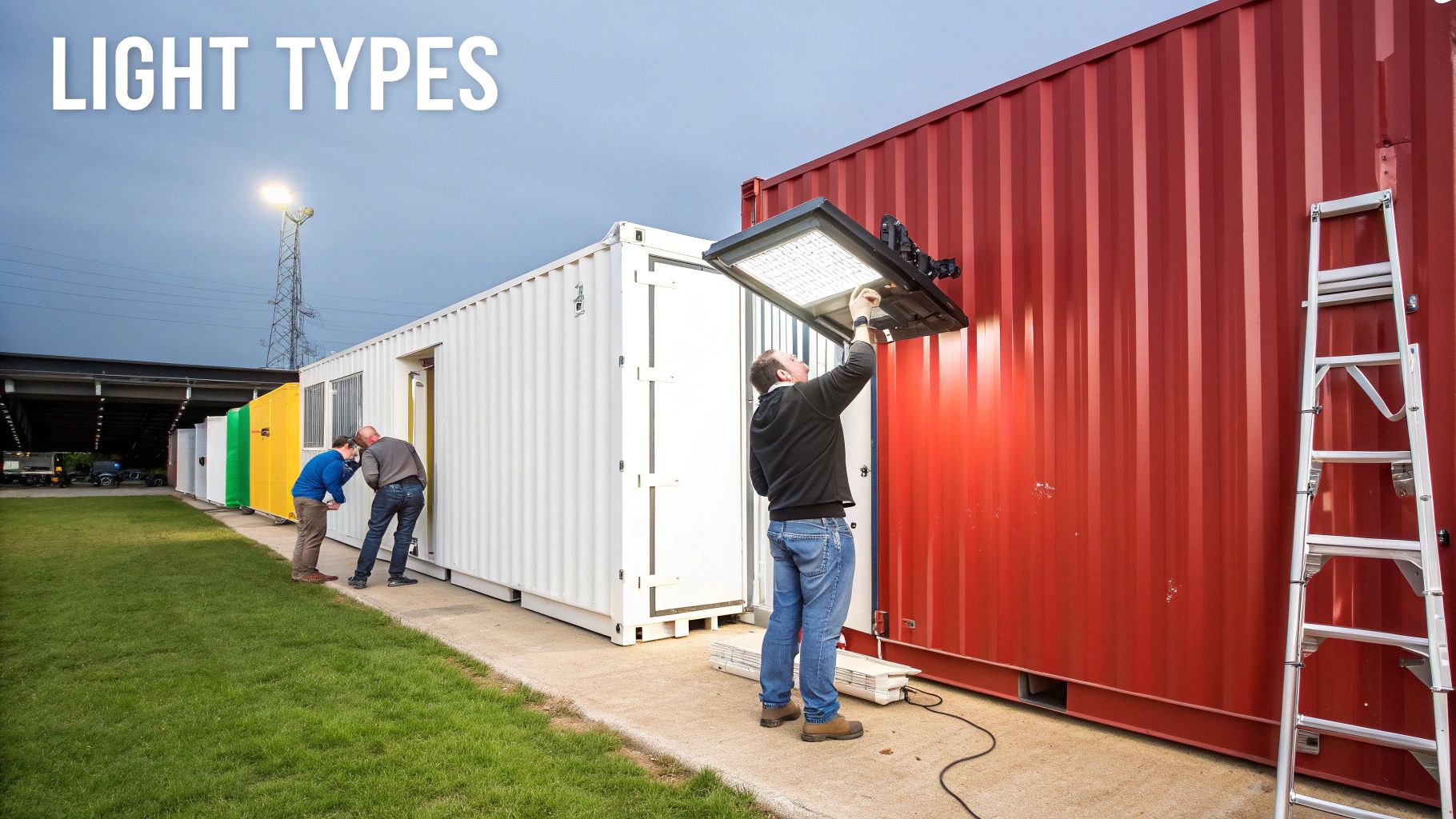
Every type of light has its own strengths and weaknesses. To make the best call, you need to get your head around the main options available and figure out how they fit with your power source and what you'll be doing inside. Let's break down the most popular choices for container projects here in the UK.
When you need dependable, all-around lighting for a container workshop, office, or a storage space you’re in and out of all the time, LED batten lights are the go-to. These are the long, linear fixtures you see that give broad, even light. They’re fantastic for getting rid of the dark corners and annoying shadows you get with single-bulb setups.
Their real strength lies in efficiency and a seriously long lifespan. LEDs use far less juice than old-school fluorescent tubes and can last for tens of thousands of hours. That means you won't be climbing a ladder to swap them out anytime soon. Most are designed to be hardwired straight into a mains supply, making them ideal for containers with a permanent power hook-up.
If your container is sitting in a storage yard, on a building site, or anywhere that needs a bit of perimeter security, external floodlights are a must. Their job isn't so much about lighting the inside, but blasting the area around the container with light, scaring off trespassers and making it safer to approach after dark.
Modern LED floodlights are incredibly powerful and often come fitted with motion sensors (PIR sensors). These only switch the light on when they detect movement – a brilliant feature for saving energy while still providing a hefty security deterrent. When a would-be thief is suddenly drenched in 5,000 lumens of bright light, they tend not to hang around.
The need for powerful external lighting has a long history in the UK, especially around industrial sites like ports, which has pushed lighting innovation for centuries. Long before modern LEDs, gas lighting was common in London's industrial zones by the 1820s. By the late 20th century, electric floodlights became the standard for securing yards full of shipping containers, showing just how long we've needed strong, reliable lighting in these environments.
But what if you don't have mains power? Or you just need a temporary lighting fix you can easily remove? This is where magnetic LED strip lights really shine. These clever kits are made for ridiculously quick and easy installation, with no drilling or wiring needed. The powerful magnetic backing means you can just snap them onto the steel ceiling or walls of the container in seconds.
Magnetic LED strips offer a true 'plug-and-play' approach to container lighting. They are the perfect answer for temporary setups, rental containers, or any situation where you can't—or don't want to—modify the container's structure.
Powered by batteries or even small solar panels, these systems give you incredible flexibility. For example, our LED strip light kit for shipping containers can be moved around in an instant to focus light exactly where you need it for a particular job. Their low power consumption means they can run for hours on a single charge, making them perfect for off-grid sites. This adaptability makes them a fantastic choice for anyone needing a simple but effective lighting solution without the commitment of a permanent installation.
Choosing the perfect shipping container lights is only half the battle. Getting the installation right is what really brings your setup to life, making sure it’s safe, durable, and reliable for years to come. A rushed job can lead to damaged gear, dodgy performance, and even serious safety hazards. This guide will walk you through the essentials, whether you’re fitting a simple magnetic kit or wiring up a full mains-powered system.
Before you even think about mounting a light, a few quick checks will save you a world of hassle. First, give your new lights a thorough once-over for any damage that might have happened in transit. If you've gone for a battery or solar option, make sure it’s fully juiced up so you can test it on the spot. Lastly, give the inside surfaces of the container a good clean where you plan to stick your fixtures. A quick wipe-down to get rid of dust and grime means any magnetic mounts or adhesives will get a proper grip.
Getting this prep done first means a much smoother installation from the get-go.
A bit of planning now will pay off big time later. Before you fix anything permanently, take a few minutes to map out where you want everything to go. Think about where you need the most light – is it over a workbench, along a main walkway, or just spread evenly for general storage? Hold the lights up in their intended spots to see how the light actually falls and to spot any awkward shadows.
Once you’re happy with the placement, it’s time to think about the wiring. For any system with cables, plan a route that’s both neat and safe. The best bet is to run them along the top corners of the container, where they’re well out of the way and won't get snagged by people or equipment moving around. Using self-adhesive cable clips is a brilliant way to keep everything tidy without having to drill into the container walls.
Cable routing isn't just about looking neat; it’s a crucial safety step. Dangling wires are a massive trip hazard and can easily get damaged, which could lead to electrical faults down the line.
How you attach your lights depends on the type of light you've got and what you're using the container for. Each method has its pros and cons.
The power source you’re using for your shipping container lights will completely shape the installation process. If you’re hooking up a mains-powered system that needs a 240V supply, the rule is simple: always hire a qualified electrician. This isn't a DIY job. A pro will make sure the wiring is safe, meets all UK regulations, and is properly earthed – which is absolutely vital in a big metal box. For anyone considering the practical steps, a guide to professional LED lighting installation can provide some really valuable insights into proper planning and execution.
For off-grid setups like solar-powered lights, the game changes to focus on where you place the components. The solar panel needs to go on the container's roof or an outside wall where it can soak up the maximum amount of direct sunlight all day, even during the UK's notoriously grey months. Likewise, if your system has a motion sensor, put it near the entrance at a height that’ll pick up movement effectively without being set off by every gust of wind or passing car. Nailing this placement is the secret to getting reliable, year-round performance.
When you're fitting out a shipping container in a commercial setting, just popping in a bright light is only half the battle. To keep your operations safe and, crucially, legal here in the UK, your entire lighting setup has to be up to scratch with national health and safety rules. Cutting corners isn't just a minor slip-up; it’s a massive risk that can lead to accidents, legal trouble, and expensive downtime you just can't afford.
Following the guidance from bodies like the Health and Safety Executive (HSE) isn't optional—it's essential. These regulations are there for a reason: to protect your team by making sure workplaces, including converted containers, are properly and safely lit. Good lighting massively cuts down on the risk of trips, falls, and injuries, especially when your staff are handling tools, equipment, or heavy boxes. It’s the bedrock of a safe working environment.
Getting your shipping container lights compliant means ticking a few key boxes. These aren’t just suggestions; they’re legal must-haves for a safe workspace.
To really get a handle on the full scope of safety, it's worth digging into the specific regulations. A great starting point are the UK emergency lighting British Standards, which lay out the detailed requirements for safety lighting in workplaces.
The rules around workplace lighting get even tighter in industrial zones like ports and logistics yards. There’s a long history of focusing on safety in these areas, and that has shaped the regulations we have today. For example, the 2010 "Safety in Ports (SIP009)" guidance clearly states that all dock premises must be "suitably and adequately lighted" to stop accidents from happening. This rule specifically covers areas where shipping containers are being handled and stored, meaning they need to meet standards like BS EN 12464-2 to keep operations safe around the clock.
Investing in certified, high-quality lighting systems is not an expense—it is a critical investment in safety and compliance. It protects your workers, safeguards your business against liability, and ensures your container is a genuinely safe and productive asset.
By making regulatory compliance a priority from day one, you build a foundation of safety that supports a smooth and secure operation. The most effective way to meet these obligations and protect your team is to choose the right, certified shipping container lights and get them installed by a professional.
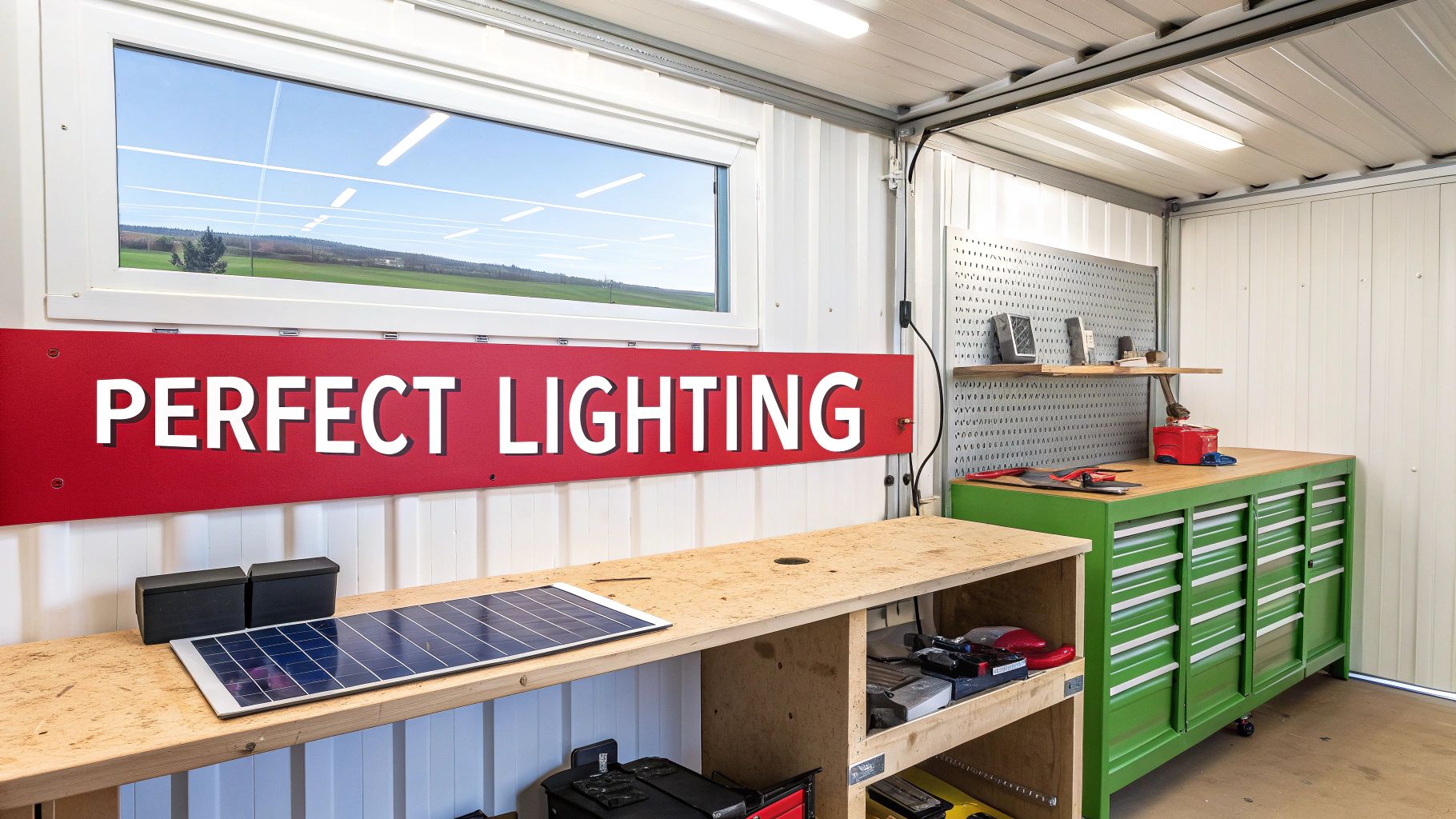
Choosing the right shipping container lights really comes down to matching the tech to the job at hand. Once you’ve got a handle on lumens, IP ratings, and installation methods, you can pick a setup that’s safe, efficient, and perfect for your project.
To put it all into practice, let's walk through a few common scenarios. This will help you see how different lighting solutions solve real-world problems. Whether you're setting up a remote site or a permanent workshop, the right choice makes all the difference.
Imagine a container plonked on a remote site with no mains power. You need it to be self-sufficient. The goal here is simple: provide bright, reliable light for grabbing tools and materials, often at unsociable hours, without fumbling around in the dark.
For a self-storage facility, lighting pulls double duty. It needs to help customers feel safe when accessing their belongings while also acting as a strong deterrent for potential intruders. Good lighting, both inside and out, is non-negotiable for security and a positive customer experience.
A workshop demands consistently bright, clear light for detailed and often delicate tasks. The priority is to create a workspace that mimics natural daylight, which helps reduce eye strain and improves accuracy. You can't be squinting when you're making a precise cut.
By thinking about your specific application—whether it’s for security, off-grid work, or detailed tasks—you can align your lighting choice with what you actually need to achieve. This makes sure you invest in a solution that doesn't just light up the space but genuinely enhances the container's functionality.
Interestingly, the UK played a central role in standardising shipping containers, a legacy that started with the Railway Clearing House back in the 1920s. Those early efforts laid the groundwork for the global ISO standards we rely on today, ensuring containers are uniform and secure. This heritage of standardisation and security now extends to customising containers with modern accessories like shipping container lights.
When it comes to fitting out a container, a few common questions always pop up about lighting. Getting straight answers is the best way to make a smart purchase, so we've put together a quick rundown of the queries we hear most often.
Think of this as the final checklist to make sure your lighting plan is sound, safe, and right for your setup.
It’s tempting to think you can save a few quid by grabbing a standard light from a DIY shop, but it’s a really bad idea for a shipping container. Your typical household light just isn't built for the job.
The main problem is the damp. Containers get a lot of condensation, especially with the classic British weather, and household fittings don't have the IP (Ingress Protection) rating to cope. That’s a serious electrical risk. Plus, they’re not designed to handle the knocks, bumps, and vibrations that come with life on a commercial or industrial site. Purpose-built shipping container lights are tough, properly sealed, and designed to work safely in these exact conditions.
This really comes down to what you’re using the container for. The best way to think about it is in total brightness, which is measured in lumens.
The rule of thumb is to match the light to the task. It's always better to have a bit too much light that you can position well, rather than not enough. Not having enough light is both a safety issue and a headache for getting work done properly.
We get this question a lot. With our famously grey skies, it's a fair concern! But modern solar tech has come a long, long way, making solar-powered shipping container lights a surprisingly reliable and practical choice, even through the winter months.
The latest solar kits have really efficient photovoltaic panels that can still generate a charge on overcast days. They’re hooked up to high-capacity batteries that can store enough juice to run the lights for hours—sometimes even days—without seeing direct sun. Many also have smart features like motion sensors, which save battery life by only switching on when you’re actually there. It all adds up to reliable, free-to-run lighting all year round, perfect for any off-grid container.
Ready to light up your container? At Quickfit Container Accessories, we stock a full range of tough, high-quality lighting systems built for every kind of job, from remote building sites to secure storage yards. Take a look at our collection and get it delivered anywhere in the UK tomorrow.
Find your ideal container lighting at https://www.quickfitcontaineraccessories.co.uk.
{"one"=>"Select 2 or 3 items to compare", "other"=>"{{ count }} of 3 items selected"}