
Website Orders To Northern Ireland & Republic Of Ireland and USA Now Available!


Proper shipping container security is all about getting to grips with the real-world threats and building a defence that can actually stand up to them. It’s not just about slapping on a strong lock; it’s about taking a hard look at how, where, and why criminals target these steel boxes, from quiet construction sites to busy logistics hubs across the UK.
Before you can properly secure a shipping container, you need a clear picture of what you’re up against. It's a common mistake to think the container's built-in strength is enough, but determined thieves have plenty of well-practised tricks up their sleeves. Getting inside their heads is the first step to building a defence that really works.
These threats aren't just hypotheticals pulled from a security manual; they're a daily reality for anyone using containers for storage or transport in the UK. Criminals are opportunists at heart. They'll exploit any weakness they can spot, whether that's a container left overnight in a poorly lit yard or one sitting on a lorry at a vulnerable service station.
You might think containers are most at risk in the middle of nowhere, but that’s not the full story. High-traffic locations like warehouses and unsecured lorry parks are actually prime targets. The latest data on cargo theft paints a stark picture, showing these spots are hotspots for criminal activity.
In fact, warehouses are the scene for a staggering 41% of theft incidents, while unsecured roadside parking accounts for nearly 40% of cases. These numbers make it crystal clear: whether your container is sitting still or on the move, it needs serious security. You can get more details by reading the full report on UK cargo theft tactics and trends.
A container's security is only as strong as its weakest point. Thieves are experts at finding that point, whether it’s a standard-issue lock, an unmodified door handle, or even the container wall itself.
To build a security plan that holds up, you have to think like a thief. Their methods are often brutally simple but frighteningly effective, relying on speed and the right tools to get past basic security measures.
Here are some of the go-to tactics:
Facing up to these threats is the first, most important step. Once you accept that a standard container is a target, you can start putting the layered security in place to properly protect what’s inside.
When it comes to securing a shipping container, there's no magic bullet. Forget trying to find a single, unbeatable lock. Real security is about building a fortress, creating multiple, overlapping layers of defence that work together. It’s a strategy designed to slow down, frustrate, and ultimately convince any would-be thief that your container just isn't worth the trouble.
Think about it. A top-of-the-line padlock is a decent start, but for a determined criminal with the right tools, it’s just a puzzle to be solved.
But what happens when you protect that same padlock with a heavy-duty steel lockbox? And then you add motion-activated floodlights, a perimeter fence, and a GPS tracker inside? Suddenly, the game changes. Each layer forces a thief to spend more time, make more noise, and take bigger risks. Your container goes from being a target to a major headache.
This proactive mindset is the foundation of modern container security. It’s how you turn a simple steel box into a genuinely secure asset.
To get this layered approach right, it helps to think in terms of three distinct defensive zones. Each zone has a specific job, and together they create a powerful, cohesive security system. By tackling vulnerabilities in all three, you build your fortress from the outside in.
Understanding the biggest threats helps you decide how to build out these layers. As the diagram below shows, major UK container theft happens everywhere—from supposedly secure storage yards to exposed roadside stops.

This just goes to show that your security needs to be rock-solid whether your container is sitting in a compound for months or parked up for a few hours during transit.
To help visualise this strategy, here’s a simple breakdown of the layered security model.
| Security Layer | Objective | Example Security Measures |
|---|---|---|
| Outer Perimeter | Deter and delay initial access to the site. | Fencing, locked gates, CCTV surveillance, security patrols, adequate lighting. |
| Container Exterior | Make physical entry into the container difficult and time-consuming. | High-security padlocks, steel lockboxes, crossbar locks, puck locks, door reinforcement. |
| Container Interior | Provide an immediate alert if the container is breached. | Motion-activated alarms, GPS trackers with geo-fencing, internal cameras. |
By addressing each layer, you create a comprehensive defence that covers all your bases.
The physical barriers are only half the story; the psychological impact is just as crucial. Before they strike, thieves are always doing a quick risk-reward calculation in their head. A container with a single, lonely-looking padlock presents a simple problem with a potentially big reward.
Now, picture a different scene. That same container is sitting behind a locked gate. It’s bathed in bright light. The padlock is shrouded inside a thick steel lockbox. This is no longer a simple problem; it’s a complicated, noisy, and high-risk mission.
A layered security strategy transforms your container from an easy target into a complex problem. More often than not, that complexity is the most powerful deterrent of all, persuading thieves to simply move on to an easier mark.
This approach systematically drains a criminal’s two most valuable resources: time and confidence. By forcing them to defeat multiple, different types of security measures, you dramatically increase the odds that they’ll either give up or get caught. That’s the true power of building a fortress.
Once you’ve got your layered security strategy mapped out, it’s time to get hands-on with the hardware that will form the backbone of your container's physical defence. This isn’t about grabbing any old lock off the shelf; it's about picking specific, tough-as-nails equipment designed to stop brute-force attacks in their tracks. The right gear can turn your standard steel box into a proper stronghold.
Think of it like adding armour to a knight. The steel plating itself is strong, but the real protection comes from reinforcing the vulnerable joints—the locks, hinges, and handles. High-quality security hardware is engineered to do exactly that, turning weak points into hardened obstacles.
The padlock is your first and most important line of defence, but let's be clear: not all locks are created equal. A cheap padlock is little more than a visual deterrent, one that a pair of bolt cutters can defeat in seconds. For real shipping container security, you need a high-security padlock, specifically one with a CEN (Central European Norm) rating.
This system grades padlocks from 1 (low security) to 6 (maximum security). For a shipping container, you shouldn't even consider anything less than a CEN Grade 4 or higher. These locks are built from hardened steel and have been rigorously tested to resist drilling, sawing, and brute-force attacks.
Another critical feature to look for is a shrouded shackle. This clever design incorporates a protective steel shoulder that covers most of the U-shaped bar, leaving very little exposed. It’s a simple feature, but it makes it incredibly difficult for thieves to get any purchase with bolt cutters, rendering one of their favourite tools almost useless.

Even the toughest padlock has a potential vulnerability: that small, exposed piece of the shackle. This is where a steel lockbox (sometimes called a cowl housing) comes in. It’s a heavy-duty steel cover that gets welded or bolted directly onto the container doors, creating a protective fortress around the padlock itself.
With a lockbox installed, a thief can no longer get at the padlock with bolt cutters, angle grinders, or crowbars. They’re forced to attack the lockbox first—a much tougher, noisier, and more time-consuming job. This one addition can elevate your security from good to great.
A high-security padlock is the gatekeeper, but a steel lockbox is the fortress wall that protects it. Combining the two creates a powerful synergy that stops most brute-force attacks dead in their tracks.
The container's own locking bars are strong, but the handles and cams can be targeted. A common tactic involves thieves using long steel pipes to wrench the handles, applying immense leverage to bend the bars and pop the doors open. Heavy-duty locking bar clamps or bridge clamps are designed to prevent exactly this.
These devices fit across the vertical locking rods of both doors, clamping them firmly together. This makes it impossible to operate the door handles independently, neutralising any attempt at prying them apart. They add a powerful and highly visible layer of defence.
Puck locks are a fantastic example of a device that secures these rods. You can see how a Quickfit Puck Lock offers this extra layer of protection.
For containers that are frequently on the move, like those at loading docks, additional measures are vital. Safeguarding your assets during loading and unloading by investing in reliable dock lock systems is a critical part of your security setup. These systems prevent unauthorised movement at one of the most vulnerable points in the supply chain.
By thoughtfully selecting and combining these key pieces of hardware, you can build a formidable physical defence. The table below compares these essential components to help you decide on the right mix for your needs.
| Security Device | Primary Function | Estimated Cost (GBP) | Best For |
|---|---|---|---|
| High-Security Padlock | Provides the primary locking mechanism, resisting cutting and drilling. | £50 – £150+ | All containers; the non-negotiable first line of defence. |
| Steel Lockbox | Shields the padlock from direct attacks with tools like bolt cutters. | £40 – £100 | High-risk areas where brute-force attacks are likely. |
| Locking Bar Clamp | Prevents door handles from being pried apart with leverage. | £60 – £200 | Securing stationary containers or adding a strong visual deterrent. |
Physical hardware turns your container into a tough nut to crack, but it's the active monitoring systems that truly give it a voice. While hefty locks and thick steel are brilliant for deterring casual thieves and slowing down determined ones, alarms and surveillance act as your round-the-clock eyes and ears, alerting you the moment a break-in is even attempted.
This technology transforms your container from a silent, passive box into a responsive, actively monitored asset. Instead of just discovering a theft after the fact, you get real-time intelligence that can stop a loss before it happens. This active layer of security is often the final straw that convinces criminals your container is simply too much trouble.
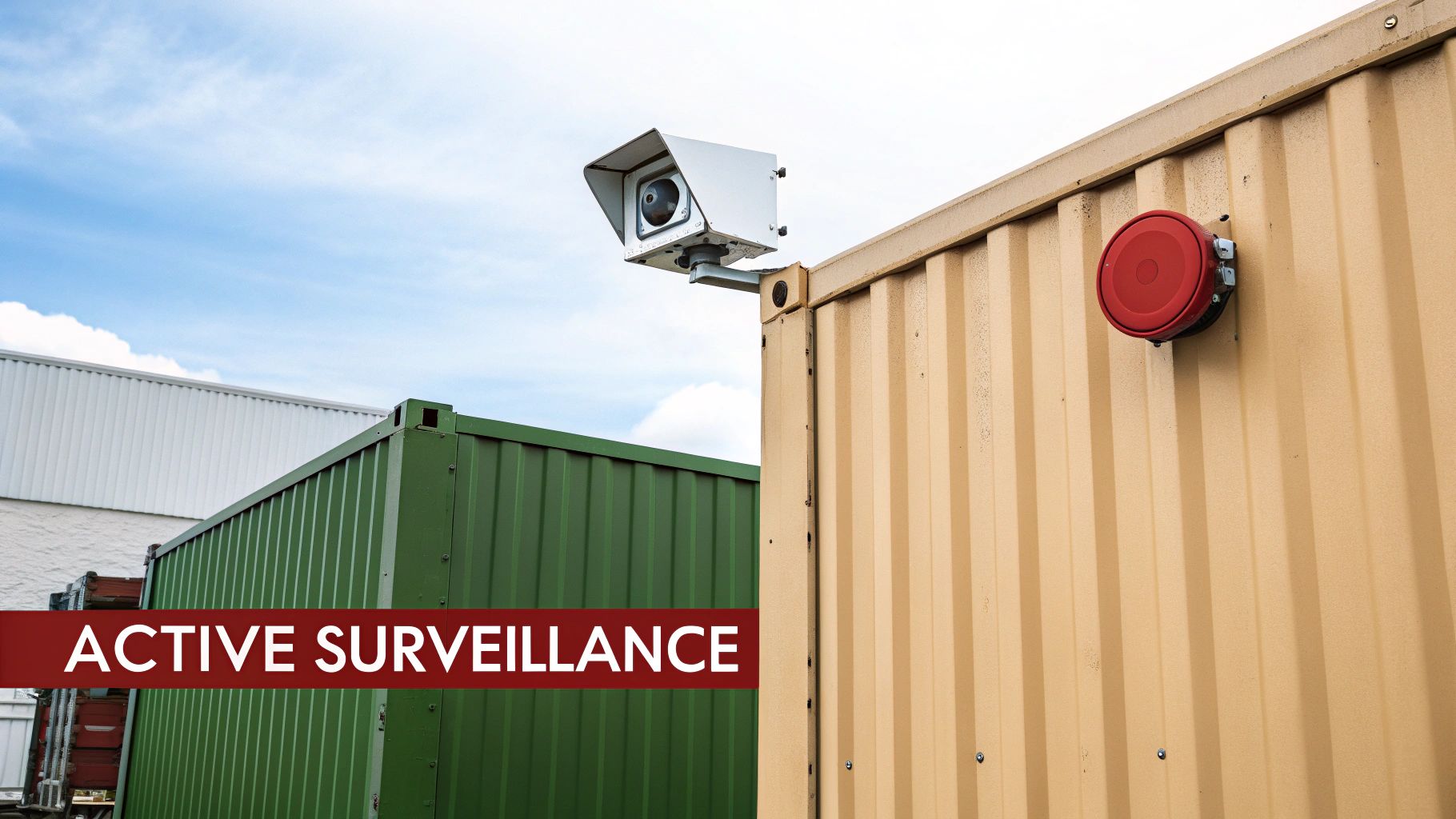
One of the biggest headaches with securing containers is that they often sit in remote spots with no access to mains power. Thankfully, modern alarm systems are built for exactly these kinds of off-grid scenarios, offering robust protection without being tethered to a power socket.
These clever, battery-powered alarms are completely self-contained units that can run for months or even years on a single set of batteries. They’re typically kitted out with a range of sensors to sniff out any unauthorised entry.
Key features to look for include:
An alarm system does more than just make a racket. It acts as an immediate early warning, closing the critical time gap between a break-in starting and you being able to do something about it.
To guarantee a rapid and professional response, you might consider connecting your system to one of the top commercial alarm monitoring services. These pros can verify alerts and dispatch security or police on your behalf, providing 24/7 protection.
While an alarm tells you there’s a problem, CCTV cameras and good lighting work together as a powerful deterrent, stopping many criminals before they even get started. The mere sight of a camera is often enough to make a thief think twice – the risk of being identified just got a whole lot higher.
Modern surveillance tech is also perfectly suited for remote container locations. Solar-powered CCTV systems with battery storage can operate completely independently, recording footage and even offering live-streaming capabilities right to your phone. When positioning cameras, aim for a clear view of the container doors and any access points, making sure there are no blind spots for an intruder to hide in.
Motion-activated lighting is the perfect partner for CCTV. A sudden flood of bright light not only startles a would-be thief and exposes them but also ensures your cameras capture clear, usable footage, even in the dead of night. This combination creates a "spotlight effect" that most criminals will actively avoid. For a hassle-free setup, a utility pole for outdoor lights and CCTV gives you the perfect mounting point without having to drill into the container itself.
By combining these technological tools, you add a dynamic, responsive layer to your shipping container’s security. You’re no longer just relying on passive physical strength; you have an active system watching over your assets, ready to alert you at the first sign of trouble. This intelligent approach provides real peace of mind and a formidable defence against theft.
A container kitted out with the best locks and alarms is still a sitting duck if you leave it in an isolated, unlit, and unmonitored spot. The truth is, the effectiveness of your security hardware is completely tied to its surroundings. Real shipping container security means thinking beyond the box itself and getting the environment right.
This principle is universal, whether your container is on a busy construction site, a quiet rural farm, or tucked away in a self-storage facility. By controlling the surrounding area, you’re creating the crucial outer layer of your security fortress, making it much harder for thieves to even get close.
The first job in securing the environment is to establish a clear, controlled perimeter. You want to make it as difficult as possible for anyone unauthorised to approach your container without being seen. This means creating physical and visual barriers that work together.
Start with the basics: robust perimeter fencing and a single, controlled entry point. A high fence doesn't just act as a physical deterrent; it clearly marks the boundary of your secure zone. Pair this with a heavy-duty, locked gate that stays shut whenever the site is empty.
Good lighting is just as important. Criminals love the dark, using shadows to hide what they're up to. By installing bright, motion-activated floodlights, you instantly remove these hiding spots and put any potential intruder right in the spotlight. A well-lit container is a far less tempting target.
Of course, the specific measures you take will depend on where your container is. The security needs of a container in a bustling city centre are worlds away from one on a remote farm.
A secure environment acts as a force multiplier for your physical hardware. A lockbox is effective, but a lockbox on a container lit up by floodlights and watched by CCTV is a seriously formidable deterrent.
Beyond the physical site, your procedures matter, especially if your container is part of a larger supply chain. Keeping meticulous records, like an access log detailing who enters the site and when, can be invaluable. It creates accountability and can help you spot internal threats.
It’s also crucial to make sure your container is placed on a stable, even surface. Proper ground preparation not only prevents issues like water damage and door misalignment but also ensures your security devices function exactly as they should. Our detailed guide offers practical advice on shipping container levelling for optimal stability and security.
Security during transport is another critical piece of the puzzle. Shipping container transport security in the UK involves tackling weaknesses along the entire supply chain, particularly during transfers at rail yards, lorry parks, and port facilities. These are the points where containers are most vulnerable. Research has consistently shown that theft and tampering risks are highest when containers are stationary or being moved between different modes of transport, highlighting the need for robust tracking and sealing protocols. You can explore a detailed analysis of these risks to learn more about container security throughout the supply chain.
Even with the best kit and a solid site plan, you'll still run into practical questions about day-to-day container security. We get asked a lot of them. This section tackles the most common queries from UK container owners, giving you clear, straightforward answers to help you protect your assets.
This is a big one, and the answer almost always comes down to your hire agreement. Most rental companies are crystal clear: no permanent modifications. That means no welding on a lockbox or drilling holes for new hardware. If you do, you’ll likely face hefty penalties and repair costs when the container goes back.
But that doesn’t mean you have to settle for poor security. There’s a whole range of seriously effective 'no-drill' solutions out there:
While a top-tier, CEN-rated padlock is a fantastic starting point, relying on it as your only line of defence is a gamble. A single lock, no matter how tough, is a single point of failure. A determined thief with the right tools will eventually get through it. Real security is all about layers.
A layered security approach is far more effective than any single device. It creates multiple obstacles—each requiring different tools and more time to defeat—which is the most powerful deterrent you can have.
Think of it this way: a great lock paired with a steel lockbox, an internal alarm, and good site lighting creates a massive headache for a thief. That complexity is often enough to make them give up and search for an easier target.
Condensation can be a real menace in a container, but simply cutting a hole in the wall is like rolling out the welcome mat for thieves and pests. It creates an obvious weak spot that’s just asking to be exploited.
The right way to do it is by installing specialised container vents. These are intelligently designed with steel cowls and reinforced internal grilles. This setup allows air to flow freely—preventing damp and mould—but it’s engineered to resist being pried open with tools like crowbars. You get the ventilation you need without compromising your security.
For all your security needs, from heavy-duty hardware to specialised vents, Quickfit Container Accessories provides reliable, high-quality solutions. Explore our full range of products to build your layered defence today at https://www.quickfitcontaineraccessories.co.uk.
{"one"=>"Select 2 or 3 items to compare", "other"=>"{{ count }} of 3 items selected"}