
Website Orders To Northern Ireland & Republic Of Ireland and USA Now Available!


Your shipping container's Corten steel walls might look impenetrable, but without the right shipping container locks, they offer little more than a false sense of security. The lock isn’t just an accessory; it's the single most critical part of your security plan, deciding whether your assets stay safe or become an easy target.
Think of your shipping container as a medieval fortress. Its thick steel walls are the ramparts, built to withstand brute force and put off casual opportunists. But even the strongest fortress is useless if its main gate is left unsecured. The lock on your container is that gate—it's the first place thieves will try to get in.
A weak or flimsy lock basically leaves this gate wide open. Criminals with simple tools like bolt cutters or crowbars can snap a standard padlock in seconds, making the container's tough construction completely pointless. This simple mistake can lead to massive problems, well beyond just losing your goods.
Failing to properly secure a container can have serious financial and logistical knock-on effects. The direct cost of stolen cargo is only where the pain starts. Businesses also have to deal with:
The threat is very real, and it's growing. Cargo theft from shipping containers is a major issue in the UK, adding to global losses in the billions. In fact, theft is forecast to jump by 8% each year if things continue as they are, as criminals keep finding ways to exploit weak locks. You can read more about these worrying trends from the UK P&I Club and realise just how important proactive security is.
Your container lock is the crucial link between your valuable assets and the outside world. Investing in a high-quality, properly installed lock isn't an expense—it's essential protection against theft, damage, and disruption.
Getting to know the different locking shipping containers options is the first step toward building a serious defence. By making this one component a priority, you ensure your fortress gate holds strong, protecting everything you've got stored inside.
Choosing the right lock for your shipping container can feel like a minefield with so many options out there. But getting a handle on the main types is the first real step to securing your stuff properly. Let's walk through the most common solutions, from the simple padlock to more specialised gear, to see what they do best.
The one we all know is the heavy-duty padlock. Think of it as the general-purpose soldier of container security. These aren't your typical garden shed locks; they're chunky, usually made from hardened steel, and built to put up a fight against basic attacks.
The big problem, though, is the exposed shackle—that U-shaped bar. It’s a glaring weak spot and a prime target for anyone with a set of bolt cutters. While a tough padlock is a decent start, if you're storing anything valuable, it should really just be one part of your security plan. For a deeper dive, our guide on padlocks for shipping containers has some great advice.
A serious step up from a standard padlock is the hidden shackle 'puck' lock. As the name implies, this round lock completely hides its shackle, leaving absolutely nothing for bolt cutters to grab onto. It's a simple design change, but it makes a massive difference against brute-force attacks.
Now, to get the most out of a padlock or puck lock, you need a lockbox. This is essentially a thick steel housing that’s welded right onto the container doors. It acts like a personal safe for your lock, covering it completely and protecting it from angle grinders, crowbars, or cutters.
A lockbox completely changes the game. It takes a vulnerable, external padlock and turns it into a protected, internal mechanism. A thief is no longer fighting the lock; they’re forced to take on the reinforced steel box itself—a much tougher, noisier, and longer job.
Putting a quality puck lock inside a sturdy lockbox is one of the most effective security setups you can get for a stationary container. This layered approach is a real headache for would-be thieves.
If your container is on the move a lot, or if you need a heavy-duty temporary fix, the external crossbar lock is a fantastic choice. It's a solid steel bar that stretches across both container doors, clamping down on the vertical locking rods.
It basically works like a giant, reinforced boot clamp for your container. Because it locks the doors together from the outside at multiple points, it stops them from being prised open even if the main lock is broken. If you're curious about the mechanics behind these devices, it’s worth exploring the various locking mechanisms to see how differently they all work.
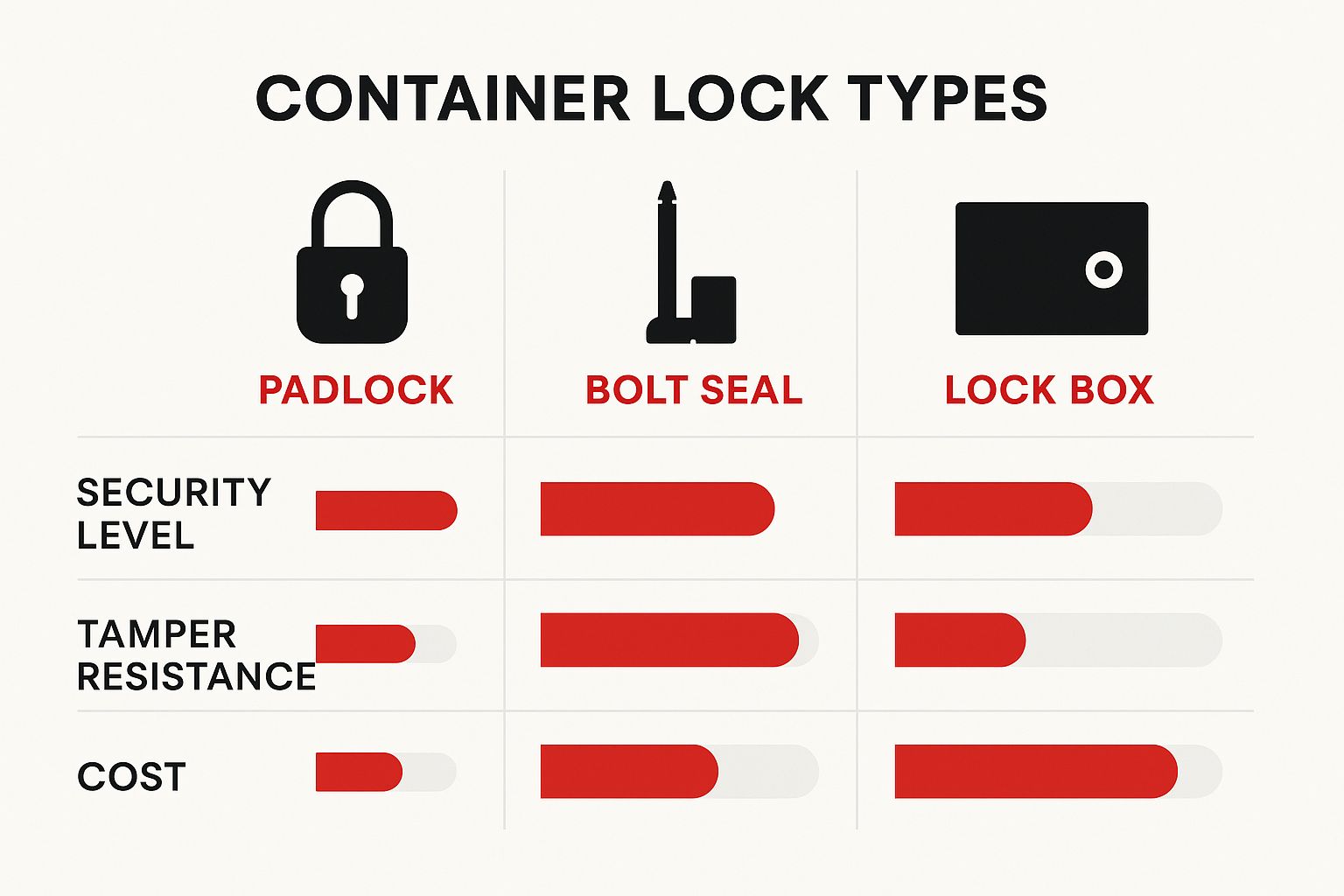
As you can see, while a simple padlock gets the job done on a budget, a proper lockbox system offers far better security and tamper resistance.
Choosing the right lock comes down to balancing security, convenience, and cost. By thinking about what you need—whether it’s for a static storage unit or a container in transit—you can pick the right lock, or combination of locks, to build the best possible defence for your valuable assets.
A lock's real strength isn't in its size or weight; it's buried in the technical specs. To make a smart choice, you need to look past the marketing fluff and get to grips with what actually makes a shipping container lock secure. Understanding these ratings and materials means you can pick a lock based on proven performance, not just how tough it looks.

The single most reliable measure of a padlock’s toughness is its CEN (Comité Européen de Normalisation) rating. This is a standardised European grading system that puts locks through their paces against all sorts of attacks. Think of it as an MOT for your lock – it’s an independent certification that it meets specific, measurable security standards.
The CEN scale goes from Grade 1 (low security) all the way up to Grade 6 (maximum security). Each step up the ladder means it can withstand more punishment from common break-in methods. When you’re securing anything valuable in a shipping container, you shouldn't even consider a lock with anything less than a Grade 3 rating.
A lock without a recognised certification is a gamble. A CEN rating gives you independent proof that the lock can take a specific level of abuse, offering real peace of mind that your security is built on tested performance, not just a promise.
To give you an idea of what these grades mean in the real world, a Grade 3 lock offers decent security for general use, but a determined thief with the right tools could probably get through it. As you climb the scale, the resistance ramps up fast.
Choosing a lock with a high CEN rating is your assurance that it's been independently verified to resist the very tools a thief is likely to bring to the party.
Alongside its security grade, the material a lock is made from is absolutely fundamental to its strength. The two most common materials you’ll find in high-security locks are hardened steel and boron alloy, and each has its own strengths when it comes to protecting a container.
Hardened Steel is a go-to choice for its excellent durability and solid resistance to cutting and drilling. The steel goes through an intense heat-treatment process that rearranges its molecular structure, making it significantly tougher. This creates a strong defence against common attacks from saws and drill bits.
But for the best protection you can get, boron alloy (also called boron steel) is the champion. This material has boron infused into it, an element that dramatically increases the metal's hardness. The end result is a lock shackle that is exceptionally difficult for bolt cutters—the number one tool for brute-force attacks—to get through.
Here’s a quick rundown of how they stack up:
| Feature | Hardened Steel | Boron Alloy |
|---|---|---|
| Primary Defence | Good resistance to drilling and sawing. | Exceptional resistance to cutting and cropping. |
| Hardness | Very hard and durable. | Extremely hard, often blunting cutter blades. |
| Cost | More affordable high-security option. | Generally higher cost due to advanced material. |
| Best Use Case | General high-security applications. | Maximum security against bolt cutter attacks. |
At the end of the day, decoding security specs is all about looking for proof. A certified CEN grade, combined with a seriously tough material like boron alloy, gives you a tested and formidable barrier. It ensures the container lock you choose offers genuine, measurable protection, rather than just acting as a visual deterrent.
Even the world's toughest, highest-security lock is next to useless if it isn't fitted correctly. A top-tier lock that’s sloppily installed gives you a false sense of security, creating a glaring weak point that a determined thief will spot and exploit in seconds. Proper installation is what turns a good lock into a truly formidable defence, making sure it delivers the maximum protection it was designed for.
Getting this right is about more than just snapping a padlock shut. You need to understand how each part of the system—the lock, the hasp, the lockbox—works together to create layers of security. Whether you're using a simple padlock, a full lockbox system, or a heavy-duty crossbar lock, following the right procedure is essential.
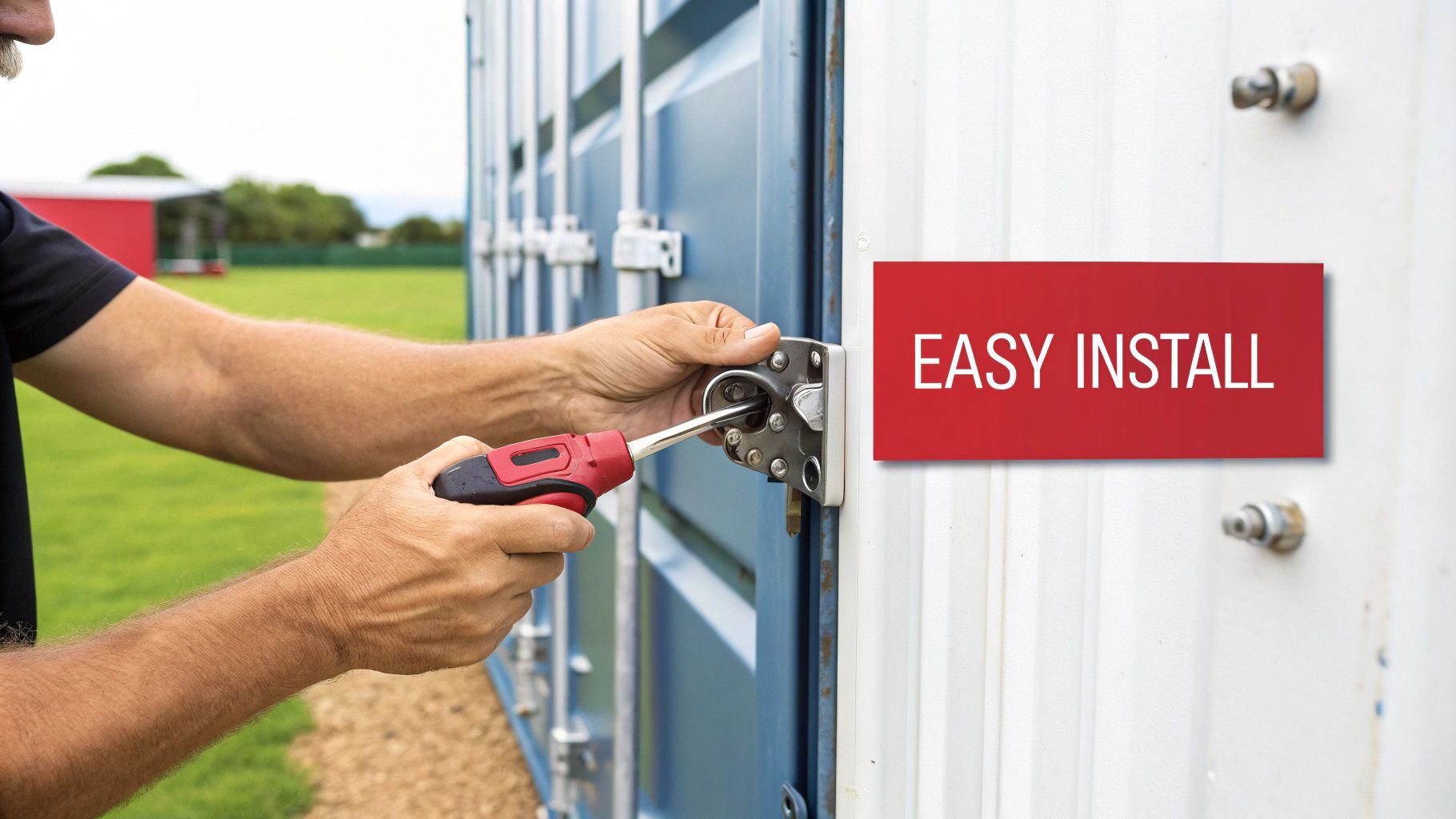
The most common setup you’ll see is a heavy-duty padlock housed inside a steel lockbox. The absolute key here is getting a snug fit. The padlock shackle needs to pass cleanly through the container's locking rod cam and keeper, but it should leave almost no extra space once it's locked.
A loose or oversized padlock rattling around inside a lockbox is a massive vulnerability. Any gap is an open invitation for thieves to jam in a pry bar or the tips of bolt cutters, giving them the leverage they need to force the lock or wrench the box itself off the door. The aim is to make the lock feel like an integrated, immovable part of the door mechanism.
If you’re fitting an aftermarket lockbox yourself, precision is everything. The box must be welded securely to both container doors, effectively creating a single, solid steel housing over the locking point. A poorly welded lockbox can be knocked clean off with a sledgehammer, making that expensive lock you bought completely worthless.
Crossbar locks, especially for containers on the move, offer a different but equally effective layer of protection. Their power comes from clamping the vertical locking bars together, spanning the entire width of the doors.
To install one correctly:
For ultimate peace of mind, always think in layers. This means combining a high-security mechanical lock with a tamper-evident seal. After you've secured the container with your main lock, thread a uniquely numbered bolt seal through the handle. This seal offers zero defence against brute force, but it provides instant visual proof if the container has been opened—a crucial audit trail for logistics and insurance claims.
Here in the UK, the integrity of these systems is taken very seriously. The safety and maintenance of shipping containers locks are covered by the Freight Container (Safety Convention) Regulations 2017, which are enforced by the Health and Safety Executive (HSE). These rules mandate that containers and their locking mechanisms are approved by authorised bodies to meet strict safety and construction standards. You can learn more about these important UK regulations and see how they ensure container security is maintained to a high standard.
Investing in a high-security lock is a great first step, but it’s not a "set it and forget it" solution. In the UK's notoriously damp and unpredictable weather, even the toughest hardened steel can fall victim to rust, corrosion, and seizing up. Proper maintenance isn't just a good idea—it's essential to make sure your lock works smoothly when you need it most, preventing that frustrating moment when a key jams or a lock fails completely.
Think of your container lock like your car's engine. You wouldn't dream of driving for years without an oil change or a basic service, and your lock needs the same kind of attention. A little bit of preventative care will go a long way, extending its life and ensuring it provides the protection you paid for, day in and day out.
A straightforward, regular maintenance routine is your best defence against the elements. You don’t need to be a locksmith; just a few simple actions on a consistent basis will keep your shipping containers locks in top condition.
We suggest a quarterly check-up, especially for containers left out in the open. Just pop a reminder in your calendar so you don't forget.
The industry standard for lock maintenance is a graphite-based powder or a PTFE spray. These products create a slick, dry film that repels moisture and keeps everything moving freely without attracting dirt.
Apply the lubricant sparingly, straight into the keyway and onto the shackle itself. Then, pop the key in and turn it a few times. This works the lubricant deep into the mechanism and ensures everything operates as smoothly as it should.
Even with the best maintenance plan, you might still hit a snag from time to time. The good news is that most common issues are easy to fix yourself.
| Common Problem | What's Likely Happening | How to Fix It |
|---|---|---|
| Stiff or Gritty Key Turn | There's probably debris in the keyway, or the mechanism is dry. | Get a can of compressed air and give the keyway a good blast. Follow up with a quality dry lubricant like graphite powder. |
| Jammed Key | The internal pins are stuck or out of line. | Don't force it! Gently wiggle the key up and down while applying a tiny bit of turning pressure. If that doesn't work, add more dry lubricant, wait a few minutes, and try again. |
| Visible Surface Rust | It's been exposed to too much moisture. | Scrub the rust off with a wire brush and some fine-grit sandpaper. Once it's clean and dry, apply a thin coat of rust-inhibiting primer to the area to stop it from coming back. |
By sticking to this simple cycle, you ensure your lock remains a trusty guardian instead of becoming a rusty liability. This proactive approach guarantees your security investment continues to work as intended, protecting your valuables from both thieves and the elements for years to come.
Right, we've walked through the different types of shipping container locks, decoded the security ratings, and covered why proper installation and a bit of upkeep are so important. Now it's time to pull it all together. Choosing the right lock isn't about grabbing the priciest one off the shelf; it’s a strategic decision that needs to fit your specific situation like a glove. Get this right, and you're not just buying a lock—you're investing in solid protection for your assets.
To find your perfect match, you need to ask a few honest questions. Think of it as a mini-security audit for your container. Your answers will paint a clear picture of what you actually need, guiding you to a solution that nails the balance between strength, convenience, and cost. The whole point is to make a smart choice that lets you sleep at night.
A lot of the same thinking that goes into choosing door locks and handles applies here. Understanding material strength and how different mechanisms work gives you a great foundation, no matter what you're trying to secure.
Let's start by weighing up a few factors. Be realistic here—your answers will point you directly to how much security you truly need and can afford. This isn't about finding the one "best" lock on the market, but the best lock for you.
What's the total value of your assets?
This is the big one. If you’re storing thousands of pounds worth of tools, stock, or equipment, cheaping out on a lock is a classic false economy. The cost of a high-security setup, like a CEN Grade 5 or 6 padlock paired with a sturdy lockbox, is pocket change compared to the financial hit of a break-in.
Where will the container be located?
A container sitting in a secure, well-lit yard with CCTV and staff wandering about is a different beast entirely from one left on its own in a remote, rural spot. For those isolated or high-risk locations, you need to go all-in on protection. We're talking crossbar locks, alarms, and the toughest puck locks you can get your hands on.
How often do you need to access the container?
If you're in and out of it every day, a complicated system with multiple locks will quickly become a pain. In that scenario, a top-quality puck lock nestled inside a lockbox offers fantastic security without the fuss. But for long-term storage where access is rare, a more layered approach with something like a crossbar lock is a much better bet.
A lock should be a proportional response to the risk. Overspending on a lock for low-value goods is inefficient, but under-spending on a lock for high-value assets is a disaster waiting to happen. Match your security level to the value and vulnerability of what you're protecting.
When it comes down to it, your choice is a trade-off between your budget and the level of security you genuinely need. A basic padlock might set you back less than £50, but a top-of-the-line, CEN-rated lock and lockbox combo could easily be over £200. While that initial cost is higher, the sheer protection and durability of a premium lock often make it a much smarter investment in the long run.
The sheer volume of goods flowing through UK ports highlights just how vital robust security has become. As deep sea imports rise, so do the number of containers and the value of what's inside them, making secure locks more critical than ever. It's a trend you can see reflected in the UK government's annual port freight statistics report on cargo information.
By taking a moment to think about your assets, location, and budget, you can confidently pick the right shipping container lock for your unique situation. This bit of forethought is what turns your container from an easy target into a secure fortress.
It's natural to have a few questions when you're digging into the specifics of shipping container locks. Let's clear up some of the most common queries to help you make security decisions you can feel confident about.
Not at all—they do two completely different jobs. Think of a bolt seal as a single-use "tell-tale." Its purpose is to show if a container has been opened, providing a tamper-evident trail. It offers almost no real defence against a determined thief.
A strong padlock, especially one with a high CEN grade, is your actual security. It's a reusable device built to stop forced entry in its tracks. For a truly secure setup, you need both: a high-security lock to physically secure the doors and a uniquely numbered bolt seal to create a clear audit trail.
While it’s tempting to grab any lock that looks tough, not all heavy-duty padlocks are right for a shipping container. The devil is in the details, specifically the shackle's diameter and clearance. The lock has to fit through the container's locking rods or, even better, sit completely protected inside a lockbox.
Always measure the locking apertures on your container before you buy anything. This is why hidden shackle 'puck' locks are so popular for this job; they're designed with this exact application in mind and offer fantastic protection by shielding the shackle from bolt cutters. This specific design makes them one of the most effective shipping container locks out there.
A lockbox is an essential upgrade for any container storing valuable goods. It elevates your security from a simple deterrent to a formidable physical barrier, significantly increasing the time and effort required for a thief to gain access.
A lockbox is essentially a thick steel housing that’s welded directly onto the container doors. It creates a protective shroud that completely covers your padlock, shielding it from direct attacks with tools like bolt cutters, angle grinders, or pry bars.
Is it worth it? Absolutely. For any container holding valuable assets, a lockbox is a non-negotiable investment. It transforms a vulnerable, exposed lock into a well-protected internal mechanism that is incredibly difficult for criminals to get to. It's a one-off cost that delivers long-term peace of mind.
For all your container security needs, from high-grade padlocks to robust lockboxes, Quickfit Container Accessories provides the reliable solutions you need to protect your assets. Explore our full range of security products and place your order today for next-day UK delivery at https://www.quickfitcontaineraccessories.co.uk.
{"one"=>"Select 2 or 3 items to compare", "other"=>"{{ count }} of 3 items selected"}