
Website Orders To Northern Ireland & Republic Of Ireland and USA Now Available!


Buying a shipping container in the UK might feel like a huge task, but it really just boils down to a few key decisions. This guide is here to walk you through it all, from picking the right type of container—new or used—to getting it delivered without a hitch. By the end, you'll have the confidence to make a solid choice for your storage or project needs.
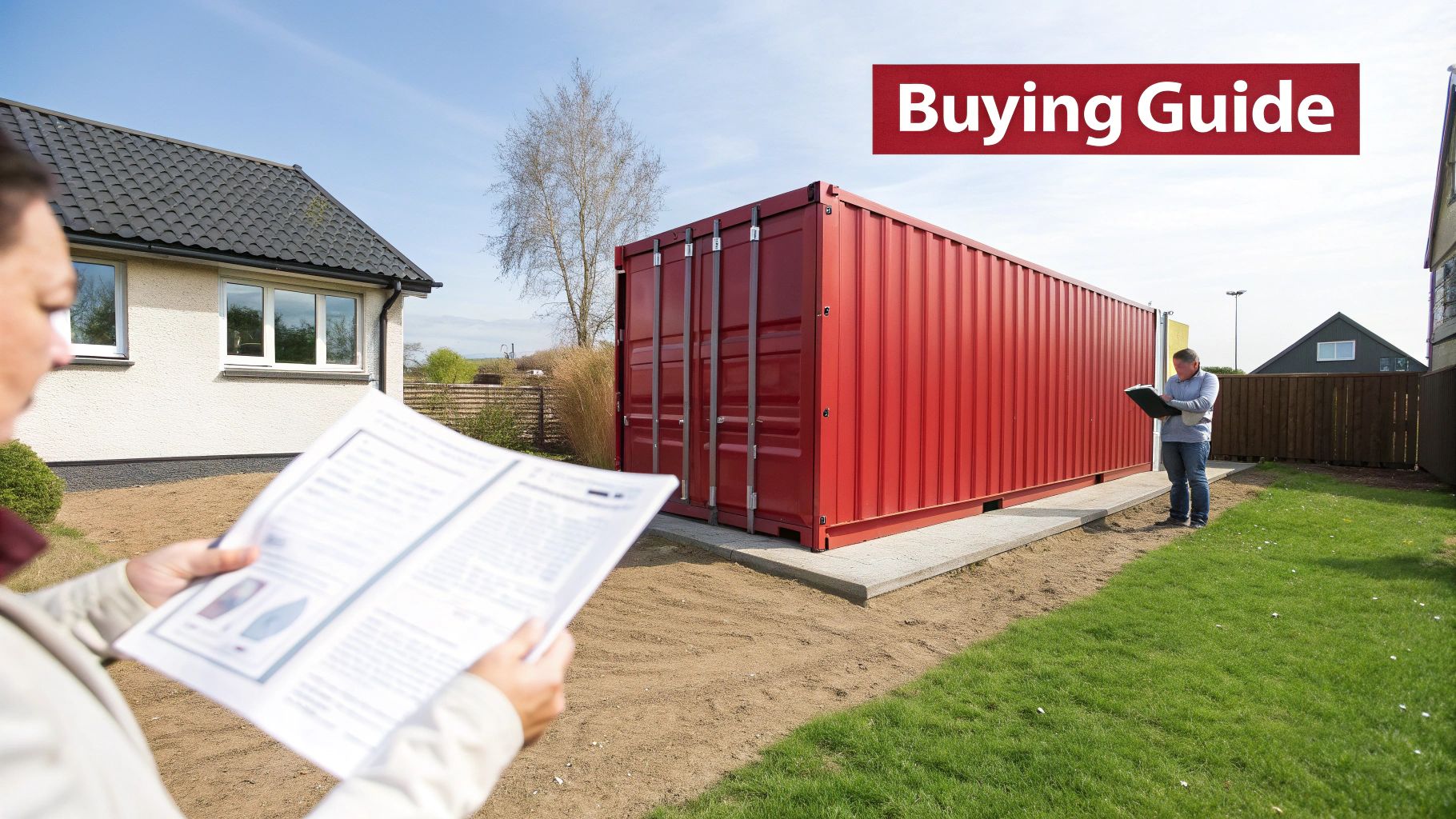
Deciding on a container purchase in the UK opens the door to all sorts of possibilities, whether you need simple on-site storage or you’re planning something more ambitious like a home office or workshop. But a good purchase starts with getting the basics right before you spend a penny. Think of it less like buying a steel box and more like investing in a tough, versatile asset that's built to last.
Your first big decision is a classic one: budget versus condition. Do you go for a brand-new 'one-trip' container with a perfect finish and the longest possible lifespan? Or does a more budget-friendly used container offer the right mix of value and function for what you need? Each route has its own clear pros and cons.
To get this right, you need to think about a few key things right from the start. These initial choices will steer the rest of your buying journey, affecting everything from the final price to how useful the container will be in the long run. Nailing these down is your first step toward a great investment.
Here are the big questions you need to answer:
A successful container purchase is about more than just the price—it's about matching the right unit, condition, and logistics to your specific requirements. A thoughtful approach ensures your container serves its purpose effectively for years to come.
Before you jump in, it's worth mapping out these key decisions. The table below summarises the most important choices you'll face.
| Decision Point | Key Considerations | Common Options |
|---|---|---|
| New vs. Used | Budget, appearance, expected lifespan, intended use. | New ('One-Trip'): Pristine condition, long life. Used: Cost-effective, various grades available. |
| Size & Type | Space on-site, volume needed, special requirements (e.g., height). | Sizes: 10ft, 20ft, 40ft. Types: Standard Dry, High Cube, Open Top. |
| Delivery & Siting | Site access for a large lorry, ground conditions, required lifting equipment. | Hiab (crane-fitted) lorry, sidelifter, forklift offload. |
| Customisations | Security needs, ventilation, insulation, access requirements. | Lockboxes, vents, windows, personnel doors, insulation lining. |
Thinking through these points will put you in a much stronger position when you start talking to suppliers.
Ultimately, this guide is your roadmap. We’re cutting through the industry jargon to give you practical, straightforward steps. By understanding these initial decisions, you can navigate the market with confidence and find the perfect container for your project and your budget.
Right, so you’ve decided a shipping container is the answer. Now comes one of the first, and biggest, decisions you’ll make: do you go for a brand new unit or a used one? It's a classic trade-off. You're balancing the immediate cost against the container's appearance and how long it'll last you. There’s no single right answer here—it all comes down to what you need it for.
A new container, what we in the industry call a ‘one-trip’ container, has done exactly that. It's made a single journey from a factory in Asia, carrying cargo to the UK. This means it turns up on your doorstep in almost perfect nick, with maybe just a few minor scuffs from its voyage. If looks matter for your project—say, you're building a pop-up shop, a slick garden office, or anything else your customers will see—then a one-trip is the way to go.
On the flip side, a used container can save you a serious amount of cash. This makes it the default choice for straightforward storage, a temporary site office, or for agricultural use where a few dents and scratches don't matter. These containers have earned their keep in the global shipping fleet for 10-15 years. While they’ll show signs of a hard life, they're still made from incredibly tough Corten steel and have plenty of years left in them.
Opting for a one-trip container isn't just about getting a pretty box; it's an investment in a long, hassle-free life. You’re getting fresh paint, perfect door seals, and a spotless interior. It’s a unit with its entire lifespan ahead of it, which can easily be 25 years or more with a bit of basic care. You can pretty much forget about immediate repairs or maintenance.
A one-trip container is your best bet if your plans involve:
Yes, the initial cost is higher, but that’s balanced out by its long-term value, better resale potential, and the fact that it's ready to use straight away without needing any work.
The biggest draw for a used container is, without a doubt, the price. But "used" can mean a lot of things, and it's vital you understand the different grades to avoid ending up with a rusty, leaky mess. Any decent supplier will have a clear grading system to tell you exactly what you’re buying.
Understanding the language of container grading is your best tool for making a smart used container purchase. Don't just look at the price—ask for the grade and what it guarantees.
In the UK, you’ll mainly come across these grades:
Whether you're viewing a container in person or asking the supplier for detailed photos, a thorough check is a must for any used container purchase in the UK. Focus on these key areas to see what you're really getting for your money.
When you picture a shipping container, you probably see a standard rectangular box. That’s not wrong, but it’s only scratching the surface. To make a smart container purchase UK buyers will be happy with, you need to get familiar with the surprising variety of sizes and specialised types out there, each built for a specific job.
Getting this choice right from the start saves a world of headaches later on. Think of it like choosing a tool – you wouldn't use a sledgehammer when you need a screwdriver. Picking the wrong container can mean wasted space, awkward access, or even damage to whatever you’re storing.
Consider this section your field guide. We'll cut through the jargon and give you practical advice to help you match the perfect unit to your needs.
The containers you see most often are the 20ft and 40ft standard dry vans. There's a good reason they're the backbone of global shipping and UK storage – they offer a fantastic balance of capacity and footprint.
A 20ft container is the go-to choice for on-site storage, whether it’s for a construction site, a farm, or even just extra space at home. It gives you roughly the same room as a single-car garage, making it perfect for tools, equipment, business archives, or the contents of a small flat during a move. For a detailed breakdown, you can learn more about the exact dimensions of a 20 foot shipping container in our dedicated guide.
The 40ft container simply doubles the length, offering a massive amount of storage. These are ideal for bigger commercial needs, large workshop conversions, or holding significant amounts of stock.
So, what do you do when you need to store taller items like a mini-digger, pallet racking, or stacked furniture? That’s where the High Cube (HC) container proves its worth.
High Cube containers are identical in length and width to the standard models but have one crucial difference: they're one foot taller. It might not sound like a lot, but that extra height boosts the internal volume by around 12%. This can be a real game-changer, allowing for more efficient stacking, accommodating bulky machinery, or just creating a more open, less claustrophobic feel for conversion projects.
Choosing a High Cube over a standard container is one of the most cost-effective ways to increase your storage capacity without needing a larger ground footprint. That extra foot of height often comes at only a marginal price increase.
As we covered earlier, your first big decision is whether to go for a new or used container. This simple flowchart sums it up nicely.
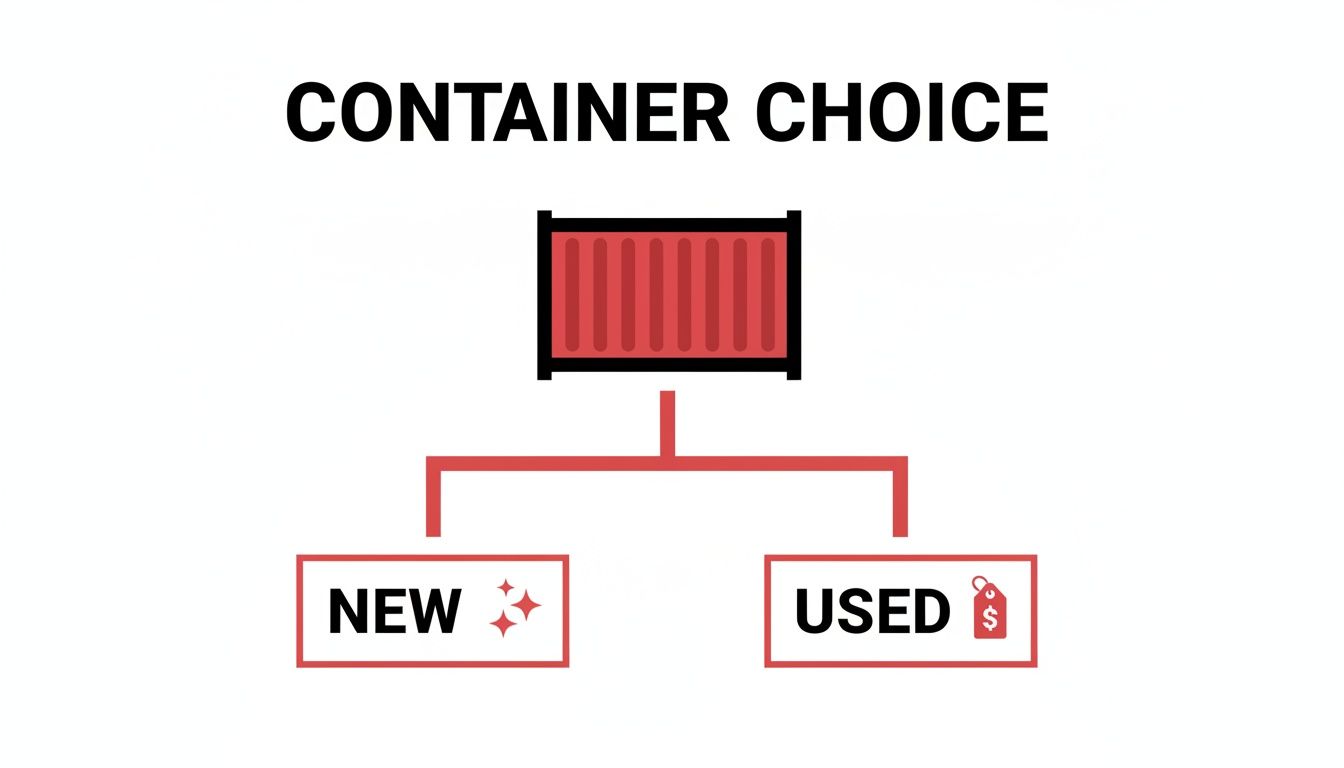
It all starts with condition – pristine and new, or cost-effective and used. Once you’ve made that call, you can narrow down your options on size and type.
Beyond the standard and high cube models, there’s a whole world of specialised containers designed to handle unusual cargo or solve unique storage problems. They’re less common for general use, but knowing they exist can be a lifesaver.
The fact that so many different container types are available points to a healthy and growing market. In fact, the UK shipping container market is projected to grow by 2.1% CAGR from 2025 to 2035, thanks in large part to e-commerce and the ever-present need for slick logistics. This steady demand means you’ll have a wide choice of both standard and specialised units.
When you’re looking to buy a shipping container here in the UK, it’s all too easy to fixate on the price tag. But that figure on the quote? That’s just the beginning of the story. To avoid any nasty surprises, you need to think about the total cost of ownership – everything from the unit itself to getting it perfectly placed on your property.
The final price of the container is a moving target, shaped by a few key things. The size you choose (20ft, 40ft, High Cube), its history (new 'one-trip' or a seasoned used model), and any modifications it already has will all play a big part. But it doesn't stop there. Bigger market forces like global steel prices and simple local supply and demand can make prices swing.
And demand is certainly booming. In the first quarter of 2025, UK ports saw a massive 13% jump in container tonnage, hitting a staggering 18.2 million tonnes. That kind of activity puts a squeeze on availability and can definitely nudge prices upwards. You can see the official figures on the government's port freight statistics page.
Once you've picked your container, the next big number to consider is the delivery cost. It’s not a simple flat fee; the final price depends on the distance from the depot to your door, the type of lorry needed for the job, and how tricky the drop-off will be.
Don't forget to factor this in from the start. You can use a general shipping calculator to get a rough estimate, but you'll need a firm quote from your supplier, as the specific vehicle required makes all the difference.
The single biggest mistake people make is underestimating the cost and complexity of the delivery. Figuring out how you'll get the container from the lorry to its final resting place is just as important as choosing the right unit in the first place.
The type of delivery vehicle you'll need comes down to one simple question: what lifting gear do you have on-site? Getting this right is the key to a stress-free delivery day.
Standard Flatbed Lorry: This is your no-frills, most affordable option. An articulated lorry shows up with your container on the back... and that's it. It has no way of getting it off. This only works if you have your own heavy-duty kit ready to go, like a massive forklift or a crane that can safely handle several tonnes.
HIAB Crane Lorry: This is, by far, the most common choice for UK deliveries, and for good reason. A HIAB is a rigid lorry with its own crane built-in. The driver can lift the container right off the truck and place it exactly where you want it. It costs more, but it’s an all-in-one solution that saves you the headache of hiring separate lifting equipment.
A successful delivery is all about preparation. If the driver can't get safe and clear access, you could be looking at a failed delivery attempt – and that gets expensive, fast.
Here’s your pre-delivery checklist to make sure everything goes off without a hitch:
Clear the Path: Is the route to your drop-off spot wide enough for a huge lorry? Walk the path and look for tight turns, weak bridges, or gates that are too narrow.
Solid, Level Ground: The spot where the container will live needs to be firm and level. Think concrete, tarmac, or properly compacted hardcore. If you place it on soft ground like grass or soil, it will sink over time, and you'll have a nightmare trying to open the doors.
Check for Overhead Hazards: Look up! Walk the access route and scan the placement area for low-hanging tree branches, telephone lines, or power cables. Anything that could get in the way of the HIAB's crane needs to be dealt with.
Give Them Room to Work: A HIAB lorry needs a surprising amount of space to park up, extend its stabiliser legs, and operate the crane safely. Make sure the entire area is clear of cars, equipment, or any other obstacles before the driver arrives.
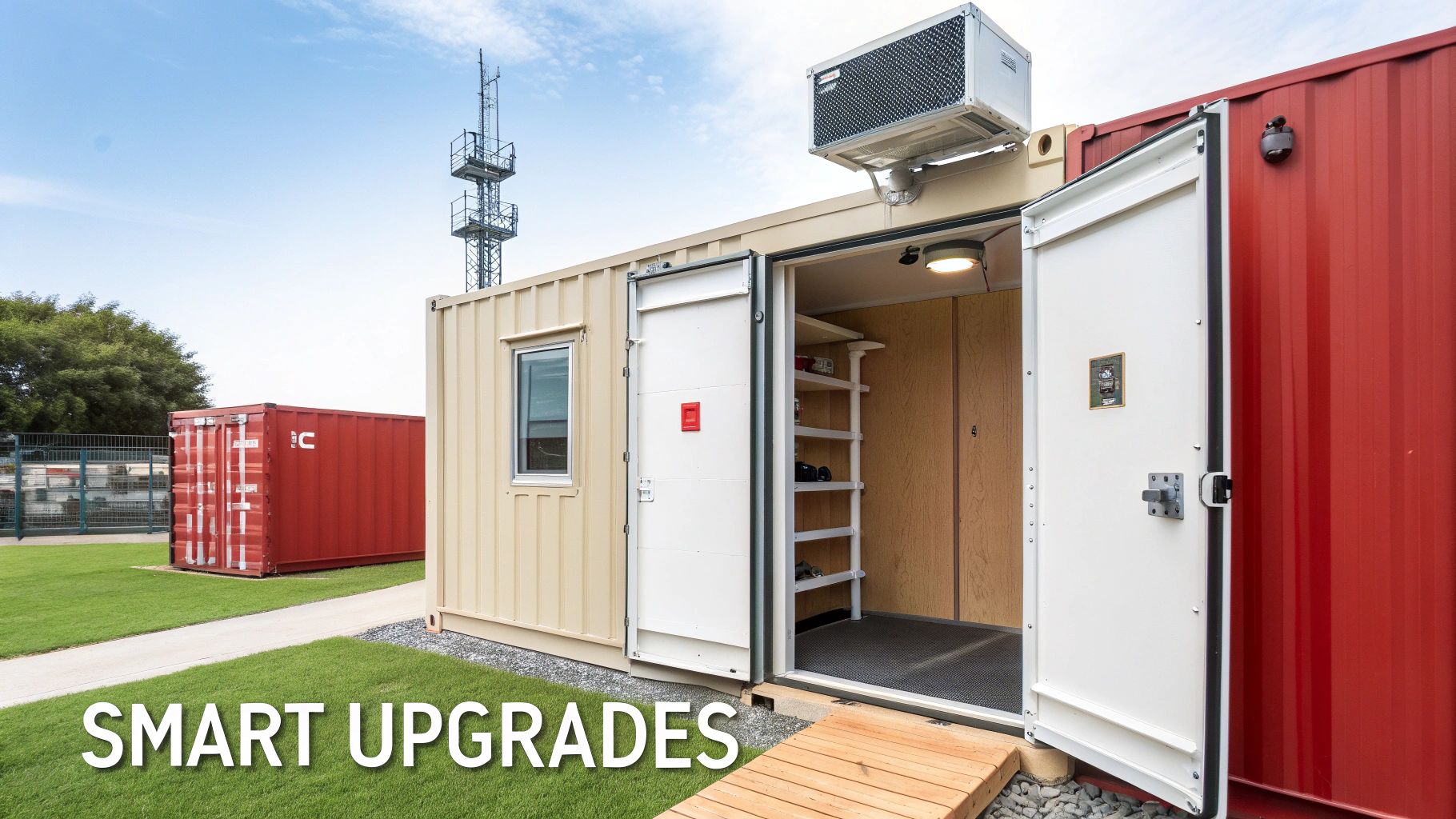
A shipping container is one of the most versatile bits of kit you can buy, but its true potential is only really unlocked with a few smart customisations. Think of the basic steel box as a blank canvas. It's the accessories you add that transform it from a simple box into a secure, functional, and efficient space that’s perfectly suited to what you need.
These aren't just cosmetic add-ons, either. They're practical, value-adding investments that protect what's inside, make the container easier to use, and maximise the return on your container purchase in the UK. From simple security boosts to clever off-grid solutions, the right accessories make all the difference.
For most container owners, the number one priority is security. Containers are built tough, no doubt about it, but their standard locking points can be a weakness for a determined thief. Upgrading your security is a simple but absolutely critical first step.
The most effective and popular way to do this is with a high-security lockbox. This is essentially a thick steel shroud that gets welded onto the container doors, completely covering your padlock. It stops bolt cutters or angle grinders from getting anywhere near the lock, acting as a powerful deterrent both visually and physically.
Consider these essential security additions:
A robust security setup isn't an expense; it's insurance for the valuable goods, tools, or equipment you store inside. A simple lockbox installation is often the most cost-effective security measure you can take.
One of the biggest enemies of anything you store in a container is condensation, or what's grimly known as 'container rain'. As the temperature outside changes, moisture in the air inside condenses on the cold metal ceiling and walls, eventually dripping down onto your belongings. This leads to mould, mildew, rust, and often irreparable damage.
The solution is actually quite straightforward: ventilation. By installing a few dedicated container vents, you create airflow that allows the damp, warm air to escape before it can cause trouble. Even a couple of small, weatherproof vents can make a massive difference, keeping the air inside fresh and dry. For sensitive items, good ventilation is an absolute must.
This principle of protecting the internal environment goes beyond just moisture. Proper insulation is key for regulating temperature, which is essential whether you're creating a comfortable converted space or just protecting goods from extreme heat or cold. For a deep dive into your options, check out our guide on shipping container insulation.
Beyond security and ventilation, there's a whole range of accessories that can dramatically improve the day-to-day usability of your container. The standard cargo doors are heavy and cumbersome, so adding a personnel door gives you quick and easy pedestrian access without having to wrestle with the main doors every time.
To make the most of the internal space, good organisation is key. Instead of just piling boxes on the floor, consider these clever solutions:
The market for container accessories is always moving forward. For instance, the demand for smart containers in the UK is projected to explode, growing from £0.52 billion in 2025 to £2.82 billion by 2035, driven by the need for real-time tracking with IoT tech. This trend only increases the need for reliable physical accessories like vents and lockboxes to protect the high-value electronics and cargo inside these advanced units.
You’ve got your container type picked out and your customisations planned – brilliant. But there are a couple of crucial hurdles left to clear before that container lands on your property: navigating the local red tape and, just as importantly, finding a supplier who won't let you down. Get these two things right, and you're protecting your investment and saving yourself from a world of future headaches.
Let's quickly touch on the legal side. For most people using a container for temporary storage, planning permission isn't usually an issue. However, that can change in a heartbeat if the council decides it's a permanent structure, especially if it's in a residential spot or somewhere highly visible. The rules can be wildly different from one local council to another, so it is always best practice to contact your local planning authority for a straight answer before you pay for anything. That one phone call can save you a mountain of hassle.
Choosing the right supplier is every bit as important as choosing the right container. A good one delivers quality, transparency, and support. A bad one? Well, they can deliver costly delays, a heap of disappointment, and a container that’s seen better days.
Your vetting process needs to be thorough. Start with their online footprint. Do they look professional? Is there a clear contact number and a physical address you can find on a map? Hunt for genuine, recent reviews on independent sites. A couple of grumbles here and there aren't a deal-breaker, but a consistent pattern of complaints about quality, delivery, or surprise costs is a massive red flag. For extra peace of mind, it’s worth checking they’re a properly registered UK company.
Before you even think about committing, you need to go in armed with a list of questions. Any decent, honest supplier will be more than happy to give you clear answers.
A supplier’s willingness to answer your questions transparently is one of the best indicators of their reliability. If they rush you, avoid specifics, or pressure you into a quick decision, it's often best to walk away and find someone else.
By taking these steps, you're not just ticking boxes for compliance; you're building a relationship with a supplier you can actually trust. This final piece of due diligence ensures your container is a successful, secure investment from day one. And once it's safely on your property, you'll want to make sure it stays that way – have a look at our expert advice on improving shipping container security.
Buying your first shipping container can feel like a big step, and it's natural to have a few questions. To make things easier, we’ve put together some straightforward answers to the queries we hear most from people just like you.
This is a classic "it depends" situation. More often than not, if you're using the container for temporary storage on your property, you probably won't need planning permission.
However, the game changes if it starts looking like a permanent fixture, is in a highly visible spot, or you’re plonking it down in a residential garden. Local councils all have their own take on the rules, so our best advice is always the same: have a quick chat with your local planning authority before you buy. It’s a simple check that can save you a world of hassle.
A brand-new 'one-trip' container is a serious bit of kit. Built from tough Corten steel, it'll easily give you 25+ years of service with just a bit of basic care. Think of it as a long-term investment in secure, weatherproof space.
With a used container, its remaining lifespan really comes down to its history and how well you look after it. A good quality used unit that's been certified as wind and watertight can still be a fantastic workhorse, offering another 10-15 years of solid, reliable storage.
Ah, 'container rain'. It’s a common headache, especially in the UK, and it's all down to temperature fluctuations causing moisture to build up inside. The single most effective way to beat it is with good old-fashioned ventilation.
The simplest and best solution is to fit dedicated container vents. They allow air to circulate properly and give that damp, moisture-laden air a way to escape, keeping your gear safe from damp and mould.
If you're storing particularly sensitive items—like important documents or electronics—you could go a step further with an anti-condensation coating on the ceiling. For the ultimate protection, a full insulation and lining job is the way to go. But for most people, proper ventilation is the key to a dry, functional, and long-lasting container.
For all your container maintenance and customisation needs, Quickfit Container Accessories provides a huge range of high-quality, reliable parts. Explore our solutions at https://www.quickfitcontaineraccessories.co.uk.
{"one"=>"Select 2 or 3 items to compare", "other"=>"{{ count }} of 3 items selected"}