
Website Orders To Northern Ireland & Republic Of Ireland and USA Now Available!


A twistlock for containers is a clever, rotating connector that secures shipping containers together or fastens them to a transport vehicle like a lorry or train. Think of it as the industrial equivalent of a heavy-duty seatbelt buckle; it slots into a container’s corner casting, and a simple turn locks it securely in place, stopping any unwanted movement.
Picture trying to stack enormous, multi-tonne building blocks, dozens of metres high, on a ship that’s rolling on the open sea. Without a foolproof way to connect them, the results would be catastrophic. This is the very problem the twistlock for containers was engineered to solve. It’s a simple yet incredibly strong component that underpins the entire global logistics network.
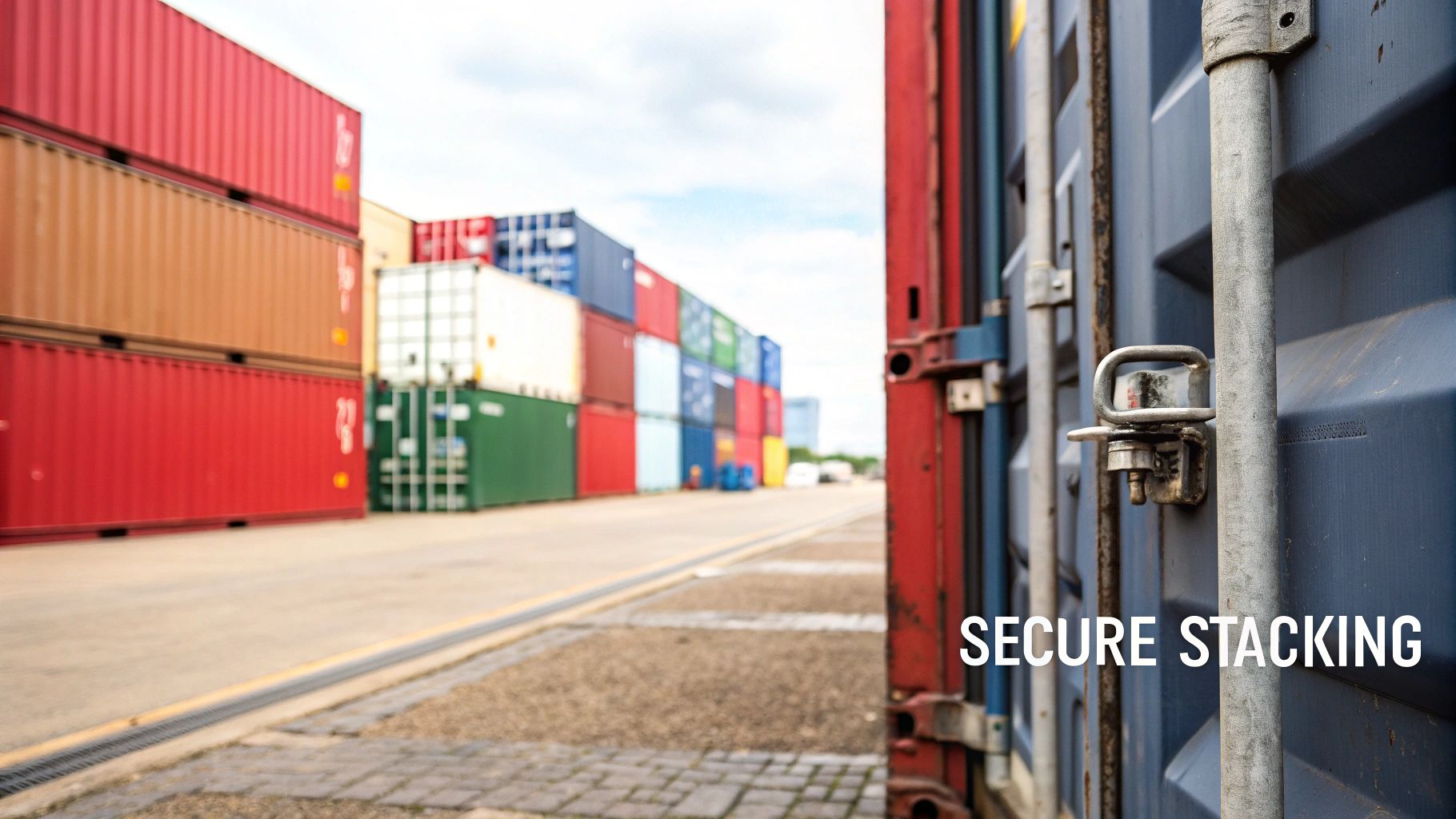
At its heart, a twistlock is a marvel of mechanical simplicity and brute strength. It’s designed to fit perfectly into the standardised oval hole found in the corner castings of every ISO shipping container. Once it's inserted, you turn a handle, which rotates the head of the lock by 90 degrees. This action secures it within the casting, effectively locking two containers together vertically or fastening a single container down to a flatbed chassis.
It's hard to overstate just how important this little device is. On massive container ships, thousands of twistlocks work together to create a single, solid block of cargo, strong enough to withstand the immense forces of ocean travel. A single failed lock could set off a dangerous domino effect, leading to lost cargo and putting lives at risk.
A correctly engaged twistlock prevents containers from shifting, sliding, or tipping over. This single point of connection is responsible for maintaining the stability of multi-tonne stacks, whether they are on a ship, train, or temporarily stored at a depot.
But their job doesn’t end on the high seas. On land, twistlocks are essential for securing containers to lorries and trailers, making sure they stay put during road transport. Of course, securing the container is just one piece of the puzzle; a complete approach to safety at loading points should also include understanding essential loading dock safety measures like wheel chocks for trailers.
The use cases for a twistlock for containers have also branched out into some pretty creative areas:
Getting to grips with how this small but mighty component works is the first step towards ensuring safe, efficient, and compliant container handling in any situation.
Navigating the world of container fittings can feel like learning a new language, but getting to grips with the different types of twistlocks is simpler than it seems. Not all are created equal, and each has been engineered for a specific job. Think of them like different keys for different locks—choosing the right one is absolutely essential for safety and function.
The main difference comes down to how they work and where they’re meant to be used. Some are designed for stacking containers one on top of the other, others for fastening them down to a lorry chassis, and a few specialised models exist for unique situations. Let's break them down into their core groups: manual, semi-automatic, and dovetail.
Manual twistlocks are the most common and straightforward type you'll come across. They rely on a person to physically turn a handle or lever to lock and unlock the mechanism. This hands-on approach makes them incredibly reliable and dead simple to inspect visually.
Their main job is stacking containers vertically. A worker slots the twistlock into the corner casting of the lower container before the upper one is carefully lowered into place. Once everything is aligned, the lever is turned 90 degrees, securely locking the two units together.
Thanks to their simple, tough-as-nails design, manual locks are a cost-effective and dependable solution for depots, yards, and any static stacking situation. They do have their limits, though. When stacking containers several high, for example, reaching the levers on the upper tiers requires ladders or elevated platforms, which can introduce safety risks and slow down operations.
If you want a closer look at various stacking solutions, you can explore a range of container stacking pins to see how different components work together.
Semi-automatic twistlocks (or SATLs) are a huge step up in efficiency, especially in busy port and terminal operations where every second counts. They are cleverly designed to lock on their own but need a manual action to be unlocked.
Here’s the genius of it: a crane operator lowers a container fitted with semi-automatic twistlocks onto the one below. The sheer weight of the container is enough to engage the locking head automatically. No one needs to be up there. To release it, a worker on the ground simply pulls a lanyard or wire attached to the lock's lever, which disengages the mechanism from a safe distance.
This design brilliantly solves the problem of reaching high stacks. Because they can be unlocked from ground level, they remove the need for personnel to work at dangerous heights, which drastically improves safety and speeds up the entire container handling process. They strike a smart balance between automation and manual control.
Dovetail twistlocks are a special breed, used almost exclusively for securing containers to the bed of a lorry, trailer, or other vehicle chassis. They get their name from their unique base, which is shaped just like a dovetail joint you’d find in woodworking.
This dovetail base slides neatly into a matching recessed housing—called a dovetail foundation or socket—that is welded directly onto the vehicle’s frame. Once the twistlock is seated in its foundation, the container is lowered on top, and the operator simply turns the handle to lock it securely in place.
Unlike stacking twistlocks that connect two containers, the dovetail twistlock's sole purpose is to create a non-permanent but exceptionally strong connection between a container and a transport platform, preventing any movement during transit.
This design provides a secure, flush fit and is absolutely essential for meeting safety compliance for road and rail haulage.
To make the choice clearer, here’s a quick breakdown of how these common twistlocks compare.
Each type of twistlock is built for a specific task. Whether you’re stacking in a yard, loading onto a ship, or securing a container to a lorry, the right hardware makes all the difference. This table highlights the key distinctions to help you decide.
| Twistlock Type | Primary Use Case | Locking Mechanism | Key Advantage |
|---|---|---|---|
| Manual | Stacking containers in depots or yards. | Operator physically turns a lever by 90 degrees. | Simplicity, reliability, and cost-effectiveness. |
| Semi-Automatic | High-volume stacking in ports and terminals. | Locks automatically under weight, unlocks manually via a lanyard. | Enhances safety and speed by eliminating work at height. |
| Dovetail | Securing containers to lorry or train chassis. | Slides into a fixed dovetail foundation and is manually locked. | Provides a secure, flush connection for transport safety. |
As you can see, every twistlock for containers serves a distinct purpose. Selecting the correct one from a supplier like Quickfit Container Accessories is fundamental to running a safe and efficient operation.
Knowing what a twistlock for containers does is one thing, but using it correctly and safely on a busy site is a completely different ball game. Proper installation isn't just about clicking two boxes together; it's a critical safety measure that stops multi-tonne loads from shifting, falling, or causing a catastrophic accident. Nailing the process ensures a rock-solid connection, every single time.
The whole operation comes down to getting the twistlock and the container's corner casting perfectly aligned. These castings are standardised under ISO 668, which means any compliant twistlock should slot in nicely. Before you even think about installing the lock, your first move should always be a quick visual check.
Before a container is lifted or a twistlock is put in position, take a moment for a few quick but vital checks. This simple habit can head off some serious problems down the line.
Once you’ve confirmed both parts are clean and in good working order, you can move on to alignment. Whether you're lowering a container onto a chassis or stacking one on top of another, the crane operator needs to line up the corners with precision. The twistlock should slide straight into the casting without being forced.
Engaging a manual twistlock is a straightforward action, but getting the details right is what guarantees a safe lock. Rushing this part is a classic recipe for an accident.
Never assume a twistlock is secure just because the handle has been moved. Always do a visual check to confirm the handle is fully rotated to its final locked position. An incomplete turn means the head isn't fully engaged in the casting, giving you little to no securing force.
This infographic shows the fundamental principles behind the most common twistlock designs.
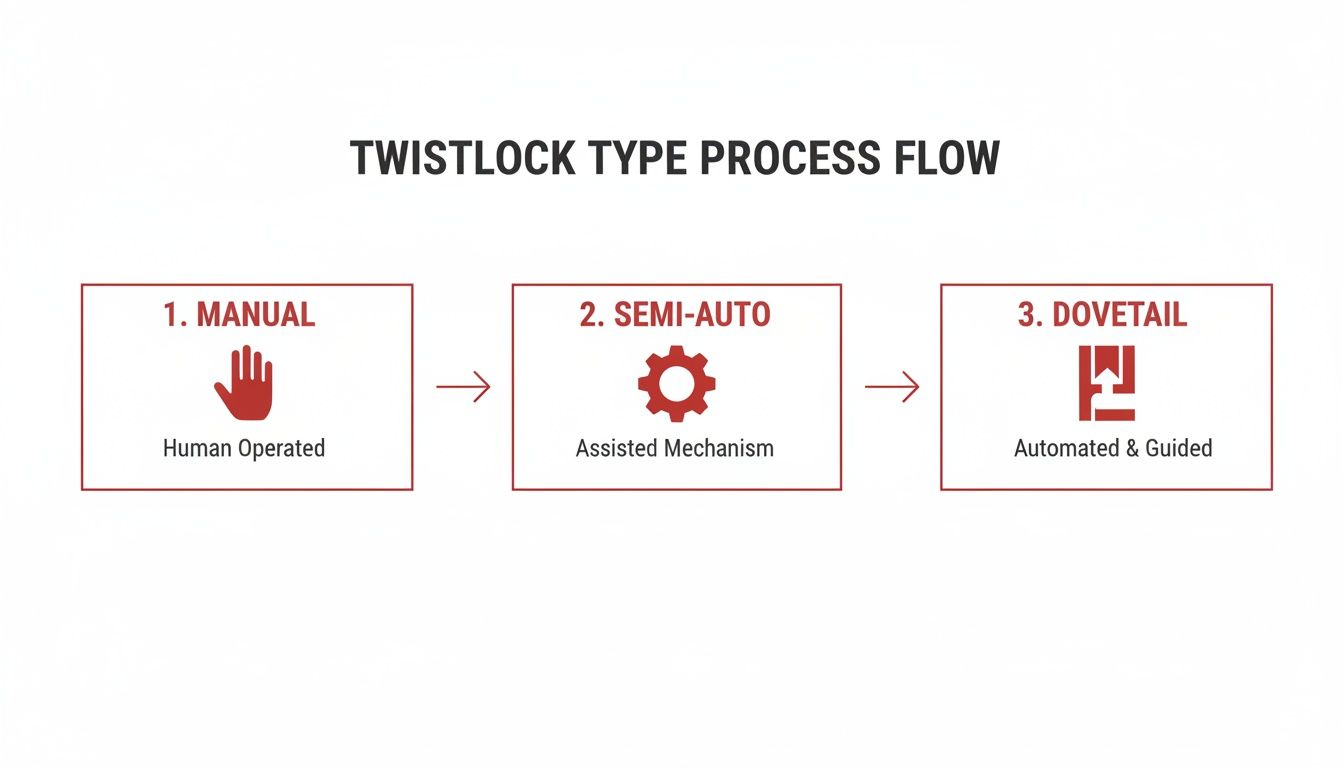
The progression from manual to semi-automatic designs shows the industry’s push to reduce how much hands-on work is needed at height—a huge factor in improving site safety.
A few common errors can completely undermine the safety of a twistlock for containers. Anyone involved in container handling needs to be aware of these pitfalls.
The most common mistake by far is not turning the handle the full 90 degrees. An operator in a rush might just give it a quick shove, leaving it sitting at a 45-degree angle. In this position, the lock has zero load-bearing capacity and can pop open with the slightest vibration.
Another serious blunder is trying to lock a misaligned container. If the corners aren't perfectly matched, the twistlock head can't seat correctly. Forcing the handle will just damage the mechanism, making it useless for the next job. For those needing a secure, non-permanent base on the ground, a reliable shipping container twistlock fixing plate is a great way to provide a stable foundation without any welding, ensuring the container is properly anchored right from the start.
By building these simple, methodical checks into your daily routine, you can operate twistlocks with confidence and dramatically cut the risk of on-site incidents.
A twistlock for containers might seem like a simple chunk of steel, but its strength and reliability are only as good as its condition. Think of it like the brakes on your car or the harness on a safety line—it’s a small component doing a massive job, and it demands regular attention to perform without fail. Proactive maintenance isn’t just about making your equipment last longer; it’s a non-negotiable part of keeping your site safe and compliant.
Ignoring a twistlock's condition is a gamble with incredibly high stakes. A component that’s rusted, bent, or seized isn’t just a potential problem; it’s a catastrophic failure waiting to happen. By putting a simple but consistent inspection routine in place, you can spot trouble long before it leads to accidents, costly downtime, or damage to valuable cargo.
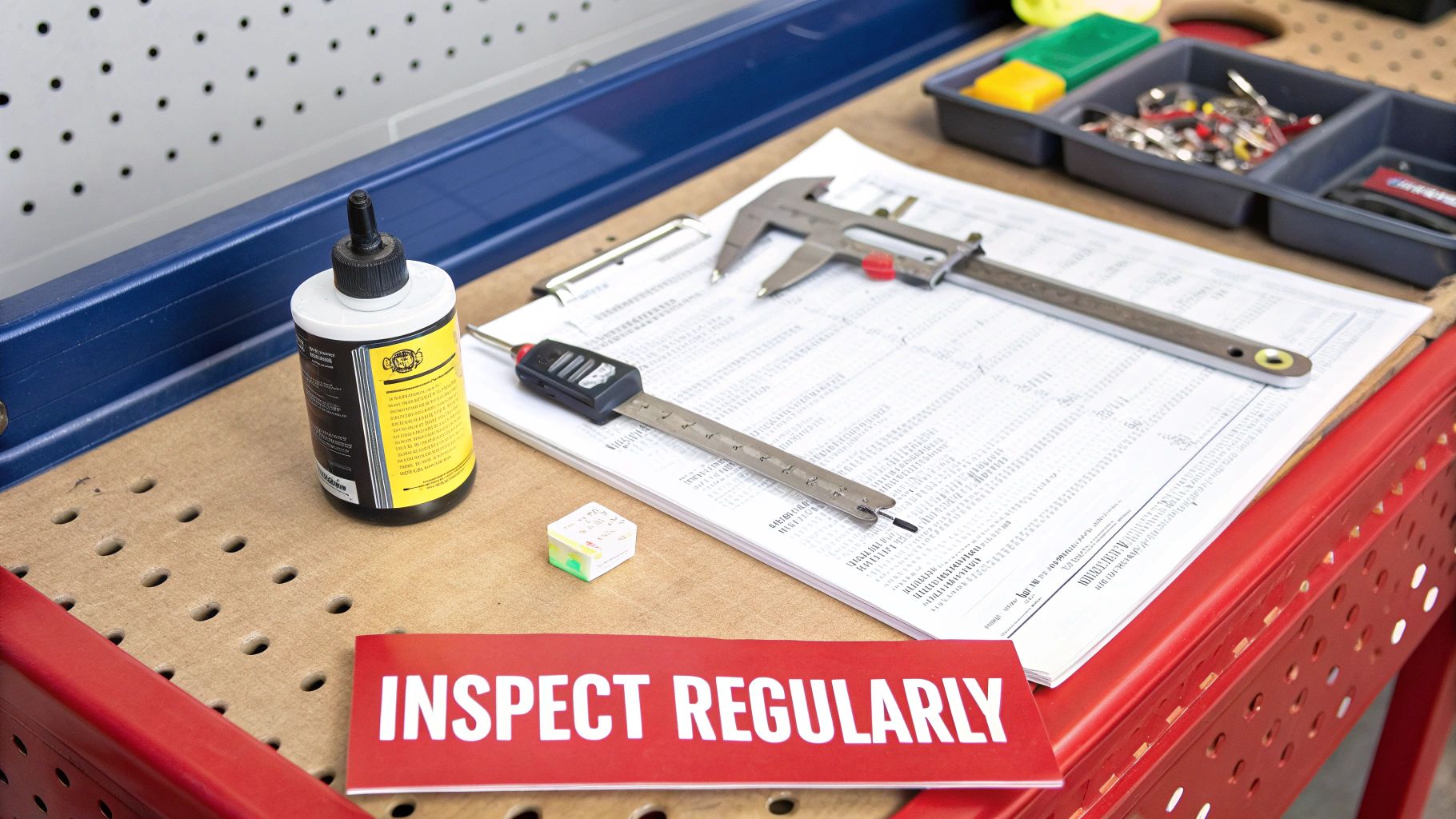
A thorough inspection doesn’t need to be complicated. It’s all about knowing the warning signs that tell you a twistlock is no longer fit for service. We strongly recommend running through these checks before every single use, especially in high-volume settings where wear and tear happens fast.
A twistlock should never need a hammer or an extension bar to operate. If you can't move the handle by hand, that device needs to be taken out of service immediately for a closer look or disposal.
The focus on physical security measures like this is only growing. The UK container security market, where the twistlock for containers plays a crucial role, hit an estimated £95 million in 2023. Projections show it surging to over £445 million by 2030, driven by rising logistical threats and a booming self-storage sector. Across more than 1,135 container sites, operators rely on these devices to protect their assets. You can find more insights on the UK container security market growth from Grand View Research.
Proper cleaning and lubrication are vital for smooth operation, especially with the often harsh UK weather. Seawater, road salt, and grit are the natural enemies of any mechanical device, and twistlocks are no exception.
After clearing away debris with a wire brush, it's time to apply a suitable lubricant. For the UK's damp and variable climate, a heavy-duty, marine-grade grease is usually your best bet. These lubricants are made to resist being washed away by water and provide lasting protection against corrosion, ensuring the mechanism keeps working correctly even in the worst conditions.
Knowing when to take a twistlock out of service is one of the most critical safety decisions you can make. There should be zero tolerance for faulty equipment. A twistlock must be retired and replaced if it shows any of these signs:
By giving your team this clear-cut criteria, you build a culture of safety and make sure that only fully functional, reliable hardware is ever used on your site.
Picking the right twistlock for containers isn’t just another item on a purchase order; it’s a critical decision that directly impacts safety and operational efficiency. Get it wrong, and you’re looking at damaged equipment, costly delays, or worse, a catastrophic failure. This guide will help you move beyond the spec sheets and make a confident, practical choice that’s right for your job.
The first step is to learn how to read the technical data from manufacturers. This isn’t just jargon for engineers—it’s the twistlock's CV, telling you exactly what it was designed to handle. Understanding these numbers is the foundation for making a safe choice, every time.
Every twistlock comes stamped with load ratings that define its absolute limits. These aren't suggestions. Pushing a twistlock beyond its rated capacity is a recipe for disaster.
You’ll typically see three key ratings:
Just as important as the load ratings are the material and manufacturing process. They are huge indicators of a twistlock’s strength and how long it will last.
The difference between forged and cast steel is a big deal. Forged steel is typically much stronger and better at resisting fatigue and impact. That’s because the manufacturing process aligns the metal's grain structure, making it the go-to choice for high-stress, safety-critical jobs.
Cast steel, while often cheaper, can have a less uniform internal structure. It's perfectly fine for lower-stress roles, but you need to know the difference. Always check the material spec to make sure it’s up to the demands of your application.
Once you’ve got a handle on the technical details, you can start matching the right device to your specific needs. The requirements for securing a temporary welfare unit on a building site are completely different from those for stacking containers five-high in a major logistics hub.
Let's look at a few real-world scenarios:
By taking a moment to analyse your application—the weight, the environmental forces, and how it will be used—you can find a twistlock for containers in the Quickfit Container Accessories catalogue that isn't just compatible, but perfectly optimised for safety, durability, and performance.
Choosing the right twistlock for containers is the final, crucial step. It’s the difference between a secure, compliant operation and a disaster waiting to happen. Throughout this guide, we've broken down how these small but mighty components lock down multi-tonne loads, whether they're crossing oceans or sitting on a local building site. Getting this right isn’t just about buying hardware—it’s about investing in reliability and total peace of mind.
At Quickfit Container Accessories, that's exactly what we deliver. We get it. Whether you're stacking containers five-high on a depot or just securing a single welfare unit, you need fittings you can trust completely, no questions asked. Our mission is to arm you with both the best parts and the practical know-how to use them properly.
We’ve built our entire service around what UK businesses actually need: a straightforward process from finding the right part to getting it installed. Our online catalogue is packed with hundreds of specialist parts, ready to go, and our team is always on hand to offer real-world advice.
We back your projects with:
You can see just how vital high-quality fittings are in the UK's booming self-storage sector. Twistlocks are the unsung heroes securing containers at the nation's 1,135 container-based sites, which now make up nearly 40% of all self-storage locations. With so many people running businesses from these units, solid twistlocks from a specialist like us are what stand between them and costly accidents or theft. As the latest SSA UK Report on Cleveland Containers shows, it’s a non-negotiable for operators and industrial teams.
When you choose a supplier like Quickfit Container Accessories, you're not just buying a part in a box. You're partnering with a UK-based expert who’s dedicated to making sure your container operations are safe, secure, and successful.
Ready to find the perfect solution for your project? Dive into our full range of twistlocks, download our detailed Container Handbook for more tips, or give our team a call for some one-on-one advice. To get even more out of your setup, check out our guide to the most essential container accessories.
When you're dealing with something as important as a twistlock for containers, a few practical questions are bound to pop up, especially if you're new to the game. We get it. To clear up any confusion, we’ve put together answers to some of the most common queries we hear.
Our aim is to give you the confidence you need to choose, install, and use your gear correctly and, most importantly, safely. Getting these details right is what keeps a stack of containers stable, secures a box to a lorry for its journey, or provides a solid foundation for a modular build.
In short, no. It’s a common question, but the designs are fundamentally different because they do completely different jobs. You can’t swap them around.
Stacking twistlocks are made to connect two container corner castings one on top of the other, creating a solid vertical link. Think of them as a double-sided key fitting into two identical locks.
Chassis twistlocks, often called dovetail twistlocks, are a different beast altogether. They have a specialised base designed to slide and lock into a fixed socket that’s been welded onto a vehicle's frame. Their one and only job is to anchor a container down for transport. Using the wrong one would create a dangerously insecure connection.
There really is no single "standard" weight capacity, and assuming there is can be a dangerous mistake. The capacity varies massively between different models, materials, and manufacturers. Every single twistlock for containers should have its specific load ratings for tension, shear, and compression clearly marked on the device itself or listed on its technical data sheet.
It is absolutely critical to check these ratings and make sure they’re more than enough for what you’re asking them to do. For example, a twistlock at the very bottom of a five-high stack of loaded containers is under immense pressure. It must have a compression rating capable of supporting the combined weight of all four fully-loaded containers sitting on top of it.
Always, always verify the Safe Working Load (SWL) before putting a twistlock into service.
The biggest mistake we see is people assuming all twistlocks are interchangeable. You must match the device's certified load ratings to the specific forces it will face—from the static weight of a stack to the intense, dynamic shear forces of road transport.
Nope, and that’s one of their biggest advantages. A standard manual twistlock for containers is designed to be operated entirely by hand. The handle or lever gives you all the leverage you need to engage the locking mechanism with a firm, 90-degree turn.
Here's a crucial safety tip: if you find yourself reaching for a hammer, a wrench, or a cheater bar to get a twistlock to turn, stop immediately. That stiffness is a massive red flag. It means there’s a serious problem, like internal rust, trapped grit, or a bent component. Forcing it will not only likely damage it beyond repair but could also result in an incomplete, unsafe lock that fails under load. Take it out of service, period.
At Quickfit Container Accessories, we supply the high-quality, reliable fittings you need to keep your operations secure and running smoothly. You can explore our full range of specialist parts right on our website.
Find the perfect twistlock for your project at Quickfit Container Accessories
{"one"=>"Select 2 or 3 items to compare", "other"=>"{{ count }} of 3 items selected"}