
Website Orders To Northern Ireland & Republic Of Ireland and USA Now Available!


A shipping container tow bar is a heavy-duty piece of kit designed specifically to connect to the corner castings of a container. This allows it to be moved safely by a suitable vehicle, like a tractor or an industrial tug. It’s a far cry from a standard car tow bar, engineered to handle the immense weight and twisting forces that come with shifting a multi-tonne box. It's an absolutely essential tool for precise, off-road positioning in busy industrial environments.
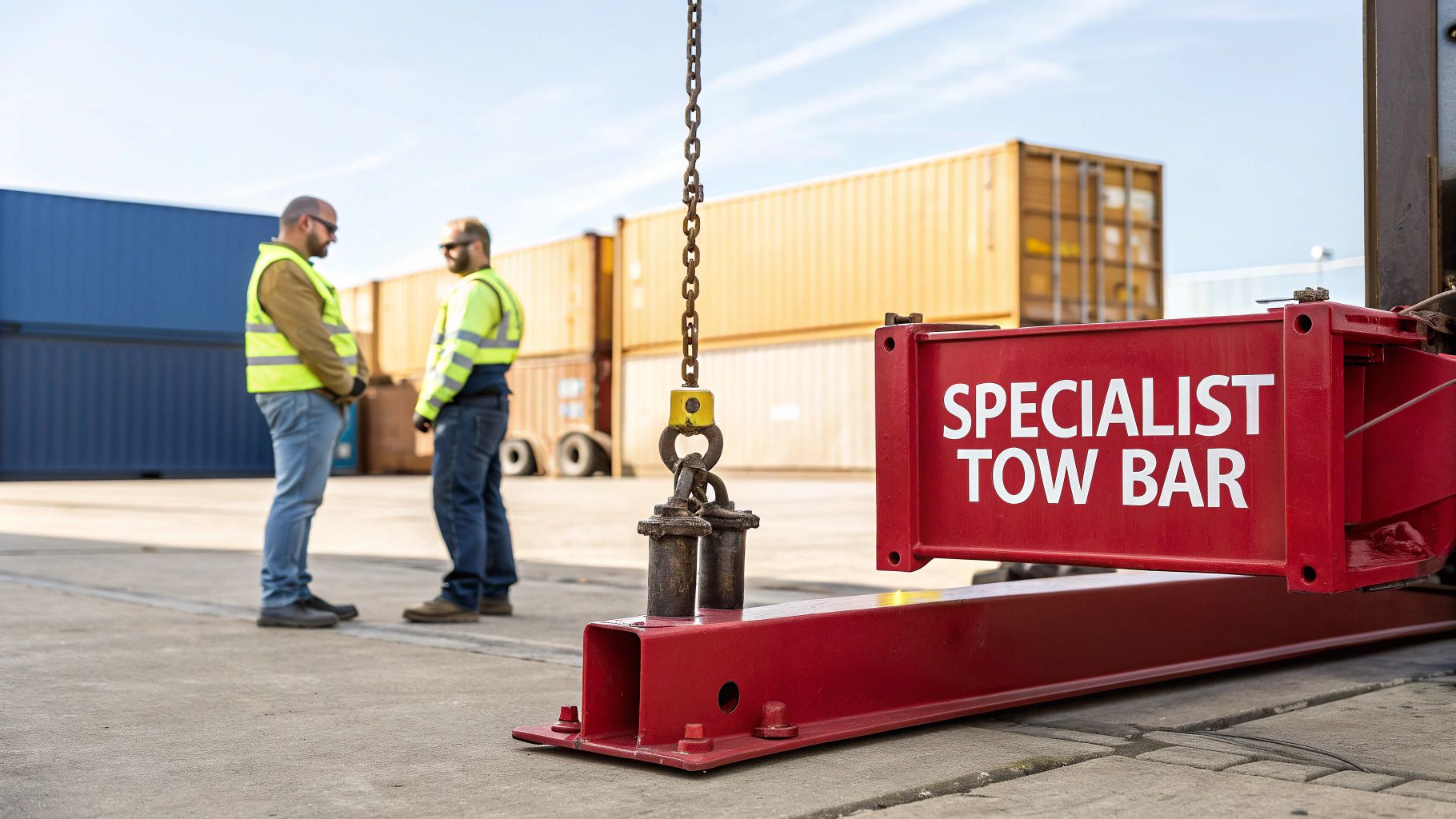
In the tough worlds of logistics, construction, and on-site storage, moving a shipping container is one of those jobs where cutting corners leads to disaster. A specialised shipping container tow bar isn't just a handy accessory; it's a fundamental piece of safety and operational equipment. Its whole purpose is to create a secure, engineered connection point for shifting containers around a site, well away from public roads.
This becomes crystal clear in a few real-world scenarios. Picture a bustling port where containers need to be moved from a stack to a loading bay with millimetre precision. Or think of a construction site where a containerised office needs to be repositioned as the project grows. In these situations, getting it done efficiently and safely is everything.
Trying to move a container with a standard vehicle tow bar or some cobbled-together chain setup is asking for trouble. These methods simply aren't designed to cope with the unique stresses involved. A standard tow ball could shear straight off, and chains can snap under the huge torsional load, leading to a container moving uncontrollably, causing massive property damage, or worse, serious injury.
A purpose-built shipping container tow bar is engineered to lock directly into the ISO corner castings. This creates a rigid, secure connection that distributes forces correctly and prevents the catastrophic failures you see with makeshift solutions.
Using the right equipment is a cornerstone of modern logistics. In fact, UK ports managed around 76 million tonnes of containerised goods in 2023, a figure that highlights the sheer volume of container movements happening every single day. Handling this cargo efficiently relies on specialised gear like tow bars to keep operations flowing smoothly. You can find more insights on this in the UK Chamber of Shipping’s Value of Shipping report.
Beyond just preventing accidents, using the correct tow bar brings some major operational advantages. It allows for much faster turnaround times, enabling a single operator with a suitable vehicle to reposition containers quickly and easily. This efficiency translates directly into cost savings and better productivity.
Ultimately, investing in a specialised tow bar is a non-negotiable part of responsible site management. It guarantees:
Picking the right tow bar for your shipping container is probably the most important decision you'll make for moving them around on-site. This isn't just about finding something that fits; it's about matching the gear to your specific job to keep things safe and efficient. Get it wrong, and you're looking at potential equipment failure, damaged containers, or worse, a serious accident.
Your decision should really boil down to three things: the size and weight of your containers, the type of connection you need, and the kind of work you're actually doing. Each one plays a huge part in figuring out which tow bar is right for you.
First off, think about the containers themselves. Are you just shuffling standard 20ft boxes around, or do you have the big 40-footers in the mix too? While a lot of tow bars are pretty versatile, some are built specifically for one size, which can give you much better stability and control.
Even more critical is knowing the Maximum Gross Weight (MGW) of the containers you plan to shift. An empty 20ft container is about 2.3 tonnes, which is manageable, but load it up and you could be looking at over 30 tonnes. Your tow bar must be rated for the heaviest load you'll ever pull, not just the average.
Choosing a tow bar based on the weight of an empty container is a common and extremely dangerous mistake. Always check the tow bar's load rating against the maximum potential weight of your containers. It's the only way to prevent a catastrophic failure when it's under load.
Shipping container tow bars generally fall into two main camps: rigid and articulating. The difference is pretty simple but has a big impact on how you can use them.
Here’s a quick rundown of the key features for different tow bar types to help you decide what’s best for your operation.
| Tow Bar Type | Typical Load Capacity | Best Use Case | Connection Mechanism | Pros | Cons |
|---|---|---|---|---|---|
| Rigid | Up to 35 tonnes | Straight-line towing on flat, even surfaces (e.g., concrete yards). | Fixed connection to container corner casting. | Simple, robust, excellent stability for predictable tasks. | Lacks manoeuvrability, can cause stress on uneven ground. |
| Articulating | Up to 35 tonnes | Navigating uneven terrain, tight corners, and confined spaces. | Pivoting joint between the hitch and the container connection. | Excellent manoeuvrability, reduces torsional stress. | More complex design, may be slightly more expensive. |
| Forklift Mount | 5 - 15 tonnes | Short-distance shunting with a forklift. | Attaches to forklift tines, connects to corner casting. | Versatile for sites with forklifts, easy to attach. | Lower load capacity, not for long-distance towing. |
| Heavy-Duty | 35+ tonnes | Towing fully-laden, oversized, or specialised containers. | Reinforced steel, often with custom hitch options. | Extremely durable, highest safety margins for heavy loads. | Overkill for empty or light containers, less common. |
Choosing between these options really comes down to the environment you're working in and the loads you're handling. For most general-purpose work, an articulating tow bar offers the best blend of flexibility and strength.
The connection to the container itself is almost always through the ISO corner castings, but how it hitches to your vehicle can differ. Make sure the tow bar's hitching mechanism is compatible with your tractor, tug, or forklift. If you want to see some examples, you can explore a range of container wheels and tow bars to get a feel for the different models available.
Never, ever buy a tow bar without checking its load rating and safety certifications. Here in the UK, any equipment used for shifting heavy loads has to meet some pretty strict safety standards.
Look for products that are clearly marked with their Safe Working Load (SWL) and have been tested to meet the relevant industry regulations. A reputable supplier will have no problem providing this documentation. Making your choice based on these hard facts ensures your operation isn't just running smoothly, but is also fully compliant and, most importantly, safe.
This is where the rubber meets the road—or, in this case, where the steel meets the steel. Moving from theory to practice and physically attaching a shipping container tow bar is all about attention to detail. Getting this hands-on process right ensures the connection is solid and safe, preventing a major headache before you even start moving.
First thing’s first: give your gear a quick pre-use inspection. This isn’t just ticking a box; it's a non-negotiable safety habit. Check the container’s ISO corner castings for any junk packed in there—mud, ice, or general debris. More importantly, you're looking for any signs of damage or warping. A compromised corner casting simply won't guarantee a secure lock.
While you're at it, give the tow bar itself a once-over. Make sure the twist-lock mechanism moves freely and isn't bent or badly worn. If a locking pin struggles to engage, that's a massive red flag telling you something's wrong.
Your setup is just as crucial as the connection. The ground you're working on needs to be as level and firm as you can get it. Trying to hook up a tow bar on a steep slope or soft ground is asking for trouble—the container can shift unexpectedly, making alignment a dangerous and frustrating nightmare.
Once your area is good to go, slowly and carefully reverse the towing vehicle towards the container. Precise alignment is everything here. You need the tow bar's connection points to line up perfectly with the holes in the corner castings. Take your time. Rushing this part almost always leads to misalignment.
This visual guide breaks down the essential selection steps—size, weight, and connection type—that come before you even get to this physical attachment process.
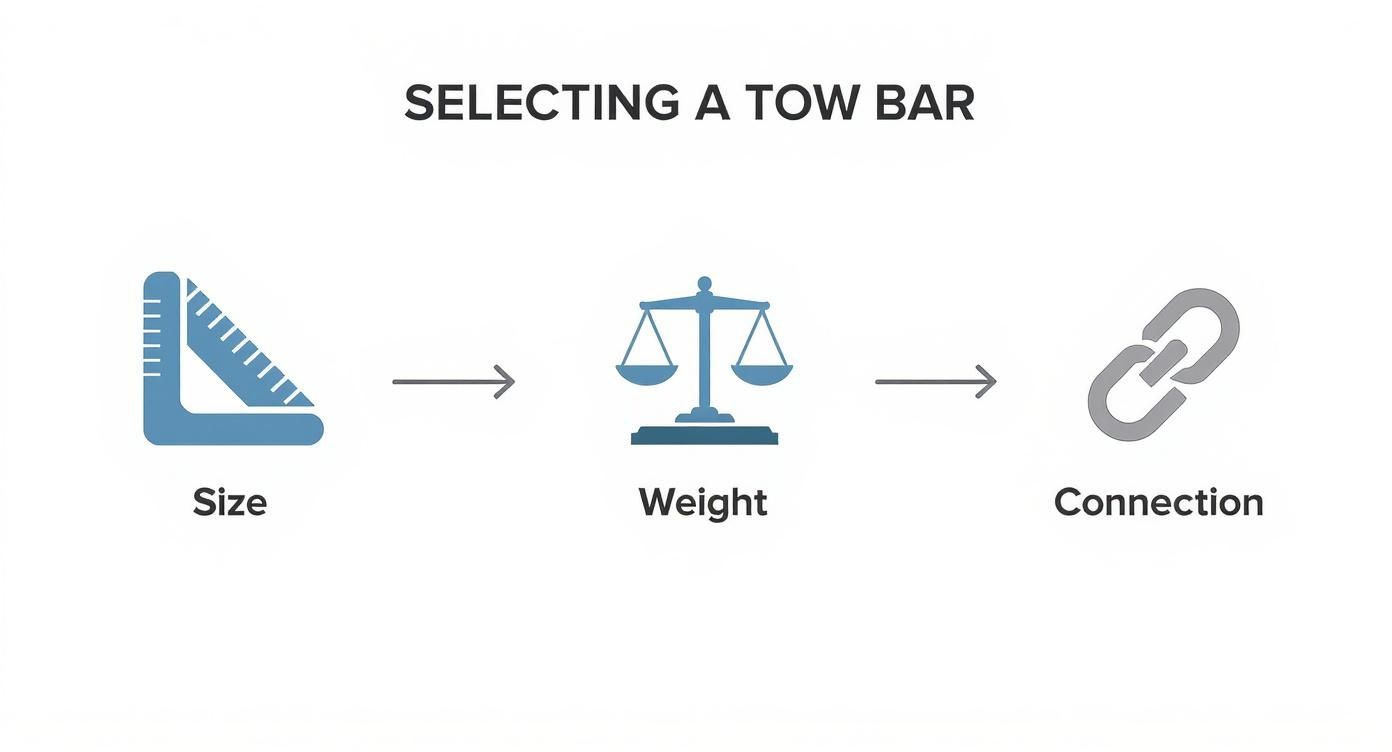
As the infographic shows, a successful attachment really begins with choosing equipment that’s properly rated for your container's specs. It's the only way to ensure a safe starting point.
With the vehicle and tow bar lined up, you can now insert the tow bar's twist-lock heads into the corner castings. They should slide in without a fight. If you feel resistance, don't force it. Just pull back and double-check your alignment and the castings for any blockages.
Once they're in, engage the locking mechanism. This usually involves rotating a handle or lever, which turns the twist-lock head 90 degrees inside the corner casting, locking it down tight. You should feel a solid 'clunk' or a firm stop when it’s fully engaged.
Before you even think about putting it in gear, you have to do a 'tug test'. With the lock engaged, gently drive the vehicle forward an inch or two to put a tiny bit of tension on the connection. This simple move confirms the lock is properly seated and is going to hold under load. It's your final, critical confirmation that you've got a secure hook-up.
This whole process is fundamental to on-site safety. Beyond just connecting the tow bar, you have to make sure the container itself is properly secured for transit. It’s always a good idea to understand general cargo securement principles. For a bit of broader context, the FMCSA Cargo Securement Rules offer some helpful guidelines, even though they're designed for road transport.
By following these steps every single time, you build a rock-solid safety routine that protects your gear, your container, and everyone on your team.
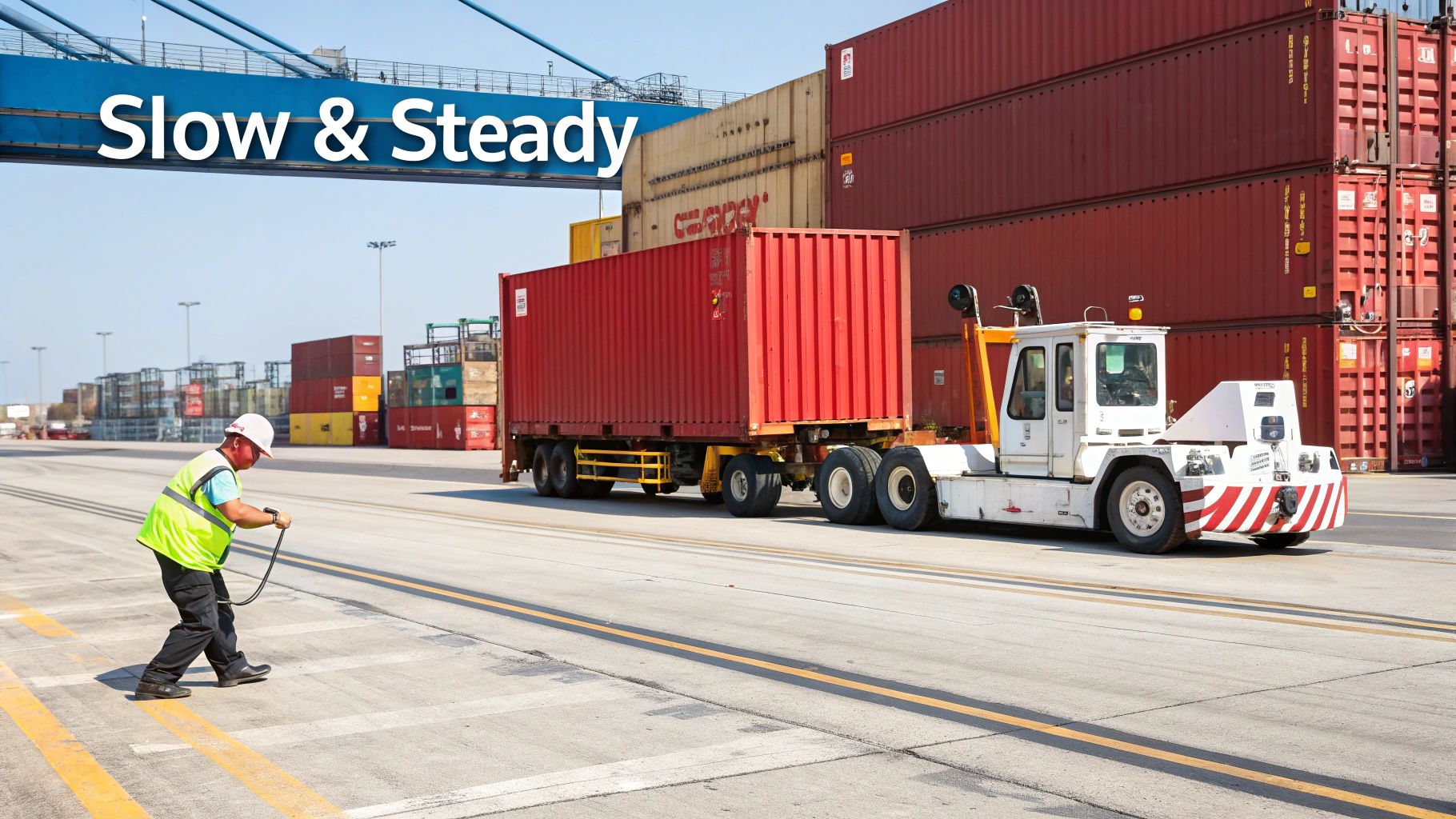
With your shipping container tow bar locked in, the real work begins. Moving a multi-tonne object safely is a different ball game entirely from driving a standard vehicle. It’s all about slow, deliberate actions where anticipation and clear communication are your best friends.
The first rule? Keep your speed right down. You’re not trying to set any records here; you're guiding a massive, rigid weight across what could be uneven ground. Any sudden acceleration or braking puts immense strain on the tow bar and your vehicle, which is a recipe for equipment failure or losing control.
When you need to turn, think wider than you’d ever imagine. The rigid length of the container means tight turns are a fast track to jack-knifing, where the container swings out and collides with your towing vehicle. Always take the widest possible arc, making absolutely sure the path is clear of obstacles and people well ahead of time.
Navigating different ground conditions also demands a bit of forward planning. A smooth concrete yard gives you predictable handling, but the moment you move onto gravel, mud, or the uneven terrain of a construction site, everything changes. The container's inertia becomes much harder to manage, so you’ll need to drop your speed even further and steer clear of any sharp changes in direction.
Before you move anything, no matter how short the distance, always run through a final pre-movement check. A quick walk-around to confirm the path is clear, personnel are at a safe distance, and the tow bar's locking mechanism is still secure can prevent 99% of potential incidents. This isn't just red tape; it’s a non-negotiable professional habit.
Clear, constant communication is absolutely vital, especially if you have a spotter or ground crew helping out. Simple hand signals or a quick radio call ensures everyone knows the plan and can halt the operation instantly if a hazard pops up.
Your pre-movement checklist should become second nature:
The use of advanced shipping container tow bars has become a key part of operational efficiency in the UK's major ports. For example, the £400 million transformation of the Port of Liverpool introduced state-of-the-art systems that allow for incredibly rapid container movements, helping service lorries in under 30 minutes. You can discover more insights about this in Peel Ports’ report on navigating the container market.
A holistic approach is essential for ensuring secure operations. For further reading, consult a comprehensive guide to fleet safety management, which details strategies for protecting drivers and vehicles. This knowledge is especially useful when integrating container towing into your wider site logistics. If you're interested in other ways to increase container mobility, check out our guide on the benefits of container wheels.
A shipping container tow bar isn't a 'fit and forget' piece of kit. To keep it working safely and stay on the right side of UK regulations, you absolutely need a solid maintenance and inspection routine. This isn't just about making your equipment last longer; it's a critical part of managing workplace safety and liability.
If you neglect this, you risk equipment failure at the worst possible moment. A routine container move can quickly turn into a serious incident. The best way to prevent that is by establishing a simple but consistent schedule of checks.
A good maintenance plan really boils down to two things: daily checks and more thorough periodic inspections. Both are equally important for catching small issues before they become big, dangerous problems.
Daily visual checks are your first line of defence. Before every single use, the operator should do a quick walk-around inspection of the tow bar.
A simple five-minute check before each use is the single most effective habit you can build to prevent accidents. It's far better to spot a problem in the yard than to discover it when you have a 20-tonne container in tow.
Beyond the daily glance-over, you should schedule a more detailed inspection periodically—think monthly or quarterly, depending on how often you're using it. This involves giving the tow bar a proper clean to get rid of any dirt and grease that might be hiding defects, lubricating all moving parts like the twist-lock mechanism, and checking that all nuts and bolts are tight.
The boom in e-commerce has put more pressure than ever on UK logistics, which means equipment like container tow bars is seeing a lot more action. The UK shipping container market is growing steadily, with a projected CAGR of 3.08% between 2023 and 2033, mostly driven by the need for fast, cost-effective logistics. You can read the full report from Spherical Insights to get a deeper look at these market trends.
Here in the UK, this kind of equipment falls under general workplace transport safety rules governed by the Health and Safety Executive (HSE). While a tow bar itself might not always fall directly under LOLER (Lifting Operations and Lifting Equipment Regulations 1998) unless it's part of a lifting assembly, the principles of regular inspection by a competent person are a legal requirement under PUWER (Provision and Use of Work Equipment Regulations 1998).
Proper storage is also vital. When it's not in use, keep the tow bar in a dry, designated spot off the ground to prevent rust and stop it from getting accidentally damaged. Keeping your equipment in good nick is only half the battle; ensuring the container itself is stable is just as important. For more on that, check out our guide on shipping container levelling techniques.
When you're dealing with specialised kit like a shipping container tow bar, questions are bound to pop up, even for seasoned operators. Getting the right answers is key to working safely, staying compliant, and dodging expensive mistakes. Here are a few of the most common queries we get from folks on the ground across the UK.
This is probably the number one question we hear. Can you just hook up a container and pull it down the A1? The answer is a hard no.
Shipping container tow bars are built purely for off-road use. Think controlled environments like ports, container yards, construction sites, and private farms. They don’t come close to meeting the DVSA’s legal requirements for on-road vehicle coupling systems.
If you need to move a container on a public highway, you absolutely must use a specialised, road-legal trailer chassis designed for that specific job.
Another big one is what you need to do the pulling. This isn't a job for your everyday pickup truck. The towing vehicle needs serious power, braking capacity, and enough sheer weight to safely handle a container's massive inertia.
You’ll typically see a few usual suspects:
It's critical that the vehicle's gross train weight (GTW) capacity is never, ever exceeded. Always dig out the manufacturer's specs before you even think about hooking up.
"How do I know if the tow bar will even fit?" Thankfully, the industry has this sorted. The vast majority of shipping containers are made to ISO 1161 standards, which locks in the dimensions of the corner castings. Any decent tow bar is engineered to slot in perfectly. That said, it’s always smart to give the corner casting a quick once-over for any damage or debris before you attach anything.
Finally, people often ask about the difference between towing an empty and a loaded container. The difference is night and day, and it's safety-critical. An empty 20ft container weighs about 2 tonnes, but a fully loaded one can hit 30 tonnes. That massive jump in weight puts far more stress on the tow bar, the vehicle, and the brakes. You must make sure your equipment is rated for the container's Maximum Gross Weight (MGW), not just what it weighs empty.
For all your specialised container needs, from tow bars to twist locks, Quickfit Container Accessories provides the high-quality, reliable parts you need to keep your operations running smoothly and safely. Explore our full range of accessories at https://www.quickfitcontaineraccessories.co.uk.
{"one"=>"Select 2 or 3 items to compare", "other"=>"{{ count }} of 3 items selected"}